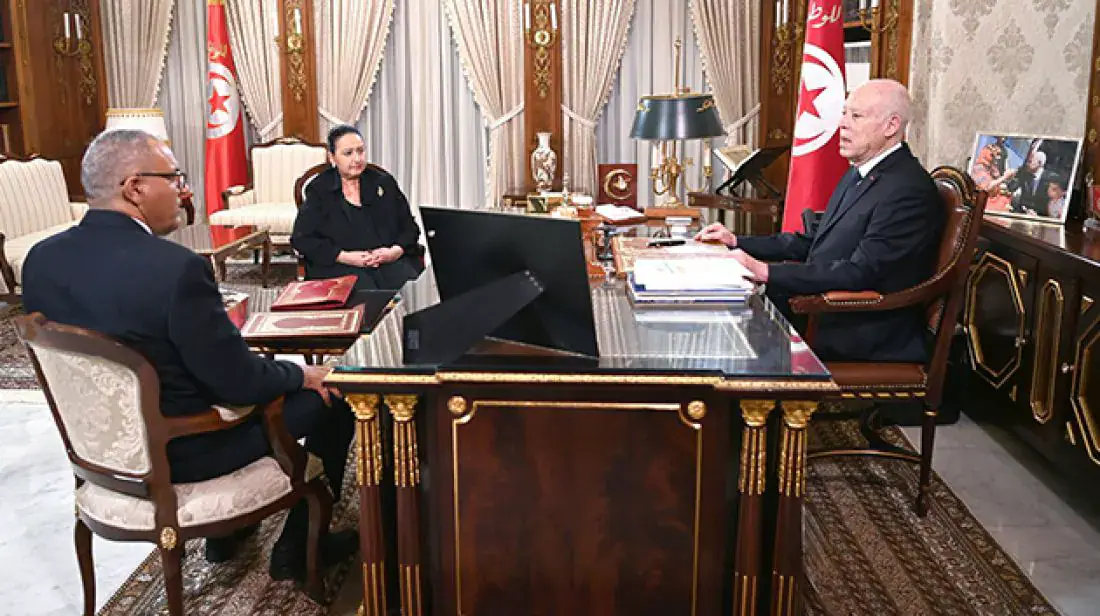
On October 8, 2026, Tunisian President Kais Saied received Minister of Cultural Affairs Amira Al-Sarrafi and Mohamed Ali Al-Boghdadi, Secretary General of the Higher Council for Education. The meeting at Carthage Palace focused on the council's role in shaping the country's education system. President Saied emphasized the need for a national education system that provides equal opportunities for all citizens. He highlighted the importance of instilling principles of freedom, independence, and social justice in young students from primary school.
President Saied noted that the Higher Council for Education was given constitutional status after a national consultation that preceded the adoption of the new constitution. He described this council as unique in the world, underscoring the government's commitment to education as a vital component of national security. The President reviewed historical attempts at reform, expressing concerns that previous efforts were often inadequate or insincere.
The President stressed the importance of establishing cultural clubs in educational institutions and providing students with necessary resources, including transportation, meals, accommodation, clothing, and school supplies. This initiative aims to ensure that all students have access to education and suitable learning conditions. The government plans to coordinate with relevant authorities to implement these measures.
President Saied expressed confidence that Tunisia will continue to produce scholars who excel globally, building on its rich history of producing renowned scientists. He envisioned a national education system that is democratic, accessible to all, and promotes equality and equal opportunities. The system should translate constitutional principles into tangible realities.
The President's vision for education aligns with his broader goals for Tunisia's development. He has consistently emphasized the need for reforms that address social and economic disparities. In this context, education is seen as a critical sector that requires attention and investment.
The Higher Council for Education is expected to play a crucial role in shaping the country's education policy. With Amira Al-Sarrafi, the Minister of Cultural Affairs, overseeing the council's inaugural session, the government is signaling its commitment to a collaborative approach to education reform.
The Tunisian education system faces challenges, including unequal access to quality education and inadequate resources. President Saied's emphasis on a national education system that prioritizes equality and social justice reflects the government's efforts to address these issues and create a more inclusive and equitable society.
Key points
- Tunisian President Kais Saied emphasizes the need for a national education system that provides equal opportunities for all citizens.
Reporting sources
- Jawhara FM · Jawhara FM