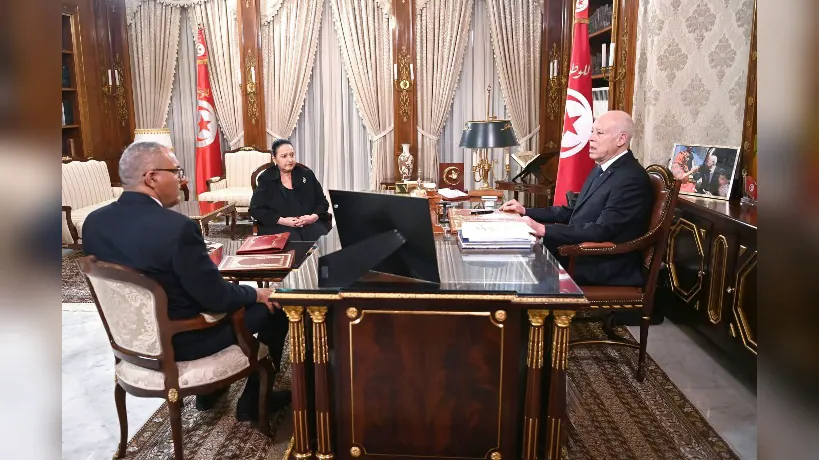
Tunisian President Kais Saied met with Minister of Cultural Affairs Amira Al-Sarrafi and Mohamed Ali Al-Boghdadi, Secretary General of the Higher Council for Education, at the Carthage Palace on October 8. The meeting focused on the importance of establishing a national education system that is democratic, accessible to all, and promotes equality and equal opportunities. President Saied emphasized that education is a fundamental aspect of national security.
President Saied highlighted the significance of the Higher Council for Education, which was established after a national consultation that took place before the adoption of the new constitution. He noted that this council is unique in the world, as it recognizes the crucial role of education in shaping the country's future. The President stressed the need to provide quality education to all citizens, regardless of their background or socio-economic status.
President Saied also emphasized the importance of teaching young people the principles of freedom, liberation, and social justice from the first year of primary education. He recalled various historical attempts at reform, which he described as often lacking genuine intent. The President called for the creation of cultural centers in educational institutions, as well as the provision of transportation, meals, accommodation, clothing, and school supplies to ensure that all students have equal access to education.
The President noted that Tunisia has a long history of producing renowned scholars who have made significant contributions to the world. He expressed his confidence that the establishment of a national education system will enable the country to continue producing exceptional talent. President Saied emphasized that the new system will translate constitutional principles into tangible reality, ensuring that all citizens have equal opportunities and access to quality education.
President Saied's vision for the national education system is centered on promoting social justice, equality, and equal opportunities. He stressed that the system should be designed to benefit all citizens, regardless of their background or socio-economic status. The President called for coordination with relevant authorities to ensure that the new system is implemented effectively and efficiently.
The establishment of a national education system is seen as a key step towards achieving Tunisia's development goals. President Saied emphasized that the country needs a system that will enable it to compete globally and produce citizens who are equipped with the skills and knowledge needed to succeed. He expressed his commitment to working with all stakeholders to ensure that the new system is implemented in a way that benefits all Tunisians.
The Tunisian government has faced criticism in the past for its handling of the education sector. President Saied's emphasis on establishing a national education system that is democratic, accessible, and promotes equality and equal opportunities is seen as a positive step towards addressing these concerns. The implementation of the new system will be closely watched by stakeholders, who are eager to see tangible improvements in the education sector.
Key points
- Tunisian President Kais Saied emphasizes the need for a national education system that promotes equality and equal opportunities for all citizens.