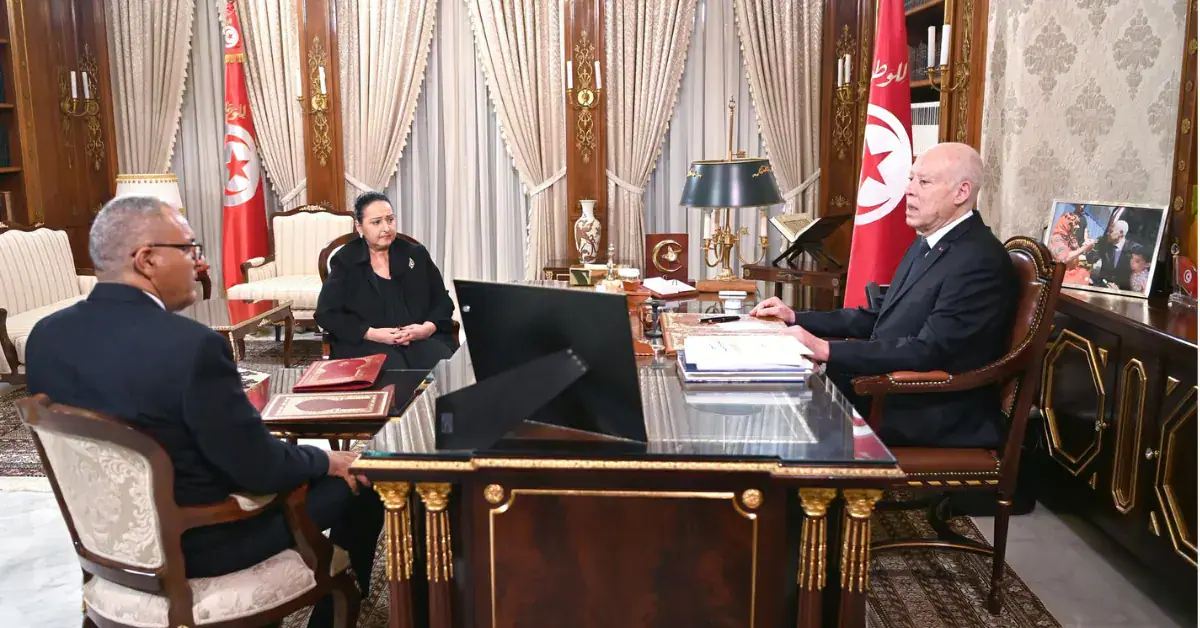
Tunisian President Kais Saied met with Minister of Cultural Affairs Amira Sarraf and Mohamed Ali Bouogdiri, General Secretary of the Supreme Council for Education, at the Carthage Palace on October 8. The meeting took place ahead of the council's inaugural session, which was overseen by Sarraf as the oldest member. The president emphasized that the council's establishment is not coincidental, citing its constitutional status following a national consultation that led to the creation of the country's constitution.
President Saied highlighted the significance of education as a national security issue, stating that it is a crucial aspect of the country's well-being. He stressed the need for a national education system that provides equal opportunities for all citizens. The president also emphasized the importance of instilling principles of freedom, liberation, and social justice in young students from the first year of primary education.
The president reviewed several historical attempts at reform, suggesting that previous efforts were often incomplete or lacking in sincerity. He expressed his commitment to creating a comprehensive education system that prioritizes equality and fairness. Saied also emphasized the need for cultural clubs in educational institutions, as well as providing students with necessary resources, including transportation, meals, and school supplies.
President Saied's vision for the education system is centered around creating a democratic and inclusive structure that is accessible to all citizens. He expressed confidence that Tunisia can produce scholars who will excel globally, just as the country has done throughout its history. The president's emphasis on education is part of a broader effort to implement the country's constitutional principles.
According to a statement from the presidency, President Saied envisions a system that converts constitutional principles into tangible realities. He believes that this can be achieved by establishing a national education system that prioritizes equality and equal opportunities. The president's plan involves coordination with various stakeholders to ensure that all students have access to quality education.
The Supreme Council for Education, which was established following a national consultation, is seen as a key institution in implementing the president's vision for education. The council's members, including Sarraf and Bouogdiri, are expected to play a crucial role in shaping the country's education policy. President Saied's emphasis on education reflects his commitment to creating a more equitable and prosperous society.
The Tunisian president's call for a national education system has been seen as a significant step towards reforming the country's education sector. With a focus on equality, accessibility, and quality, the president's vision has the potential to transform the education landscape in Tunisia. As the country continues to navigate its development trajectory, the role of education in shaping its future has never been more critical.
Key points
- Tunisian President Kais Saied emphasizes the need for a national education system that provides equal opportunities for all citizens.