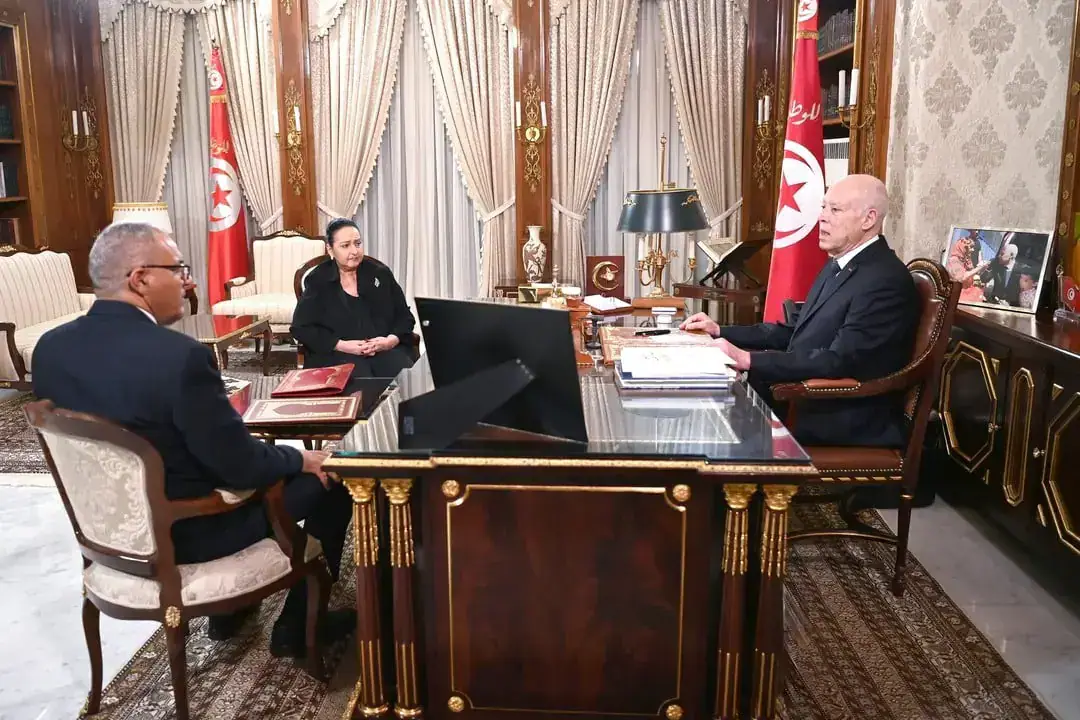
On October 8, 2026, Tunisian President Kaïs Saïed met with Minister of Cultural Affairs Amina Srarfi and Mohamed Ali Boughdiri, Secretary General of the Higher Council of Education and Teaching, at the Carthage Palace. This meeting took place as part of the council's inaugural session, which Srarfi presided over as the oldest member. The discussions focused on the future of education in Tunisia, with the President underscoring the significance of this sector.
President Saïed highlighted that the inclusion of the Higher Council of Education and Teaching in the Constitution was deliberate, reflecting the country's commitment to prioritizing education. He views education and teaching as components of national security, essential for the country's progress and stability. This perspective aligns with his broader vision for Tunisia's development, emphasizing the need for a robust educational framework.
The President stressed the necessity of establishing a national education system that is accessible to all citizens on an equal footing. He advocated for the introduction of principles such as liberty, emancipation, and social justice to children from the first year of primary education. This approach aims to foster a more equitable society through education, addressing longstanding disparities in access to quality education.
President Saïed also reflected on historical attempts to reform the Tunisian education system, noting that some efforts had not led to substantial changes. He called for a more effective strategy that would ensure genuine progress in education. This includes revisiting past reforms to identify shortcomings and implementing measures that can lead to meaningful improvements in the education sector.
In line with his vision for educational reform, President Saïed suggested the creation of cultural clubs in educational institutions. He emphasized the importance of providing students with conducive conditions for academic success, including transportation, meals, accommodation in boarding schools, uniforms, and school supplies. These measures are intended to support students from all backgrounds, ensuring equal opportunities for success.
The President's proposals also focus on coordination among relevant structures to guarantee equitable access to education for all students. By working together, the government aims to address the diverse needs of students across the country, promoting a more inclusive education system. This collaborative approach is seen as crucial for the successful implementation of the envisioned reforms.
President Saïed concluded by highlighting Tunisia's historical contribution to science and knowledge, citing numerous scholars who have gained international recognition. He expressed confidence that with a national, democratic education system based on equality and equal opportunities, Tunisia can continue to nurture talent and contribute significantly to global knowledge. The goal is to translate constitutional principles into tangible realities for all Tunisians.
Key points
- President Saïed advocates for a national education system accessible to all Tunisians, emphasizing its role in promoting equality and social justice.
- The President calls for the introduction of principles such as liberty, emancipation, and social justice in primary education to foster a more equitable society.
- Historical reforms in the education sector are revisited, with a focus on implementing effective strategies for meaningful improvements.
Reporting sources
- Éducation : Kaïs Saïed veut un système national accessible à tous · La Presse de Tunisie