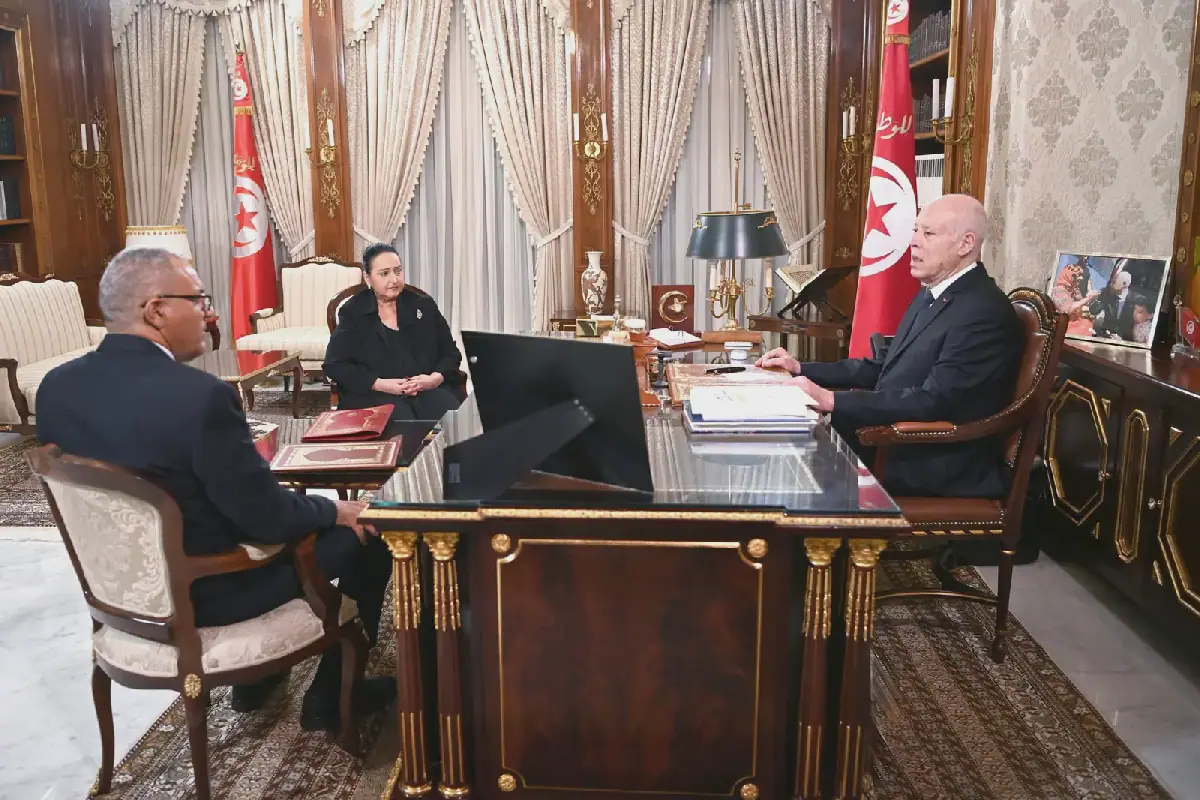
Tunisian President Kais Saied on Thursday, October 8, 2026, met with Culture Minister Amira Sarrafi and Mohamed Ali Bouogdiri, Secretary General of the Higher Council for Education. The meeting preceded the council's inaugural session, which aimed to discuss the country's education system. President Saied highlighted the importance of establishing a national education system that provides equal opportunities for all citizens. He emphasized that this council, established after a national consultation, is a unique entity that considers education as a matter of national security.
According to the presidency, President Saied stressed the need to teach young people the principles of freedom, liberation, and social justice from the first year of primary education. He also reviewed several historical milestones in Tunisia's attempts at reform, which he described as often being superficial and not genuinely aimed at improvement. The president's vision for the education system focuses on creating a fair and equitable environment for all students.
President Saied also emphasized the importance of establishing cultural clubs in educational institutions and providing students with necessary facilities, including transportation, meals, accommodation, clothing, and school supplies. This initiative aims to ensure that all students have the right to education and suitable conditions for learning. The president's proposals will be implemented in coordination with relevant authorities.
The Tunisian president expressed his confidence that the country will excel in education, following in the footsteps of its renowned scholars who have impressed the world. He envisioned a national education system that is democratic, accessible to all, and promotes equality and equal opportunities. This system will translate constitutional principles into tangible reality.
President Saied's vision for education reform aligns with his broader efforts to address the needs and concerns of Tunisian citizens. His initiatives aim to create a more just and equitable society through education. The implementation of these reforms will be closely watched by various stakeholders, including educators, parents, and students.
The Higher Council for Education, established after a national consultation, is seen as a crucial entity in shaping Tunisia's education system. Its members, including Culture Minister Amira Sarrafi, are expected to play a significant role in developing policies that promote equal opportunities and improve educational outcomes.
The Tunisian government has announced plans to implement measures aimed at enhancing the education system, including the establishment of cultural clubs and improvement of educational infrastructure. These initiatives are expected to have a positive impact on students' learning experiences and outcomes. Key initiatives will focus on promoting social justice, equality, and national security through education.
Key points
- President Kais Saied emphasizes the need for a national education system with equal opportunities for all Tunisian citizens.