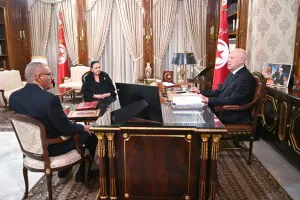
Tunisian President Kais Saied met with Culture Minister Amine El Sarrafi and Mohamed Ali El Bougdouri, Secretary General of the Higher Council for Education, at the Carthage Palace. The meeting preceded the council's inaugural session. According to a presidential statement, Saied highlighted the significance of the council, which was established after a national consultation that led to the creation of the country's constitution. He emphasized that education and training are essential components of national security.
President Saied underscored the need for a national education system that provides equal opportunities for all citizens. He stressed that young students should be taught the principles of freedom, liberation, and social justice from the first year of primary school. The president expressed concerns about past attempts at reform, suggesting that they often fell short of being genuine or innocent. Saied's comments reflect his vision for a more equitable education system in Tunisia.
The Tunisian president emphasized the importance of establishing cultural clubs in educational institutions. He also highlighted the need to provide students with essential services such as transportation, meals, accommodation, clothing, and school supplies. These measures aim to ensure that all students have access to education and suitable learning conditions. The president's proposals will be implemented in coordination with relevant authorities.
President Saied expressed confidence in Tunisia's potential to excel in education. He noted that the country has a rich history of producing renowned scholars who have impressed the world. Saied believes that establishing a democratic national education system will promote equality and equal opportunities. This system will translate constitutional principles into tangible realities.
The Higher Council for Education was established to oversee the country's education sector. The council's creation is a result of a national consultation that shaped the country's constitution. President Saied emphasized that this council is unique in its approach, reflecting the government's commitment to education as a vital component of national security.
President Saied's vision for education in Tunisia emphasizes the importance of social justice and equal access to quality education. He believes that the education system should be designed to promote the values of freedom, liberation, and social justice. The president's proposals aim to address the challenges facing the education sector and provide opportunities for all students to succeed.
The implementation of President Saied's proposals will require coordination with various stakeholders, including government agencies, educational institutions, and civil society organizations. The success of these initiatives will depend on the government's ability to allocate resources effectively and engage with local communities. The president's emphasis on education reflects his commitment to promoting social and economic development in Tunisia.
Key points
- Tunisian President Kais Saied emphasizes the importance of equal access to quality education for all citizens.