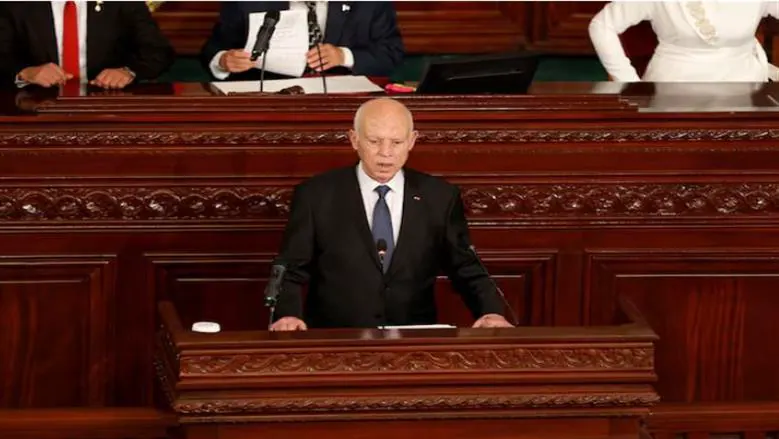
Tunisian President Kais Saied has eased penalties for electronic crimes, as outlined in a decree that had been criticized by human rights groups. The decree, which was put into effect in 2022, had been accused of being used to silence opposition and critics. According to reports, Saied's decision comes after hours of announcements from civil society organizations, led by the Tunisian General Labor Union (UGTT), planning a national march to protest what they see as restrictions on rights and freedoms.
The move is seen as a rare reversal by Saied, who has consolidated power over most aspects of Tunisia's political system since 2021. Under the revised decree, prison sentences of up to 10 years in some cases will be replaced with fines ranging from 10,000 to 20,000 Tunisian dinars (approximately $3,370 to $6,740). Those who repeat offenses will face six months in prison and a fine of 50,000 dinars.
The original decree allowed for prison sentences of up to 10 years for those who targeted public officials, with fines of up to 100,000 dinars. Human rights and press organizations, both within and outside Tunisia, widely criticized the decree as "repressive" and pointed out its use against journalists, activists, and political opponents of President Saied.
Rights groups had argued that the decree was designed to stifle dissent and opposition. Saied's decision to ease penalties appears to be a response to these criticisms. The UGTT and other civil society organizations had planned a national march to highlight their concerns about the decree and its impact on freedoms in Tunisia.
The change in policy marks a shift in Saied's stance on electronic crimes, which had been a point of contention between his administration and human rights groups. While it is unclear how this change will be implemented, it is seen as a positive step towards addressing concerns about freedom and human rights in Tunisia.
Tunisia has faced criticism from international human rights organizations over its human rights record, particularly since Saied assumed power. The easing of penalties for electronic crimes may help alleviate some of these concerns, but it remains to be seen how the new policy will be enforced and what impact it will have on the country's human rights situation.
The decision to ease penalties for electronic crimes is a significant development in Tunisia, where the government's stance on human rights and freedoms has been closely watched by international observers. As the country continues to navigate its complex political landscape, Saied's move may be seen as a step towards addressing criticisms of his administration's human rights record.
Key points
- Tunisian President Kais Saied eases penalties for electronic crimes amid backlash from human rights groups.