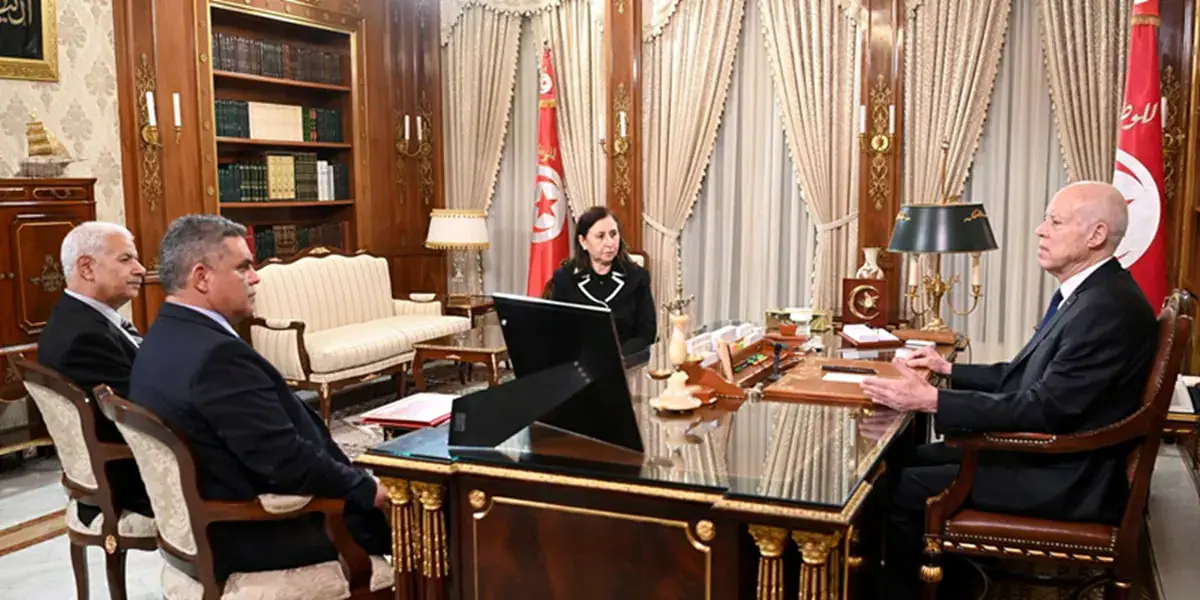
Tunisian President Kaïs Saïed has denounced the surge in prices and speculative practices affecting various consumer products, including dates, poultry, and bottled water. During a meeting at the Carthage Palace on November 6, 2026, he emphasized that farmers sell dates at a price not exceeding one dinar per kilogram, while market prices are significantly higher. Saïed received several officials, including the head of government, Sarra Zaâfrani Zenzri, and ministers of interior, Khaled Nouri, and commerce, Samir Abid.
The meeting primarily addressed the rising prices and monopolistic practices in distribution circuits. Saïed specifically highlighted the situation of date producers, stating that they sell the kilogram at a price not exceeding one dinar, despite harvest difficulties and risks faced by workers in palm groves. He also criticized obstacles to fertilizer and seed distribution, which harm farmers and threaten national production. These issues arise during the 2026-2027 harvest season, marked by significant price disparities depending on variety and marketing channels.
According to data from the Tozeur Regional Agricultural Development Commission, prices for dates vary greatly. In September, prices for non-Deglet Nour varieties ranged from 800 millimes to one dinar per kilogram, while Deglet Nour prices ranged from 1,500 to 2,800 dinars. For export, reference prices for the 2026-2027 season are higher: 3,100 dinars for standard Deglet Nour, 4,500 dinars for top-grade Deglet Nour, and 5,200 dinars for Extra category. However, these prices may not reflect the amounts directly received by farmers.
In retail markets, date prices can exceed ten dinars per kilogram. These price discrepancies occur throughout the supply chain and may not always concern comparable products or marketing conditions. Saïed also denounced sudden price fluctuations and unexplained shortages of certain products, citing lobster, poultry, and bottled water as examples. He accused some parties of creating artificial shortages to drive up prices.
The President called for an end to these practices and for those responsible to be held accountable. He emphasized the need to address the root causes of these issues and ensure fair prices for consumers. Saïed's statements highlight the challenges faced by farmers and the need for more transparent and equitable distribution systems.
The issue of date prices is particularly significant in Tunisia, where the product is a major export commodity. The country's agricultural sector faces various challenges, including climate change, water scarcity, and limited access to credit and markets. Saïed's government has prioritized supporting farmers and improving the agricultural sector's competitiveness.
The President's efforts to address price speculation and monopolistic practices aim to protect consumers and promote a more equitable economy. His administration's success in tackling these issues will depend on effective implementation of policies and collaboration with various stakeholders, including farmers, businesses, and civil society organizations.
Key points
- President Kaïs Saïed denounces price speculation on dates and other consumer goods.
- Date prices vary greatly depending on marketing channels and variety.
- Saïed calls for an end to monopolistic practices and artificial shortages.