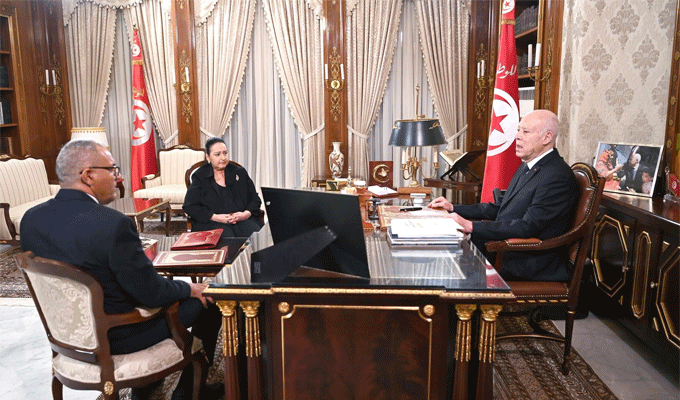
On October 8, 2026, Tunisian President Kaïs Saïed met with Minister of Cultural Affairs Amina Srarfi and Secretary General of the Higher Council of Education and Teaching Mohamed Ali Boughdiri at the Carthage Palace. During the meeting, Saïed stressed the importance of education reform. He highlighted that the inclusion of the Higher Council of Education and Teaching in the Constitution was not coincidental.
The President emphasized that education and teaching are integral parts of national security. He noted that the council, unique in the world, was created based on the conviction that education is crucial for the country's development. Saïed's remarks underscored his commitment to overhauling the education system. The meeting was also attended by Amina Srarfi, who was presiding over the inaugural session of the Council as the oldest member.
President Saïed called for a national education system that guarantees equality for all. He emphasized the need to instill principles of liberty and social justice in young generations from primary school. The President's vision for education reform focuses on creating a more inclusive and equitable system. He believes that this can be achieved by introducing essential values from an early age.
Saïed expressed his concerns about past attempts to reform the education system in Tunisia. He described these efforts as biased and lacking in seriousness. The President argued that genuine reform is necessary to address the country's educational challenges. He stressed that education is a fundamental aspect of Tunisia's development and progress.
To support education reform, President Saïed suggested establishing cultural clubs in educational institutions. He also emphasized the importance of providing students with essential services such as transportation, meals, accommodation, clothing, and school supplies. These measures aim to create a conducive learning environment for all students.
President Saïed expressed his confidence in Tunisia's potential to produce scholars who can make a positive impact globally. He attributed this potential to the country's rich history of producing renowned scholars. The President emphasized that a democratic and accessible education system can help Tunisia achieve its goals.
The proposed education reform aligns with Tunisia's constitutional principles. President Saïed's vision for education is centered on promoting social justice and equality. The reform aims to provide equal opportunities for all students, regardless of their background.
Key points
- President Saïed emphasizes the importance of instilling principles of liberty and social justice in young generations.
- The President calls for a national education system that guarantees equality for all.
- Saïed suggests establishing cultural clubs in educational institutions to support education reform.