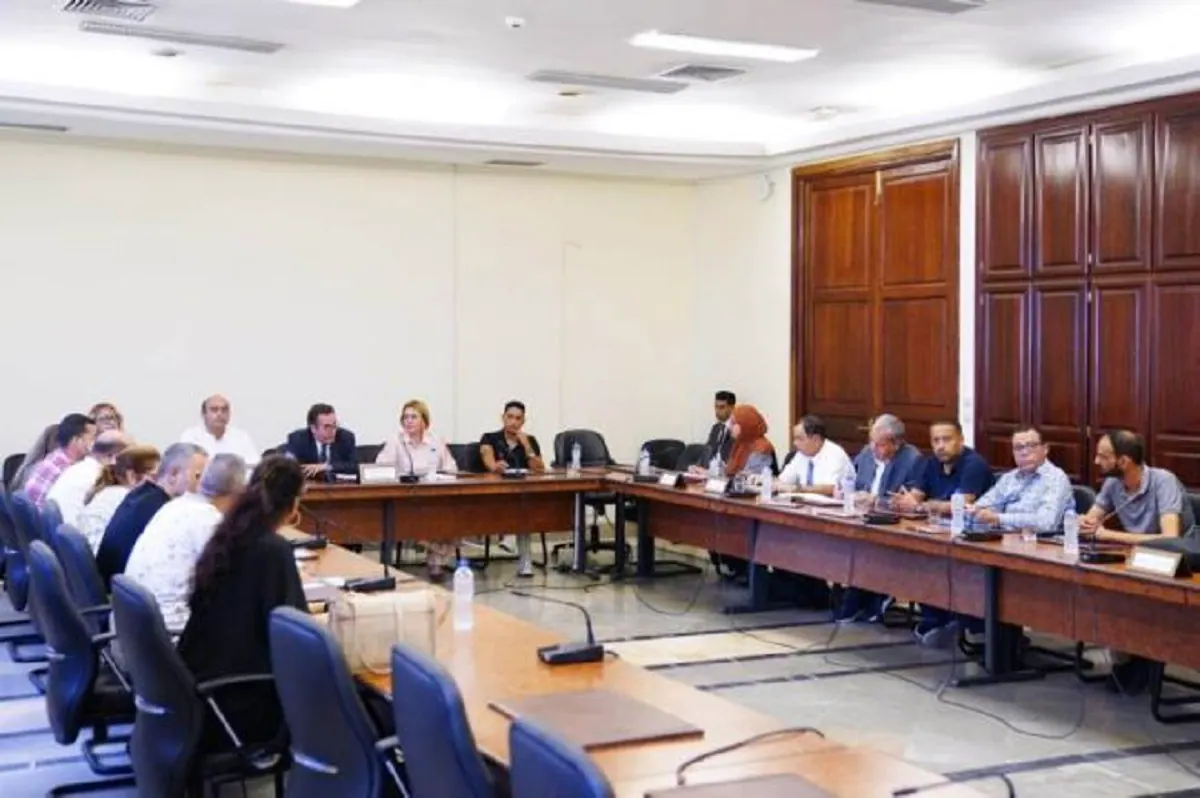
On October 23, 2026, Tunisian Parliament Speaker Brahim Bouderbala addressed a preparatory session of the Finance and Budget Committee, focusing on the state's budget and finance law for 2027. He highlighted the importance of strengthening parliamentary action and improving the quality of its work through enhanced oversight and attendance of committee meetings. Bouderbala emphasized that deputies' freedom to form convictions and express opinions is fundamental to parliamentary action, provided that positions are based on objective grounds and solid arguments.
Bouderbala's remarks underscored the need for the finance law to reflect national priorities and translate announced commitments into practical measures. He stressed the importance of complementarity between institutions to contribute to the development of a finance law that aligns with the country's needs. The session was attended by several members of the Finance and Budget Committee, including its president, Maher Ketari, and other deputies. The committee is tasked with examining the state's budget and finance law for 2027.
Maher Ketari, president of the Finance and Budget Committee, emphasized that the examination of the 2027 finance law project requires evaluating proposed provisions and their capacity to achieve economic and social objectives. He noted that the project includes provisions aimed at boosting investment and creating wealth, necessitating in-depth examination of their feasibility and effectiveness. Ketari called for rationalizing the number and content of additional articles, focusing on priority initiatives with tangible impact.
The discussion also touched on the need to balance public resource mobilization with preserving purchasing power while improving the investment climate and encouraging economic initiative. Deputies reviewed the 2026 budget execution report, expressing concerns that the data provided by the Ministry of Finance lacked precision and clarity. They questioned the absence of a rectificatory finance law, given the discrepancy between initial forecasts and actual data.
The deputies emphasized the need to identify the causes of the widening deficit and pressure on public finances, as well as their impact on state financing needs and its ability to honor commitments. They also highlighted the importance of fixing conditions, repayment deadlines, and interest rates for facilities granted to the Central Bank of Tunisia. Other economic issues were discussed, including revising the exchange code, regularizing the situation of public enterprises, and reducing administrative obstacles and unemployment.
Rationalizing compensation expenditures and directing them towards eligible beneficiaries was another key point of discussion. Deputies noted that these expenditures exceed those dedicated to investment, necessitating a balance between social protection, productive investment, and job creation. The calendar of work was also coordinated with the National Council of Regions and Districts to ensure alignment in discussing the state's budget and finance law for 2027.
The Finance and Budget Committee will continue its work, with a focus on supporting the Tunisian industry and exports, stimulating investment, creating wealth, and strengthening the country's resources in foreign currency. The committee's discussions will inform the development of a finance law that aligns with national priorities and enhances the country's economic competitiveness.
Key points
- Tunisian Parliament Speaker Brahim Bouderbala emphasizes the need for a finance law that aligns with national priorities and enhances parliamentary oversight.
- The Finance and Budget Committee will examine the state's budget and finance law for 2027, focusing on provisions aimed at boosting investment and creating wealth.
- Deputies stress the importance of rationalizing compensation expenditures and directing them towards eligible beneficiaries.