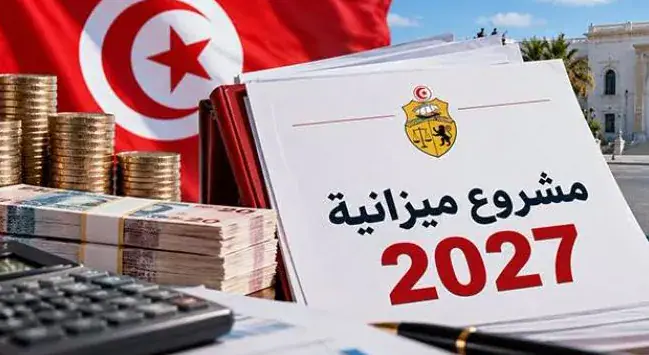
The Tunisian Parliament recently convened to discuss the 2027 budget plan for the Ministry of Finance, which is estimated at 1668.7 million dinars. The session, attended by Finance Minister Mechka Salame Khaldi, focused on key issues such as tax fairness, expansion of the taxpayer base, and modernization of public financial management through digitalization.
Several lawmakers emphasized the need for a fair and equitable tax system, criticizing the current system for burdening low-income earners and small and medium-sized enterprises (SMEs). They called for a comprehensive review of the tax system to ensure fairness and social justice. Huda Al-Ghlassi, a member of parliament, questioned whether the 2027 budget was a genuine economic and social reform plan or just a means of managing difficulties and postponing crises.
The parliamentarians also discussed the financial situation of SMEs and the Small and Medium-Sized Enterprise Financing Bank, which has been facing significant challenges. According to some lawmakers, the bank's financial statements for 2025 revealed a net loss of 15.6 million dinars and accumulated losses of over 171 million dinars. They also criticized the bank's high-interest loans from the Treasury and called for an increase in its capital.
Digitalization of public financial management was another key topic of discussion. Some lawmakers proposed the development of a national program to integrate artificial intelligence in public financial management to analyze expenditures, predict revenues, and combat tax evasion. They also suggested adopting a results-based budget with measurable performance indicators and establishing a national dashboard to monitor budget implementation in real-time.
The issue of tax evasion and the informal economy was also raised, with some lawmakers calling for stricter measures to combat these phenomena. They emphasized the need for greater transparency in public financial management and more effective measures to prevent corruption.
Regional development and fairness were also on the agenda, with some lawmakers stressing the need for greater investment in underdeveloped regions. They proposed the creation of a regional tax and investment map, as well as a mechanism to evaluate the impact of tax incentives on regional development.
The parliamentarians also discussed various proposals to improve public financial management, including the establishment of a single window for settling car cases and a regional directorate for customs. Some lawmakers emphasized the need for better coordination between different government agencies and the restructuring of public enterprises to improve their performance and contribution to development.
Key points
- The 2027 budget plan for the Ministry of Finance emphasizes tax fairness, digitalization, and public financial management.
- Lawmakers criticize the current tax system for burdening low-income earners and SMEs.
- The financial situation of SMEs and the Small and Medium-Sized Enterprise Financing Bank was also discussed.
Reporting sources
- Radio Tataouine · Radio Tataouine