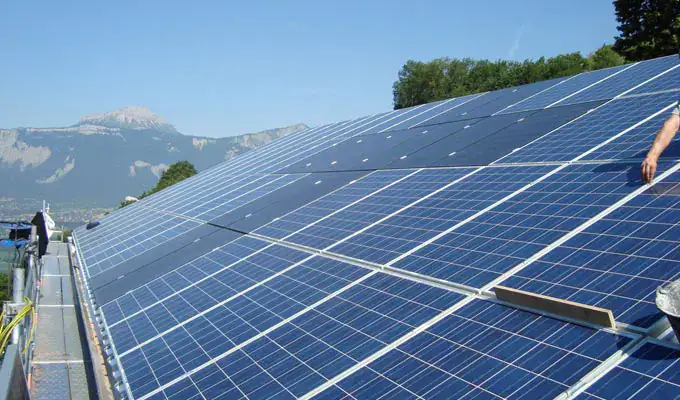
The Tunisian parliament's finance and budget committees have rejected two provisions in the 2027 finance bill that would have provided tax breaks for imported solar equipment. The rejected articles, 49 and 50, aimed to reduce customs duties on solar panels and provide benefits for electric storage batteries. This decision has reignited the debate on the effectiveness of fiscal incentives for imported solar equipment and their impact on the national industry.
According to an expert interviewed on Express FM, the rejection of the tax breaks was expected. The expert argued that the proposal lacked a solid economic justification and served commercial interests rather than energy security needs. The expert also noted that rooftop solar power, which accounts for 10% of the country's renewable energy targets, may have already exceeded 2031 goals by 2026, although these claims require verification.
The debate centers around whether to support imports or consumers. The current regulations do not specifically protect the national industry, and the expert questioned why fiscal benefits should be given to imported products with local equivalents. Instead, the expert suggested that direct support to consumers would be more effective. However, professional solar organizations advocate for lower taxes to facilitate access to equipment, although the impact of this measure on prices remains to be seen.
The rejection of the tax breaks has raised questions about the coherence of Tunisia's fiscal policy. Article 50 aimed to repeal Article 62 of the 2026 finance law, which had eliminated certain benefits for importing photovoltaic panels. The key issue remains: who benefits from these fiscal incentives? The expert argued that the current system does not prioritize the needs of local consumers.
As the country prepares for the 2027 summer season, the focus shifts to enhancing electricity generation and management. The Ministry of Energy announced a storage program targeting 300 MW of power on November 3. The success of Tunisia's energy transition will depend on the consistency and effectiveness of implemented measures.
The decision to reject tax breaks for solar imports has sparked concerns about the country's energy security. With rising temperatures and changing weather patterns, Tunisia faces challenges in meeting its electricity demands. The government must balance the need for energy security with the need to promote a sustainable and locally-based solar industry.
The Tunisian government faces a critical juncture in shaping its energy policy. As the country moves forward, it must consider the implications of its decisions on the national industry, consumers, and the environment. The debate on solar import tax breaks is likely to continue, with stakeholders pushing for policies that support a sustainable and secure energy future.
Key points
- The Tunisian parliament has rejected tax breaks for imported solar equipment, sparking debate on energy policy and the role of fiscal incentives.