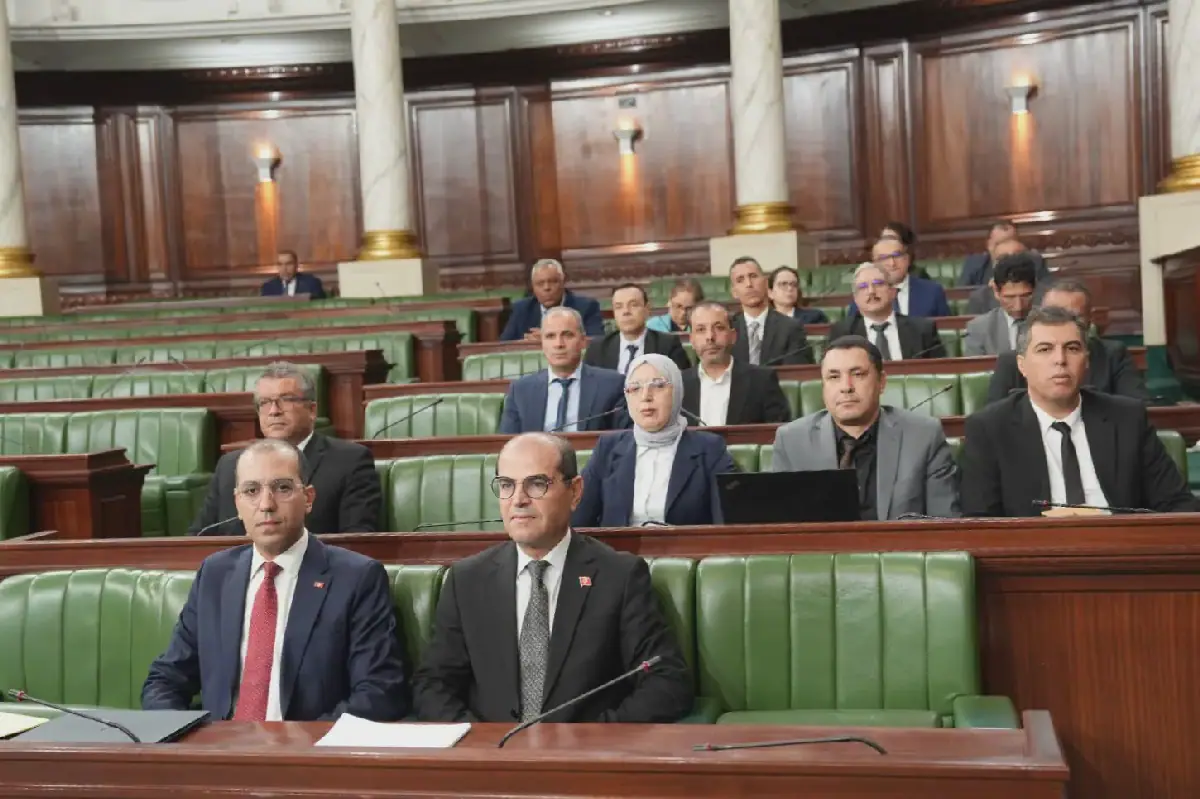
The Tunisian Assembly of People's Representatives (ARP) and the National Council of Regions and Districts (CNRD) began examining the 2027 budget for the Ministry of Industry, Mines, and Energy in a joint plenary session at the Bardo Palace. The session was attended by Minister Salah Zouari and State Secretary Wael Chouchane. The proposed budget allocates approximately 7.884 billion dinars for commitments and 7.890 billion dinars for payments.
Compared to 2026, the budget shows a significant increase of 48.2% in payment credits, rising from 5.319 billion dinars in commitments and 5.325 billion dinars in payments. The largest share of the budget, 7.090 billion dinars, is allocated to hydrocarbon subsidies, up from 4.993 billion dinars in 2026. This represents an increase of 2.097 billion dinars or 42%.
The budget also reveals an increase in development-related interventions, which are set at 551.8 million dinars, compared to 60.5 million dinars in 2026. This substantial rise is largely due to the allocation of 500 million dinars to the program for financing chemical fertilizers for agricultural use, benefiting the Tunisian Chemical Group (GCT).
A breakdown of the credits by program shows that the energy sector will receive around 7.200 billion dinars, up from 5.115 billion dinars in 2026. The budget for the mining program has reached 508.2 million dinars, a significant increase from approximately 8 million dinars this year. This surge is primarily due to the allocations for the Tunisian Chemical Group.
According to the report by the ARP and CNRD commissions, the Ministry's mission is to enhance the competitiveness of the industrial sector, improve its contribution to sustainable development, stimulate investment, and improve the business climate. The ministry also aims to develop national resources, optimize the exploitation of hydrocarbons and mineral wealth, promote renewable energies, and accelerate the transition to a low-carbon energy model.
The government has prioritized supporting and modernizing enterprises, upgrading industrial infrastructure, resuming normal phosphate and fertilizer production, reducing polluting gas emissions, and implementing the energy transition program in public establishments. These efforts aim to consolidate the industrial fabric, valorize national resources, and improve energy efficiency to support the competitiveness of the national economy.
The examination of the 2027 budget for the Ministry of Industry, Mines, and Energy reflects the government's commitment to promoting sustainable development and enhancing the industrial sector's contribution to the national economy. The ARP and CNRD will continue to review and discuss the proposed budget to ensure it aligns with the country's development goals and priorities.
Key points
- The 2027 budget for Tunisia's Ministry of Industry, Mines, and Energy has increased by 48.2% compared to 2026.