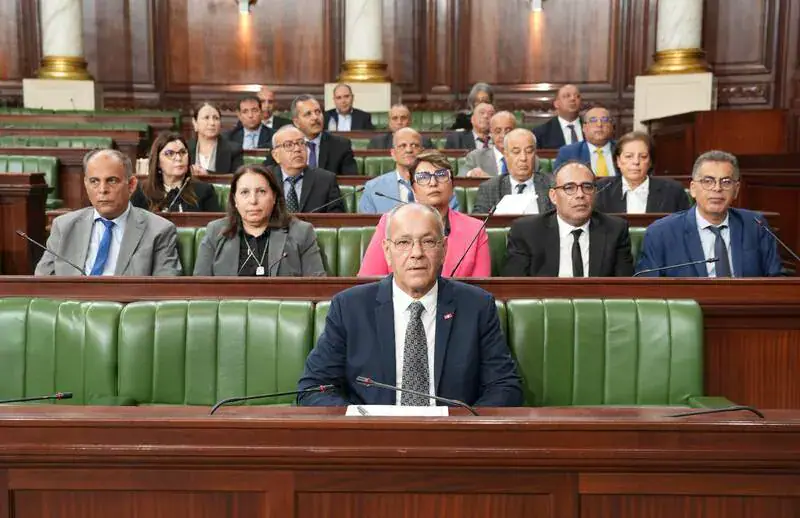
The Tunisian parliament recently held a joint session to discuss the 2027 environmental budget. During the session, lawmakers called for the acceleration of stalled purification projects and the development of a waste management system. They emphasized the need to transition from a policy of landfill disposal to recycling and valorization of waste. The session was attended by Minister of Environment Habib Obaid.
Lawmakers highlighted the need to address issues hindering the completion of several purification stations, particularly in residential areas facing environmental and health challenges. They also stressed the importance of connecting residential areas to purification networks and expanding the use of treated water for irrigation in agricultural areas. Furthermore, they raised concerns about unpleasant odors and gas emissions from some purification facilities.
The parliamentarians urged the government to improve the performance of purification facilities and accelerate the completion of tertiary treatment projects. They also called for providing the necessary human and logistical resources for the National Sanitation Office, particularly in areas experiencing urban and geographic expansion. In addition, they suggested developing mechanisms for valorizing household and similar waste.
The lawmakers proposed developing alternative fuel and energy production from waste, and utilizing recyclable waste such as plastic, metal, wood, and organic waste. They also recommended modernizing landfills and making them accessible to citizens, as well as adopting selective sorting within them. Moreover, they called for supporting private institutions active in waste collection and valorization.
The issue of managing olive oil waste, or "marjine," was also raised during the session. Lawmakers called for finding practical solutions in coordination with the Ministries of Environment, Agriculture, Interior, and municipalities, as well as olive oil producers. They suggested encouraging the creation of companies or specialized institutions to collect, process, and valorize this waste.
In the area of industrial pollution control, lawmakers demanded increased monitoring of industrial facilities and enforcement of environmental commitments. They also called for holding accountable those responsible for liquid and solid waste disposal violations. Furthermore, they urged industrial enterprises to rehabilitate exploited sites and enhance their social responsibility towards affected areas.
Finally, the parliamentarians emphasized the need to address recurring environmental issues in coastal areas, such as coastal erosion and beach degradation. They called for enhanced interventions by the Coastal Protection and Development Agency and accelerated revision of legal texts regulating temporary works on public maritime domain.
Key points
- Tunisian lawmakers urge acceleration of stalled purification projects
- Development of waste management system to transition from landfill disposal to recycling and valorization
- Increased monitoring of industrial facilities to control pollution