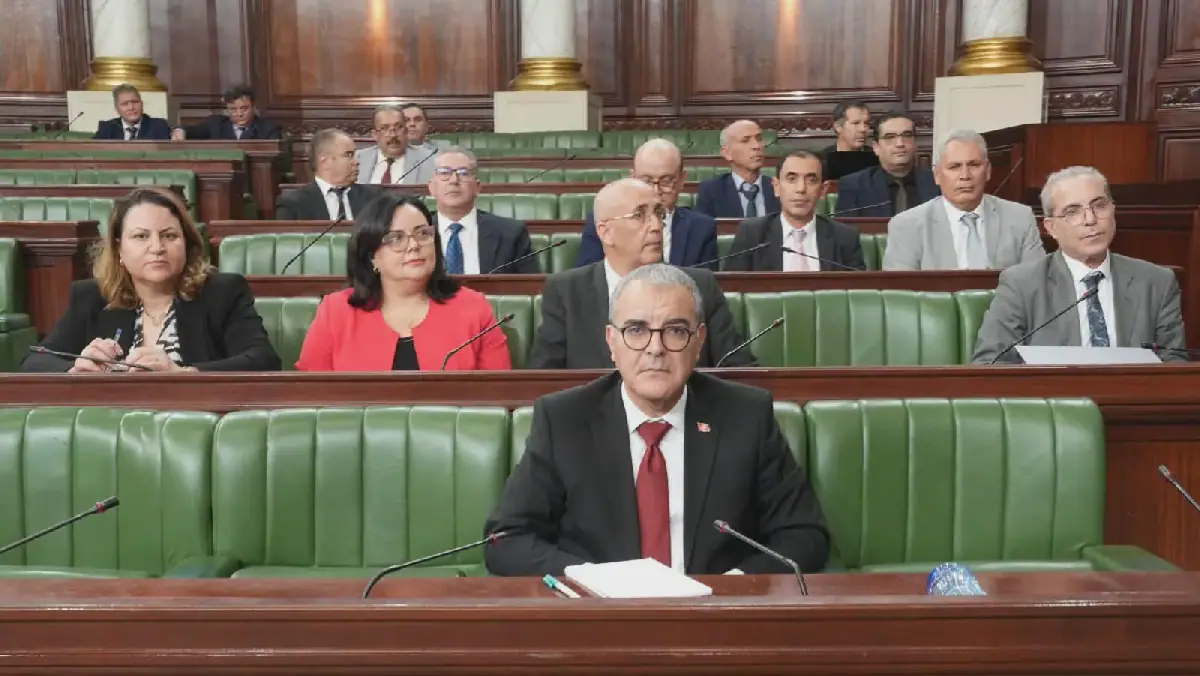
The Tunisian parliament began discussing the 2027 budget for the Ministry of Economy and Planning in a joint general session between the Assembly of People's Representatives and the National Council of Regions and Districts. The session was attended by Minister of Economy and Planning Samir Abdel Hafiz. The budget for the ministry's tasks is 994.1 million dinars in commitment credits and 794.1 million dinars in payment credits. This represents a 10.9% increase in commitment credits and an 11.3% decrease in payment credits compared to the 2026 financial law.
The Ministry of Economy and Planning's interventions focus on four strategic axes. These include improving the efficiency of economic performance and developing the national statistical system. The ministry also aims to support regional development and improve investments in regions, promote investment, and enhance the business climate. Additionally, the ministry seeks to mobilize external financial resources and promote technical cooperation.
The ministry's report on the budget project highlights its focus on supporting sectoral and regional development. 78% of payment credits are allocated to implementing special development programs. These programs primarily aim to improve citizens' living conditions and create job opportunities in regions. The budget for the Integrated Development Program has been increased to 250 million dinars in 2027, up from 190 million dinars in 2026. This represents a 31.6% increase.
The 2027 budget also shows a decrease in intervention expenses. These expenses are projected to decline by 26.17% to 539.825 million dinars in 2027, compared to 731.177 million dinars in 2026. Investment expenses are budgeted at 301.563 million dinars in commitment credits and 101.563 million dinars in payment credits. This is a significant change from 2026, when investment expenses were 2.580 million dinars in commitment credits and 1.580 million dinars in payment credits.
The decrease in investment expenses is largely due to the reclassification of credits. A portion of intervention expenses has been reclassified as investment expenses, worth 300 million dinars in commitment credits and 100 million dinars in payment credits. This reclassification is intended to finance the Regional Development Program, following a review of the legislative framework for regional councils.
The budget also shows a decline in the state's contribution to international financial institutions. This contribution is projected to decrease to 56.225 million dinars in 2027, down from 68.820 million dinars in 2026. The Ministry of Economy and Planning is responsible for monitoring the implementation of policies, programs, and projects outlined in the development plan.
The Ministry of Economy and Planning plays a crucial role in promoting economic development in Tunisia. Its tasks include improving the business climate, developing the legislative framework to promote private investment, and mobilizing external financing for priority sectors and projects. The ministry also supports regional development initiatives, in line with the strategic orientations of the 2026-2030 development plan.
Key points
- The Tunisian parliament has started discussing the 2027 budget for the Ministry of Economy and Planning, which totals 994.1 million dinars in commitment credits and 794.1 million dinars in payment credits.
Reporting sources
- Établissement de la Radiodiffusion-Télévision Tunisienne · Établissement de la Radiodiffusion-Télévision Tunisienne