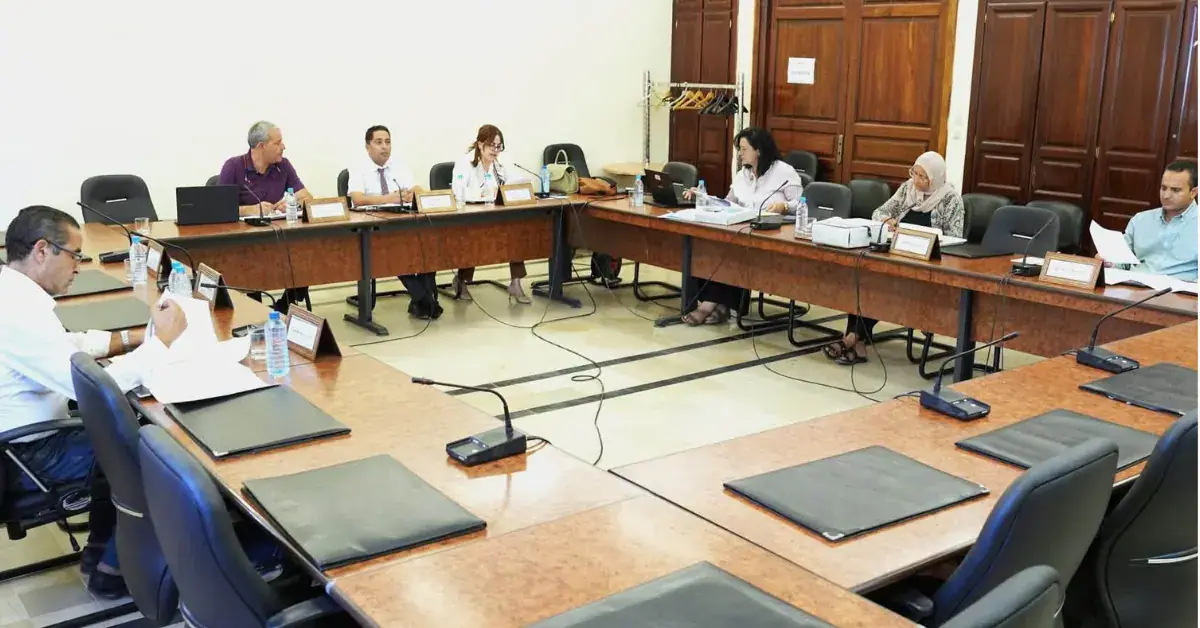
The Tunisian Parliament's Committee on Internal Affairs, Electoral Laws, and Parliamentary and Electoral Functions held a session on October 8 to review a proposed law on elections and referendums. The committee examined the proposal, which aims to unify the legal framework for elections and referendums, and make the process more transparent and secure. The proposal, numbered 27/2026, was introduced to address issues that arose during recent electoral experiences.
The proposed law includes several revisions to regulate the electoral process and simplify procedures, particularly regarding conditions and procedures for running in legislative elections. One of the proposed measures is a financial guarantee of 5,000 dinars, which aims to ensure that candidates are serious about their campaigns and prevent nominal candidatures. However, some committee members expressed reservations about this condition, citing concerns that it may limit the right to run for office and create unequal opportunities for citizens.
Committee members discussed the proposed financial guarantee, with some arguing that it would ensure the seriousness of candidatures, while others saw it as a financial barrier to exercising the right to run for office. They emphasized that running for legislative elections is a constitutional right, and that the principle of equal opportunities between citizens should be respected. The committee also examined a proposal to require a certain level of education for legislative candidates, with differing opinions on the matter.
Some committee members believed that a minimum level of education is necessary for candidates, given the responsibilities of the parliamentary function. Others argued that requiring a specific educational level would restrict the right to run for office and that voters should be free to choose their representatives. The committee also discussed the electoral program, which would be a required document for candidatures, but would not entail any legal responsibility for the candidate.
The committee decided to begin discussing the proposed law article by article in future meetings, taking into account the debates and opinions expressed during the hearings. This approach aims to deepen the understanding of the proposed law's contents and complete its study in a way that respects different opinions and approaches. The committee also examined a communication from a member of parliament regarding the hierarchical authority of the Independent High Authority for Elections.
The proposed law aims to strengthen transparency and legal security, and support trust in the electoral process. The committee's discussions highlighted the importance of balancing the need for a secure electoral process with the need to respect citizens' rights and freedoms. The review of the proposed law is ongoing, with the committee expected to continue its discussions in the coming weeks.
The Tunisian parliament's review of the proposed election law is a significant step towards reforming the country's electoral process. The committee's debates reflect the complexities and challenges of ensuring a fair and transparent electoral process, while respecting citizens' rights and freedoms. The proposed law's impact on the country's electoral process and its citizens' participation in politics remains to be seen.
Key points
- The proposed law includes a financial guarantee of 5,000 dinars for legislative candidates.