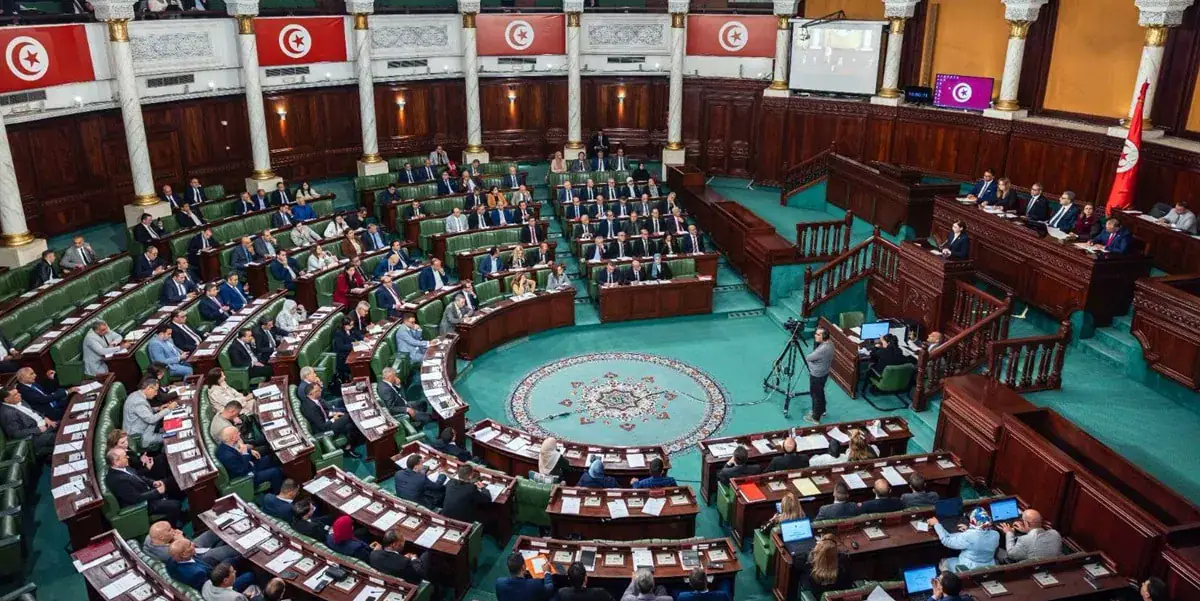
The Tunisian Parliament has amended the 2027 finance bill, with the commissions of finance and budget of the Assembly of People's Representatives (ARP) and the National Council of Regions and Districts (CNRD) completing their review of the 70-article government text. The amendments include the rejection of four government articles and the introduction of 13 additional provisions. These changes reflect compromises between the state's financing needs, concerns about purchasing power, support for businesses, and protection of certain economic activities.
The finance bill's revisions come ahead of its examination in a joint plenary session of the two parliamentary chambers. The changes are not merely technical adjustments but rather substantial modifications that address various economic and financial concerns. The bill's passage is crucial for the state's budget, with estimated expenditures of 68.895 billion dinars and revenues of 54.280 billion dinars, resulting in a projected budget deficit of 14.615 billion dinars.
One of the key points of discussion surrounding the bill is Article 12, which allows the Central Bank of Tunisia (BCT) to grant exceptional financing facilities to the Treasury, up to 9.8 billion dinars and without interest. The repayment is scheduled over 15 years, with a three-year grace period. This provision is particularly significant given the state's announced financing needs for 2027.
The state's financing needs are substantial, with total financing requirements reaching 28.122 billion dinars. The government plans to rely primarily on domestic borrowing, with 19.845 billion dinars expected from internal loans and 6.877 billion dinars from external loans. The exceptional financing facility provided by the BCT is part of this financing architecture.
The Minister of Economy and Planning, Samir Abdelhafidh, defended the mechanism, presenting it as a choice that would help avoid the high cost of borrowing on domestic and international markets. He also noted that the potential effects of this financing on inflation were still being analyzed. The debate surrounding the bill highlights concerns about both the cost of state financing and the monetary consequences of direct recourse to the Central Bank.
In addition to the amendments, the commissions rejected four articles from the initial project. One of the rejected articles, Article 24, proposed new revenue sources to diversify financing for social security funds, including increases in duties on certain products. The rejection of these articles and the introduction of new provisions reflect the parliamentary body's efforts to refine the finance bill and address various economic concerns.
The amended finance bill must now be examined in a joint plenary session before continuing its parliamentary process. The bill's approval is crucial for the state's budget and economic planning, and its passage will have significant implications for Tunisia's economic trajectory in 2027. The government's ability to finance its activities and support businesses and households will depend on the successful implementation of the bill's provisions.
Key points
- The Tunisian Parliament has amended the 2027 finance bill, rejecting four government articles and adding 13 new provisions.
- The bill's revisions reflect compromises between the state's financing needs, concerns about purchasing power, support for businesses, and protection of certain economic activities.
- The state's financing needs for 2027 are substantial, with total financing requirements reaching 28.122 billion dinars.