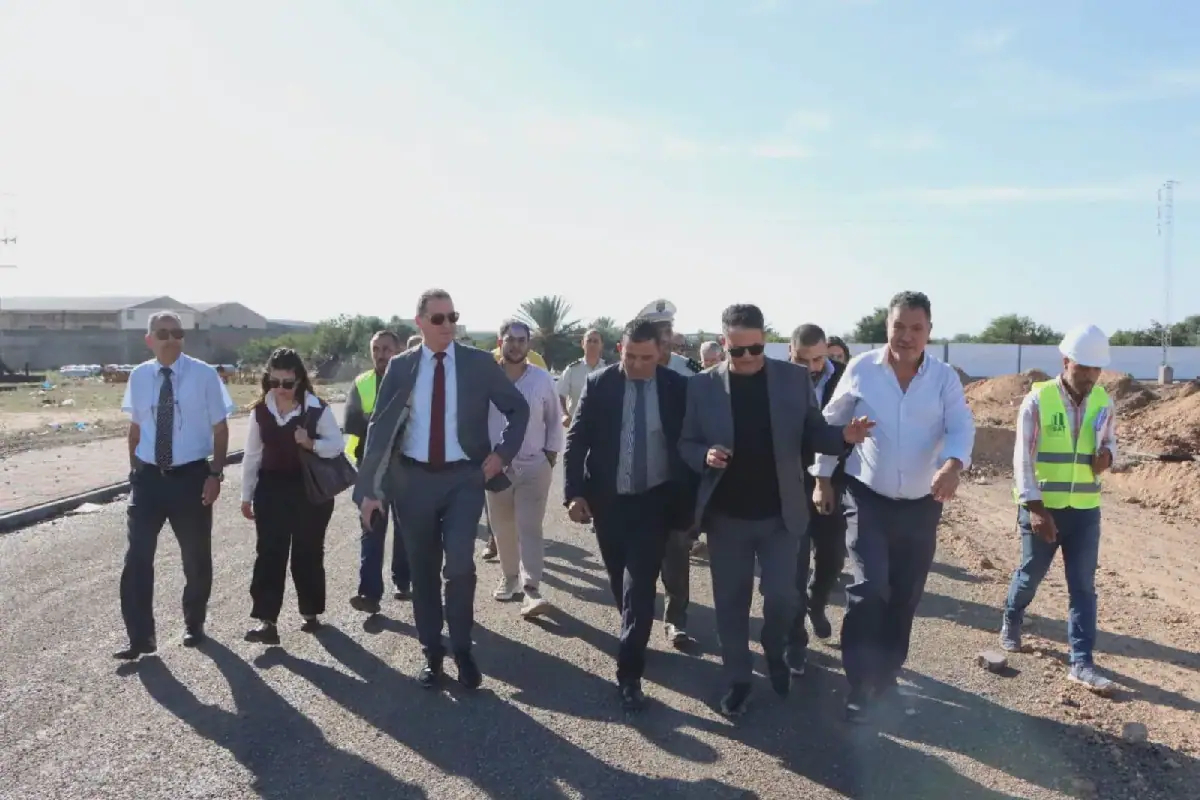
On October 31, 2026, Tunisian Governor of Mahdia, Issa Moussa, conducted a series of visits to ongoing development projects in Qasr Hilal. This activity aimed to monitor public project progress across various sectors. The governor assessed the projects' advancement, listened to related concerns, and addressed potential obstacles. The first stop was the Qasr Hilal weekly market development project, fully funded by the municipality's budget at a total cost of approximately 899,899.205 dinars.
The market project includes a 515-meter-long external fence, 4,090 square meters of asphalt concrete paving, and eight external gates. These improvements aim to organize the space, relocate commercial activities from the city center, reduce congestion, and prevent informal settlements. Governor Moussa then launched the paving and development works on Abdelaziz Ayad Street, which connects the city to the Riyad neighborhood. The project, costing around 3,524,780 dinars, is co-funded by the municipality's budget and a loan from the Local Authorities Loans Fund.
The visit continued at the Haj Ali Swa Hospital, where the governor inspected the second phase of the expansion project, valued at 2.093 million dinars. This phase involves developing and expanding several medical sections, including surgery, pediatrics, obstetrics and gynecology, and ear, nose, and throat departments, along with external premises development. These enhancements will increase the healthcare facility's capacity and improve service delivery for citizens.
Another site visited was the Qasr Hilal Cultural Center, being constructed by the Regional Department of Equipment and Housing, funded by the Ministry of Cultural Affairs, at a total cost of approximately 4.88 million dinars. Spanning 1,520 square meters, the project is 50% complete and will feature a main auditorium with 402 seats, multi-purpose rooms, and spaces for media, dance, and physical expression.
During the visits, Governor Moussa emphasized the need to accelerate project completion while adhering to technical specifications and quality standards. This ensures proper execution and achievement of the desired objectives. The governor also inspected the Qasr Hilal municipal warehouse, reviewing working conditions, organization, and records of equipment and machinery.
The governor verified the procedures for confiscation and disposal of seized items, checked the technical condition and readiness of municipal equipment and machinery for use, and stressed the importance of proper management and maintenance of municipal properties. These visits reflect the ongoing efforts to enhance infrastructure and public services in the region.
The series of visits demonstrates the authorities' commitment to monitoring and supporting development projects. By engaging with local communities and addressing challenges, officials aim to ensure the successful completion of these initiatives, ultimately improving the quality of life for residents in Qasr Hilal.
Key points
- The Tunisian governor inspected several development projects in Qasr Hilal, including a weekly market, road development, hospital expansion, and a cultural center.
- The projects aim to improve infrastructure, public services, and quality of life for residents.
- The governor emphasized the importance of timely project completion and adherence to technical standards.