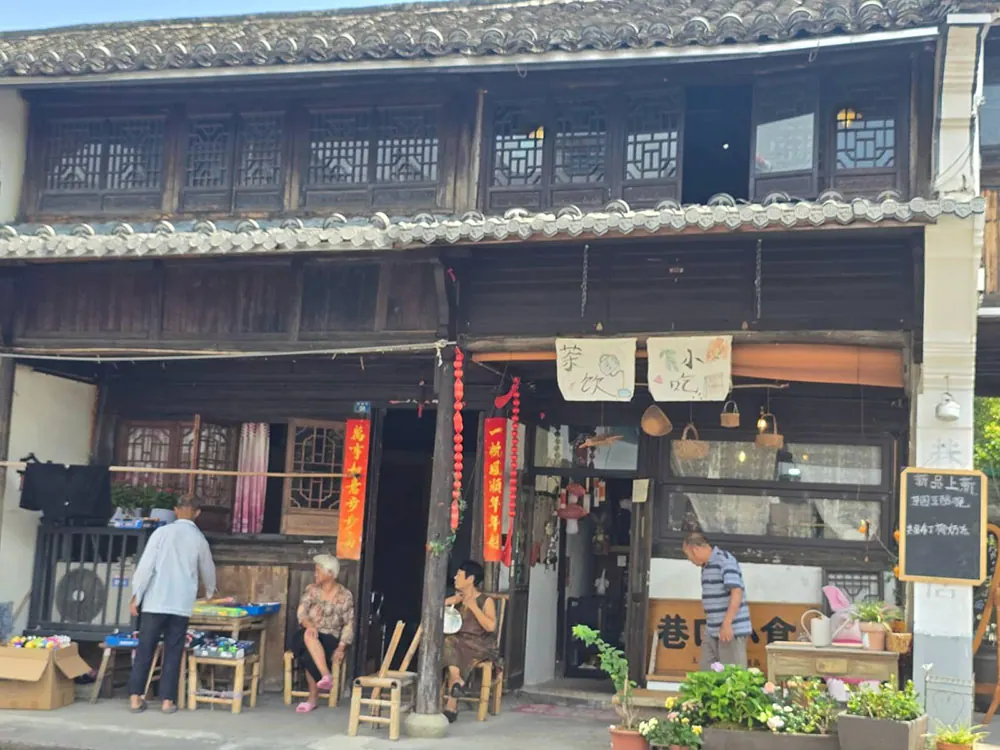
In the heart of rural China, a village called Xiaoguotun has become a model for democratic decision-making and modern governance. With a history dating back over 7,000 years, the village has managed to blend its rich cultural heritage with modern methods of governance. The village's unique approach to decision-making has transformed it into a popular tourist destination and economic hub. The village's transformation was witnessed firsthand by a delegation from the Tunisian newspaper, Assabah News.
The village's makeover began in 2018 when the residents decided to modify the high walls surrounding their homes. The walls, which previously stood at 2-3 meters high, were lowered to just 80 centimeters. This change not only improved communication between neighbors but also opened up the rural landscape. The village's infrastructure was also upgraded, with roads being paved and electricity wires being placed underground. These changes were made possible through democratic consultations between the villagers and local authorities.
One of the village's most innovative projects is its unmanned kiosks, where villagers can sell their products without the need for a salesperson. The kiosks are stocked in the morning, replenished in the afternoon, and emptied in the evening. This system has proven to be highly effective, with the village generating a significant income from these kiosks. The project is a testament to the high level of trust among the villagers and the advanced state of their civilization.
The village's rich history is also on display, with replicas of artifacts discovered at the Xiaoguotun archaeological site, which dates back to the Matuishan culture 7,000 years ago. The site was designated as a major national cultural protection unit in 2013. The idea to display these artifacts was proposed by one of the village's elderly cadres during a democratic consultation. The display serves as a reminder of the village's rich cultural heritage and its connection to the Liangcheng culture.
The village's residents gather under a 100-year-old camphor tree to discuss important issues. This tree has become a symbol of the village's democratic decision-making process. When the village faced problems with traffic congestion and parking during peak season, the residents, local authorities, and tourism company officials gathered under the tree to find a solution. They decided to open up public spaces for parking in exchange for a small fee, generating additional income for the villagers.
The village has also developed a range of tourist attractions, including a farm, a tea plantation, and a library. The farm, which was established in 2019, offers a range of activities, including food, accommodations, and handicraft sales. In May 2023, a popular TV program was filmed at the farm, further boosting the village's reputation as a tourist destination. Today, the village has over 50 restaurants and guesthouses, significantly increasing the income of its residents.
The village's tea plantations are another major attraction, with a history dating back over 1,200 years. The plantations produce some of China's best tea, with a unique cultural significance. In November 2022, the village's tea festival was recognized as an intangible cultural heritage by UNESCO. The village has over 6,300 mu of tea plantations, which have been transformed into walking trails with rest areas and tea-making activities.
Key points
- The village's unique governance model has transformed it into a popular tourist destination and economic hub.
- The village's democratic decision-making process has enabled residents to take an active role in shaping their community.
- The village's blend of traditional culture and modern governance has made it a model for other rural communities in China.