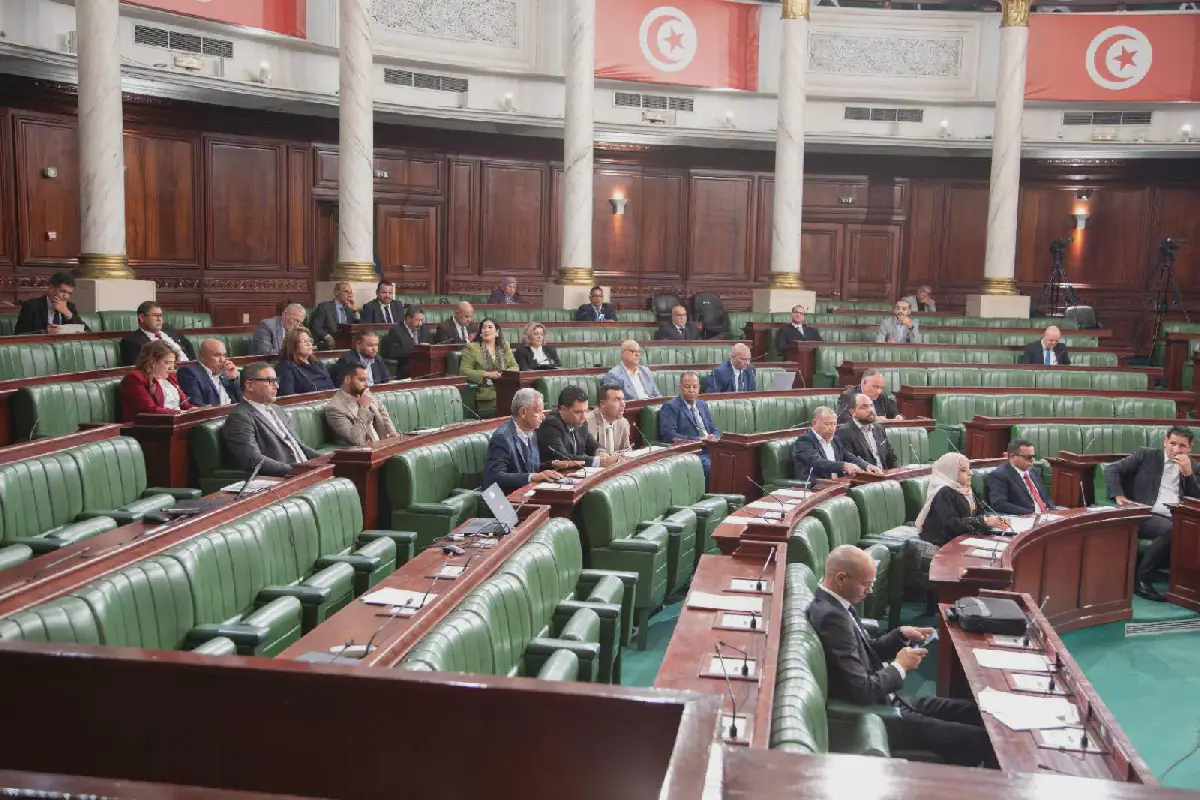
Members of Tunisia's National Council of Regions and Districts have called for a review of the country's economic and tax options to support small and medium-sized enterprises, farmers, and improve the investment climate. During a joint plenary session, council members emphasized the need to redirect public borrowing towards productive investments and job creation. They also stressed the importance of controlling the budget deficit, reducing debt, and preserving the state's social role.
Council members highlighted the need to restructure the state's tax resources, which currently rely heavily on tax revenues, accounting for around 92% of the state's resources. They argued that the tax burden has become too heavy for citizens and businesses, and called for a review of tax legislation to avoid retroactive application of new taxes. The discussion also touched on the situation of the manufacturing sector, particularly the marble and granite industries.
The council members proposed reestructuring the bank that finances small and medium-sized enterprises, increasing its capital, and providing sustainable financing lines and simplifying loan procedures. They also suggested strengthening the bank's presence in various regions to support project owners and stimulate investment, production, and employment. The council members considered supporting these enterprises as a vital investment in the national economy.
In the area of public investment, council members focused on accelerating stalled projects, improving coordination between ministries and departments, and simplifying public procurement procedures while ensuring transparency and oversight. They also called for clear deadlines for project implementation and monitoring. The discussion highlighted the problem of scattered files between government structures and the exchange of responsibility, leading to delays in project completion.
The council members also addressed the agricultural sector, calling for the development of rural roads before the rainy season, restructuring irrigated areas and water associations, and supporting small farmers, particularly olive and grain producers, and livestock breeders. They also raised issues related to land management, water and electricity supply in some agricultural areas, and the need to address these challenges to ensure continued activity and production.
In the industrial sector, council members recommended promoting investment in industrial zones, improving infrastructure, and addressing real estate and administrative issues that hinder the exploitation of some plots and projects. They also highlighted the need to resolve issues related to water and electricity connections, which affect the exploitation of available production capacities and the attraction of new industrial enterprises.
The council members also discussed the tourism sector, highlighting the environmental degradation in a valley in Sousse governorate, which threatens the Qanattir tourist area, a key component of the tourism sector and a source of foreign currency. They called for coordination between the ministries of equipment, tourism, agriculture, and relevant structures to address this situation and its environmental and economic implications.
Key points
- The council members emphasized the need for a review of tax pressure and support for investment and production to stimulate economic growth and job creation.
- They also called for the acceleration of stalled development projects and improvement of the business climate to attract investments and promote economic development.
- The council members highlighted the importance of regional equity in the distribution of investments and public services, ensuring that development is not concentrated in major cities but also reaches rural and disadvantaged areas.
Reporting sources
- Radio Tataouine · Radio Tataouine