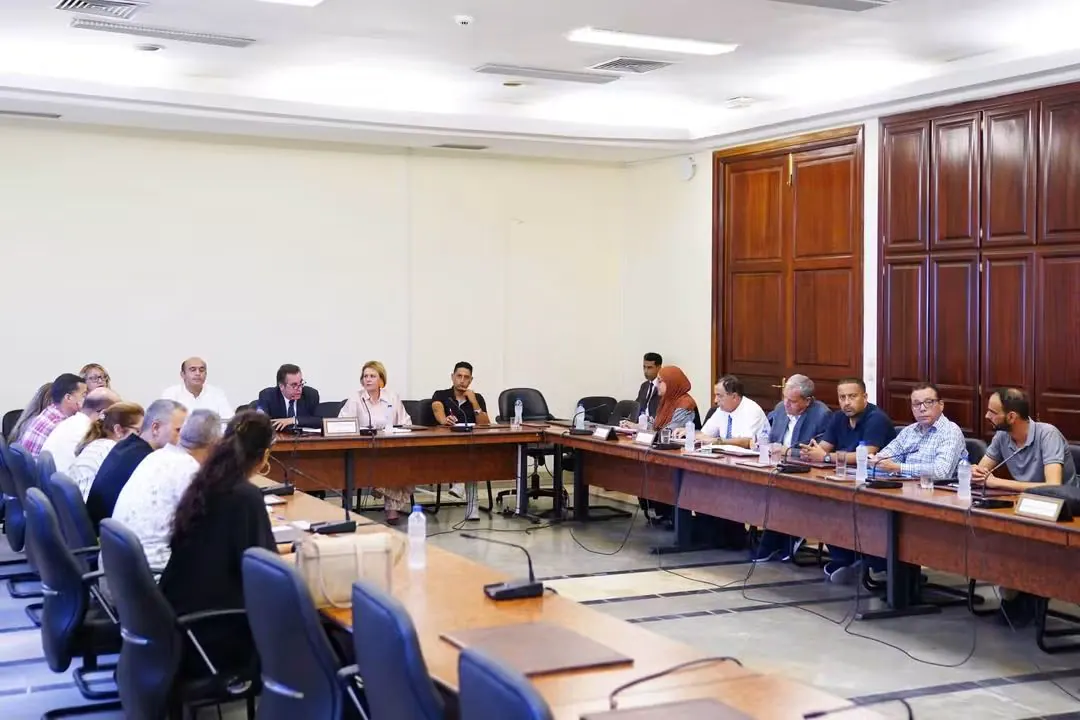
The Assembly of People's Representatives (ARP) in Tunisia held a meeting on September 21, 2026, to discuss the delayed submission of the 2027 budget project and data on the state's budget execution for the first half of 2026. The meeting was prompted by concerns over the lack of transparency and the impact on the ARP's ability to exercise its legislative and oversight powers. According to the ARP, the minister was expected to provide explanations for the delays.
The Organic Budget Law requires the government to present budget assumptions and orientations to the ARP by the end of July. However, this deadline was missed, causing concerns among lawmakers. The ARP members emphasized that the delays hinder their ability to have a clear understanding of public finances and limit their capacity to carry out their legislative and oversight responsibilities. They also raised concerns about the delayed promulgation of certain application texts for the 2026 finance law.
The ARP members also questioned the non-transmission of the Central Bank of Tunisia's (BCT) report to the commission. They stressed the importance of accessing data on monetary policy, inflation, exchange rates, foreign exchange reserves, and other indicators related to monetary and financial balances. Furthermore, they sought clarification on the nature, volume, and impact of facilities granted to the state by the BCT.
The meeting also touched on the impact of rising oil prices on the country's general equilibrium. The ARP members discussed the possibility of a supplementary finance bill to address the issue. They also decided to invite the CEOs of the Tunisian Electricity and Gas Company (STEG) and the Tunisian National Water and Sanitation Company (SONEDE) to discuss the electricity and water outages and the energy and water situation in the country.
The ARP's Finance and Budget Committee ultimately decided unanimously to hold a hearing with the Minister of Finance. The committee aims to obtain clear explanations for the delays and to ensure that the government provides the necessary information to enable the ARP to carry out its duties effectively.
The delays in presenting the budget and financial data have raised concerns about the government's commitment to transparency and accountability. The ARP's actions demonstrate its determination to hold the government accountable and to ensure that the country's finances are managed in a responsible and transparent manner.
The hearing with the Minister of Finance is expected to shed more light on the reasons behind the delays and the government's plans to address the issues. The ARP's Finance and Budget Committee will also continue to monitor the situation and ensure that the government provides the necessary information to enable the committee to carry out its oversight responsibilities.
Key points
- The Tunisian Minister of Finance, Khaldi, was summoned by the ARP to explain delays in presenting the 2027 budget and 2026 budget execution data.
- The delays have raised concerns about the government's commitment to transparency and accountability.
- The ARP's Finance and Budget Committee decided to hold a hearing with the Minister of Finance to obtain clear explanations for the delays.