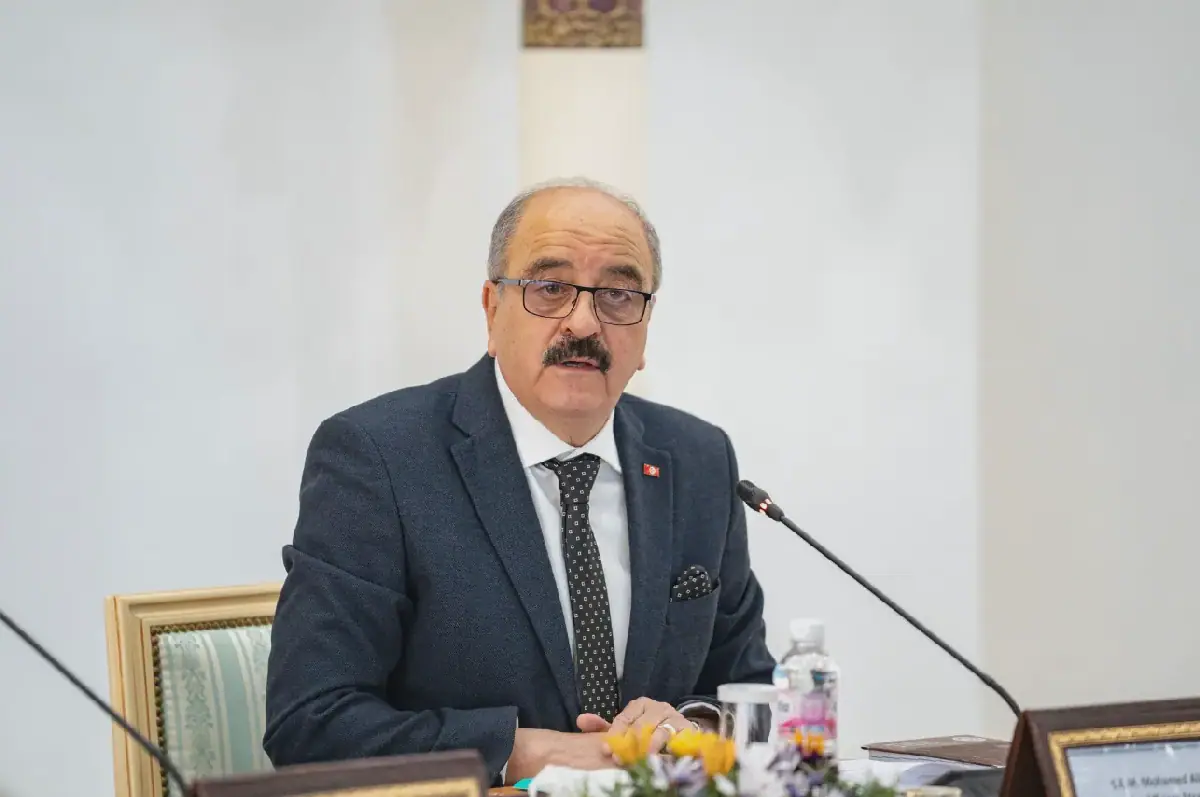
Tunisian Foreign Minister Mohamed Ali Nafti has underscored the significance of economic diplomacy in supporting the country's development efforts. He highlighted the ministry's role in defending national interests and promoting development choices despite limited budget allocations for economic diplomacy. Nafti outlined key outcomes of these efforts during a parliamentary session discussing the 2027 state budget.
The ministry is working closely with various government departments to leverage Tunisia's international relationships and partnerships to mobilize resources and financing for priority development projects. This includes attracting investments and opening new markets for Tunisian businesses. Nafti mentioned ongoing consultations with the European Commission regarding financial programming for 2025-2027.
Tunisia is seeking to increase its financial allocations from the European Union as part of its efforts to review the existing partnership agreement. The minister emphasized Tunisia's sovereign right to determine its economic and financial choices in line with national priorities. He also noted the signing of technical agreements and financing annexes with several European countries.
The minister highlighted cooperation with Arab and Asian countries, including Kuwait, the United Arab Emirates, Japan, and China. He mentioned the implementation of the "ESCWA initiative to exchange debt for climate measures to achieve sustainable development goals." Tunisia has proposed a package of projects in coordination with relevant ministries.
The ministry is coordinating the preparation of a strategic cooperation framework with the United Nations for the next five years. This framework aims to align with Tunisia's national priorities and development plan, focusing on social justice and human capital investment. The UN and donor countries have pledged $661 million for cooperation programs with Tunisia during the previous five-year period.
Nafti's efforts extend beyond mobilizing financing to ensuring that commitments are translated into actual projects on the ground. He cited cooperation with China on major projects, including the reconstruction of the Olympic Stadium in Tunis and a cancer treatment center in Gabès. The ministry is also monitoring the implementation of a development cooperation program with Italy worth €400 million.
The minister discussed ongoing projects in energy, including the electrical interconnection between Tunisia and Italy, and a tripartite electrical interconnection project with Algeria and Libya. He also touched on trade diplomacy efforts to improve market access for Tunisian products, particularly olive oil, and negotiations with China to exempt African products from customs tariffs.
Key points
- Economic diplomacy plays a crucial role in Tunisia's development efforts
- Tunisia seeks increased EU funding for development projects
- The country is strengthening cooperation with Arab and Asian countries