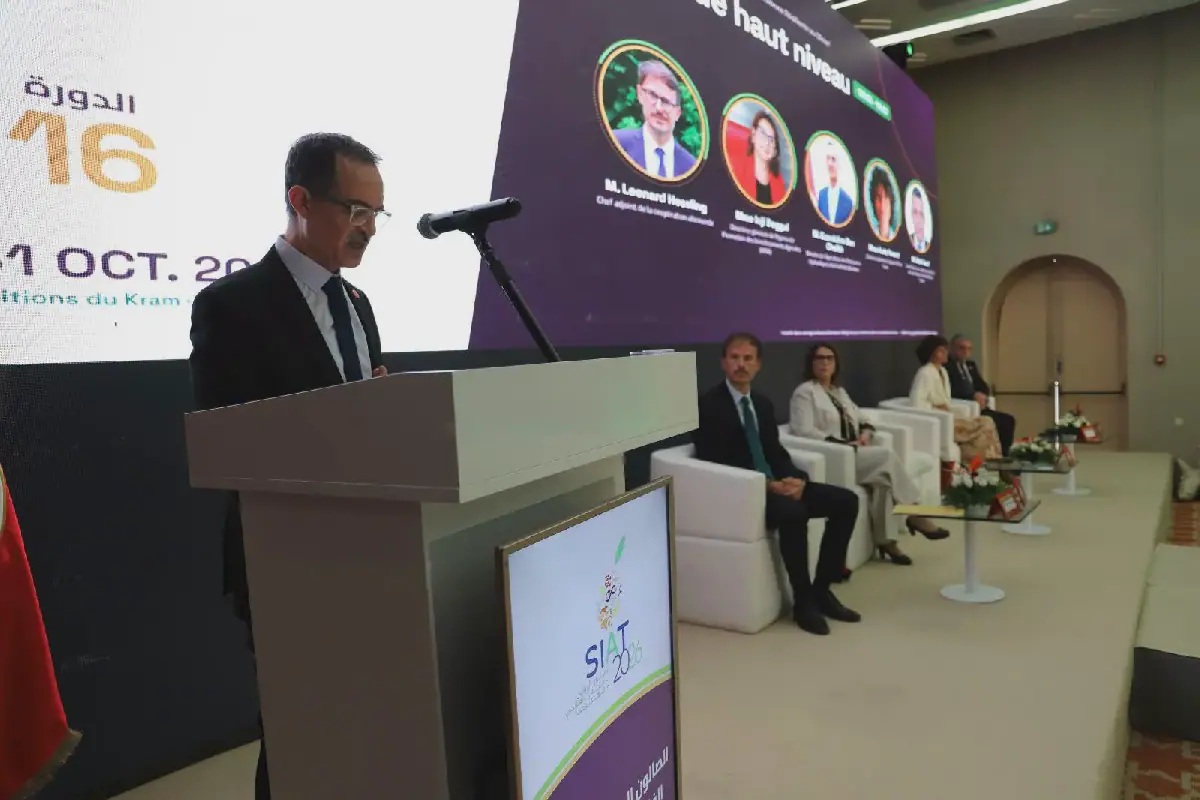
On October 29, 2026, Tunisian Agriculture Minister Azzedine Ben Cheikh attended the 16th International Salon for Agricultural Investment and Technology (SIAT 2026) in Tunis. He inaugurated a forum on climate finance for a resilient Tunisian agriculture, emphasizing the need for a new investment approach that focuses on climate adaptation, efficient use of natural resources, and technological innovation. The minister stressed that climate change poses significant challenges to Tunisia's agricultural sector, including recurrent droughts, water scarcity, and rising temperatures.
Minister Ben Cheikh noted that these challenges affect agricultural productivity, farmers' incomes, and investment returns, making climate change a major economic and development challenge. He highlighted the importance of investing in water-saving technologies, modern and smart farming techniques, and renewable energy. The minister also emphasized the need to improve soil fertility, adopt climate-resilient crops, and enhance digitalization and value chain performance in the agricultural sector.
The minister discussed the significance of climate finance in supporting Tunisia's transition to a more resilient agricultural sector. He stated that the country requires approximately $55 billion in climate finance from 2026 to 2036, with around $29 billion allocated for adaptation efforts, including $8 billion for agriculture and food systems. Minister Ben Cheikh emphasized the need for international cooperation, private sector engagement, and national financing mechanisms to mobilize these resources.
The Agricultural Investment Promotion Agency plays a crucial role in promoting sustainable investment and supporting investors, according to Minister Ben Cheikh. He noted that the agency's accreditation by the Green Climate Fund as a national entity for direct access represents a strategic advantage. This accreditation enables the agency to mobilize climate finance and channel it towards priority agricultural projects.
Minister Ben Cheikh called for the development of projects that improve water efficiency, promote natural resource conservation, and support renewable energy. He also emphasized the need to enhance innovation in agricultural value chains and expand climate finance access to small-scale investors, farmers, women, and youth in rural areas. This approach aims to ensure a comprehensive and equitable transition to a climate-resilient agricultural sector.
The minister stressed the importance of coordination among national stakeholders, development of priority projects, and improved information sharing. He encouraged partnerships between public institutions, the private sector, banks, and development partners to enhance access to climate finance and ensure its effective utilization. Minister Ben Cheikh concluded that investing in climate-resilient agriculture is essential for Tunisia's food security, natural resource conservation, and national economy.
The forum aims to generate practical recommendations and partnerships that can help transform climate challenges into opportunities for investment and innovation. Minister Ben Cheikh expressed his hope that the discussions will contribute to enhancing the resilience of Tunisia's agricultural sector and promoting national food sovereignty.
Key points
- The Tunisian government requires approximately $55 billion in climate finance from 2026 to 2036 to support its climate commitments.