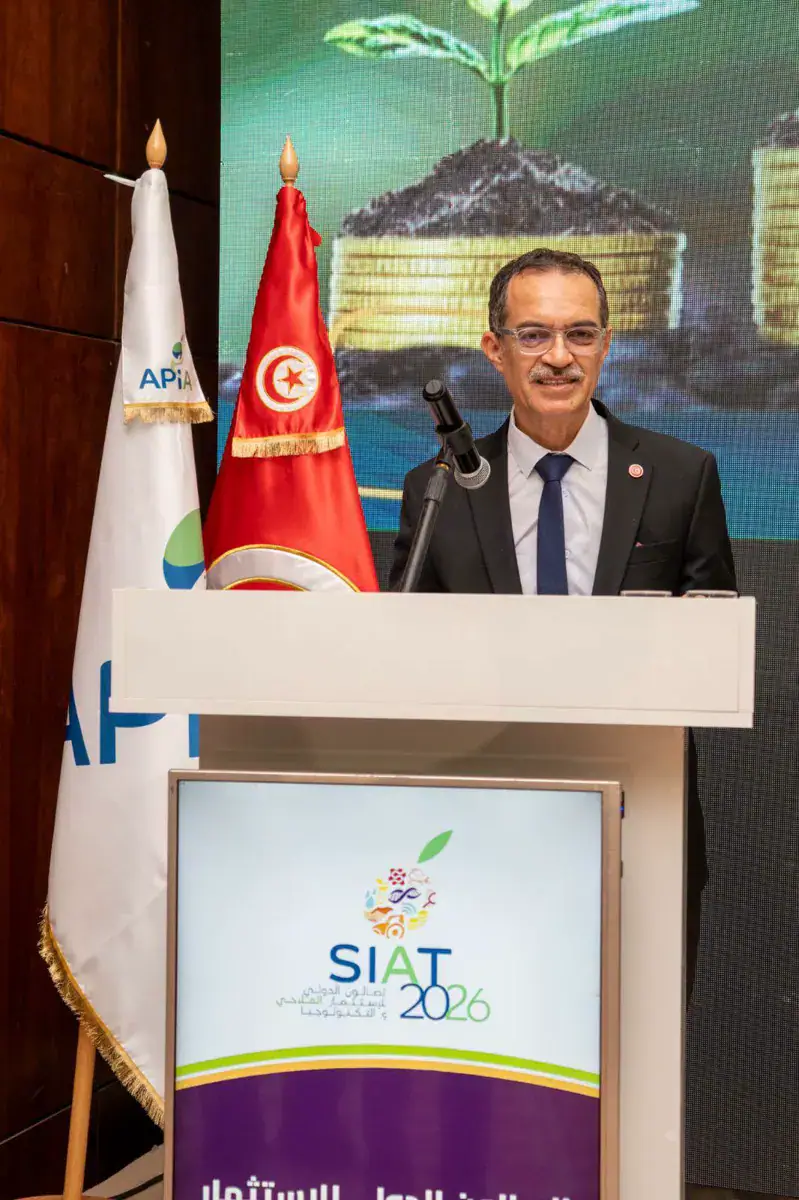
On October 29, 2026, Tunisian Agriculture Minister Azzedine Ben Cheikh inaugurated the "Climate Finance for a Resilient Tunisian Agriculture" forum, held as part of the 16th International Salon for Agricultural Investment and Technology (SIAT 2026) in Tunis. The event brought together representatives from national and international institutions, experts, and specialists in climate finance and agricultural investment. Minister Ben Cheikh emphasized that climate change poses significant challenges to Tunisia's agricultural sector, including recurrent droughts, declining water resources, and rising temperatures.
The minister noted that these challenges necessitate a new investment approach focusing on climate adaptation, efficient use of natural resources, technological innovation, and economic sustainability. He stressed that Tunisia faces growing challenges, including frequent droughts, water scarcity, and soil degradation, which directly impact agricultural productivity, farmer incomes, and investment returns. These factors make climate change a significant economic and developmental challenge that extends beyond environmental concerns to affect food security and agricultural system stability.
Minister Ben Cheikh highlighted the importance of directing investments toward water conservation, adopting modern and smart technologies, and valorizing non-conventional water resources. He also emphasized the need to develop renewable energies, improve soil fertility, and promote climate-resilient crops and varieties. Furthermore, he underscored the importance of enhancing digitalization and improving the performance of agricultural and food value chains. These investments, he noted, can enhance the competitiveness of Tunisian agricultural products, create jobs, and drive sustainable development across the country.
Regarding climate finance, Minister Ben Cheikh noted that it is a crucial lever for mobilizing resources necessary for transitioning to a more resilient and adaptable agriculture sector. He estimated that Tunisia's climate finance needs, as per its nationally determined contribution, amount to approximately $55 billion between 2026 and 2036. Of this, around $29 billion is allocated for adaptation, including $8 billion for agriculture and food systems and $10.7 billion for the water sector. The minister emphasized the importance of securing around 74% of these funds from international sources.
Minister Ben Cheikh also highlighted the role of the Tunisian Agency for the Promotion of Agricultural Investments (APIA) in encouraging sustainable investment and supporting investors. He noted that APIA's accreditation by the Green Climate Fund as a national entity for direct access represents a strategic advantage. This accreditation enables the mobilization of climate finance and its allocation to priority agricultural projects. The minister called for developing projects that improve water efficiency, valorize natural resources, and support innovation in agricultural and food value chains.
The minister emphasized the need for enhanced coordination among national stakeholders, the development of a project pipeline, and improved information exchange. He also stressed the importance of establishing effective partnerships between public institutions, the private sector, banks, and development partners. These efforts, he noted, can improve access to climate finance and ensure its effective utilization. Minister Ben Cheikh concluded by emphasizing that investing in a climate-resilient Tunisian agriculture sector is essential for food security, natural resource conservation, and national economic development.
The forum aims to foster dialogue and partnerships that can help address the challenges posed by climate change to Tunisia's agricultural sector. By highlighting the importance of climate finance and sustainable investment, the event seeks to support the development of a more resilient and productive agricultural sector. This, in turn, can contribute to achieving food sovereignty and promoting sustainable development in Tunisia.
Key points
- The Tunisian government aims to mobilize $55 billion in climate finance by 2036 to support the country's transition to a more resilient and adaptable agriculture sector.
- The agriculture sector is a significant priority area for climate finance, with $8 billion allocated for agriculture and food systems and $10.7 billion for the water sector.
- The Tunisian Agency for the Promotion of Agricultural Investments plays a crucial role in promoting sustainable investment and supporting investors in the agricultural sector.