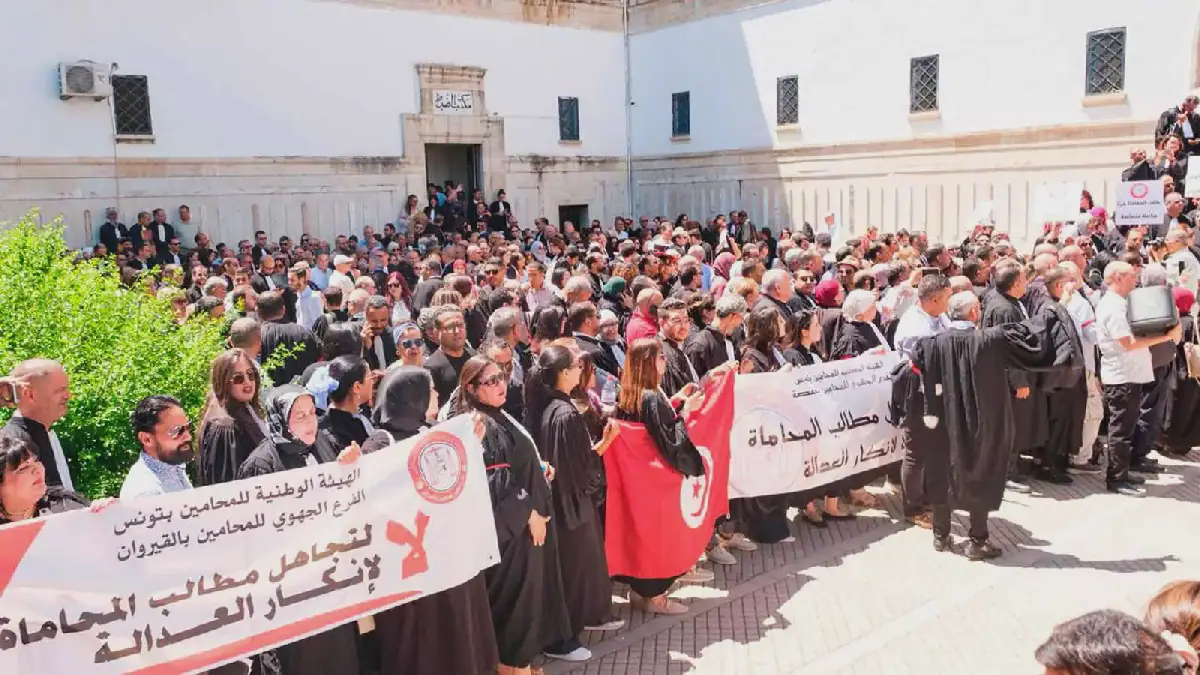
The National Association of Tunisian Lawyers has announced plans to organize protests across various regions in Tunisia on Friday, November 20. The decision was made during a meeting of the association's council, chaired by President Bubaakr Belthabet. The protests aim to express the lawyers' frustration with what they describe as the authorities' disregard for their concerns and the worsening difficulties they face in the courts.
The lawyers' association has cited a lack of response from concerned parties, particularly the Ministry of Justice, to their demands for reforms and improvements in the profession. They also highlight issues affecting working conditions and the administration of justice in the courts. The association has set a date for the protests and plans to send letters to the Presidency, Government, and Parliament to present their demands and push for institutional discussions on the reforms needed.
The protests are part of a broader movement by professional and union organizations in Tunisia. The National Coordination Framework, which includes nine Tunisian organizations such as the Lawyers' Association and the Tunisian General Labor Union, has called for a protest march on December 17. The lawyers' association has decided to join this march and is urging its regional branches to participate and ensure a strong turnout.
The escalation of protests by the lawyers' association reflects growing tensions between the legal profession and the authorities in Tunisia. The association's demands go beyond organizational aspects of the profession, encompassing working conditions in the courts, social protection for lawyers, and ensuring the sustainability of the retirement system. These issues have become central to the relationship between official institutions and professional structures.
In addition to the protests, the lawyers' association plans to hold an extraordinary general meeting to discuss and defend professional demands. The meeting will also focus on revising the internal regulations and discussing decisions aimed at reforming the Protection and Retirement Fund and improving its management mechanisms. These steps are placing pressure on the executive and legislative authorities in Tunisia to address the lawyers' concerns.
The National Association of Tunisian Lawyers is combining street protests with institutional pressure, pending the outcome of letters sent to the three presidencies and the authorities' willingness to engage with the demands and open a path to resolving outstanding issues in the sector. The protests and discussions are critical in determining the future of the legal profession in Tunisia and the government's response to the lawyers' concerns.
As the protests approach, the situation remains tense between the lawyers' association and the authorities. The lawyers are seeking meaningful engagement and concrete solutions to their demands. The government's response will likely have significant implications for the relationship between the state and the legal profession in Tunisia.
Key points
- The protests are driven by demands for reforms, improved working conditions, and enhanced social protection for lawyers.