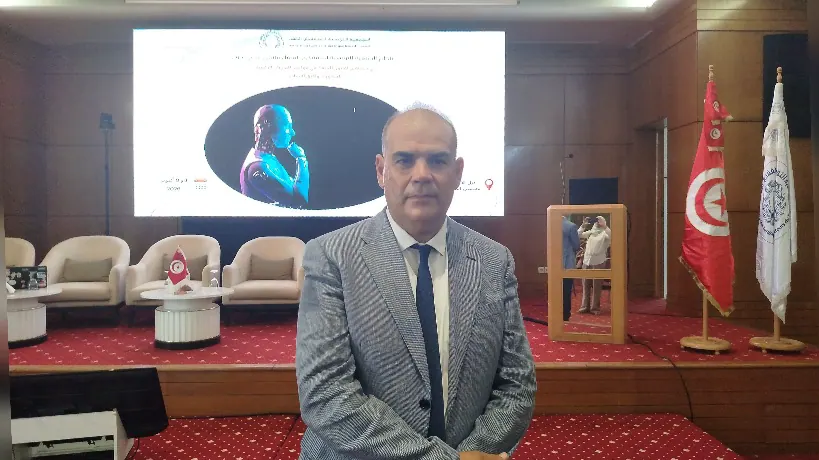
The Tunisian Association of Labor Inspectors recently organized a two-day scientific conference in Yasmine Hammamet, titled "What Future for Labor Law in the Face of Digital Challenges: Difficulties and Prospects for Reform." The conference brought together labor inspectors, representatives from institutions and the private sector, judges, lawyers, university professors, and representatives from professional organizations and social funds. The event aimed to discuss the implications of technological advancements, globalization, and artificial intelligence on labor relations and the Tunisian Labor Code.
The conference focused on the rapidly changing world of work and the emergence of new forms of employment, such as remote work and platform-based work. According to Hatem Hilal, President of the Tunisian Association of Labor Inspectors, the conference was organized to address the need for labor laws to keep pace with digital transformations and the rapid spread of artificial intelligence applications. Hilal emphasized that the appearance of new forms of work and the adoption of AI technologies in human resource management require a review and revision of certain provisions of the Labor Code.
The conference program included a series of scientific interventions by university professors, experts, and specialists in social law and labor relations. One of the key topics discussed was the impact of AI and modern technology on new forms of work, presented by university professor and social law expert Hafez Omouri. Another session focused on the management of human resources, with a presentation by Professor Samir Hamdi on the impact of technology and AI on leading and managing human resources within institutions.
The conference also explored the role of digitalization in developing the skills of human resources managers, as well as the role of digitalization in organizing and managing advisory committees within institutions. On the second day, the discussions focused on legal issues related to technological development, including the legal implications of monitoring workers and the organizational and regulatory aspects of monitoring employees using modern technological devices and techniques.
The conference also addressed the issue of remote work in Tunisia, with a presentation by Hatem Hilal on the reality of this form of work and the prospects for reforming the regulatory framework. Hilal stressed that one of the primary tasks of labor inspectors is to identify legislative gaps and shortcomings and to communicate them to the supervisory authorities. He emphasized that the rapid developments in the world of work require continuous review of the legal system.
According to Hilal, Tunisian legislation has undergone several reforms in recent years, including a review of the rules related to subcontracting and the organization of employment contracts. However, he believes that there is still a need for further regulation of remote work and the establishment of clear legal frameworks for various modern forms of work. The conference is expected to conclude with a set of recommendations and practical proposals that will be submitted to the supervisory authorities.
The Tunisian government is currently preparing a draft for the revision of the Labor Code to respond to the requirements of digital transformation and the evolution of work patterns. The conference's recommendations and proposals are expected to inform this process. Key stakeholders, including labor inspectors, representatives from institutions and the private sector, and experts in social law and labor relations, will play a crucial role in shaping the future of labor laws in Tunisia.
Key points
- The Tunisian Association of Labor Inspectors has called for a revision of labor laws to address the impact of artificial intelligence and digital transformation on the workforce.
- The conference aimed to discuss the implications of technological advancements, globalization, and artificial intelligence on labor relations and the Tunisian Labor Code.
- The Tunisian government is currently preparing a draft for the revision of the Labor Code to respond to the requirements of digital transformation and the evolution of work patterns.