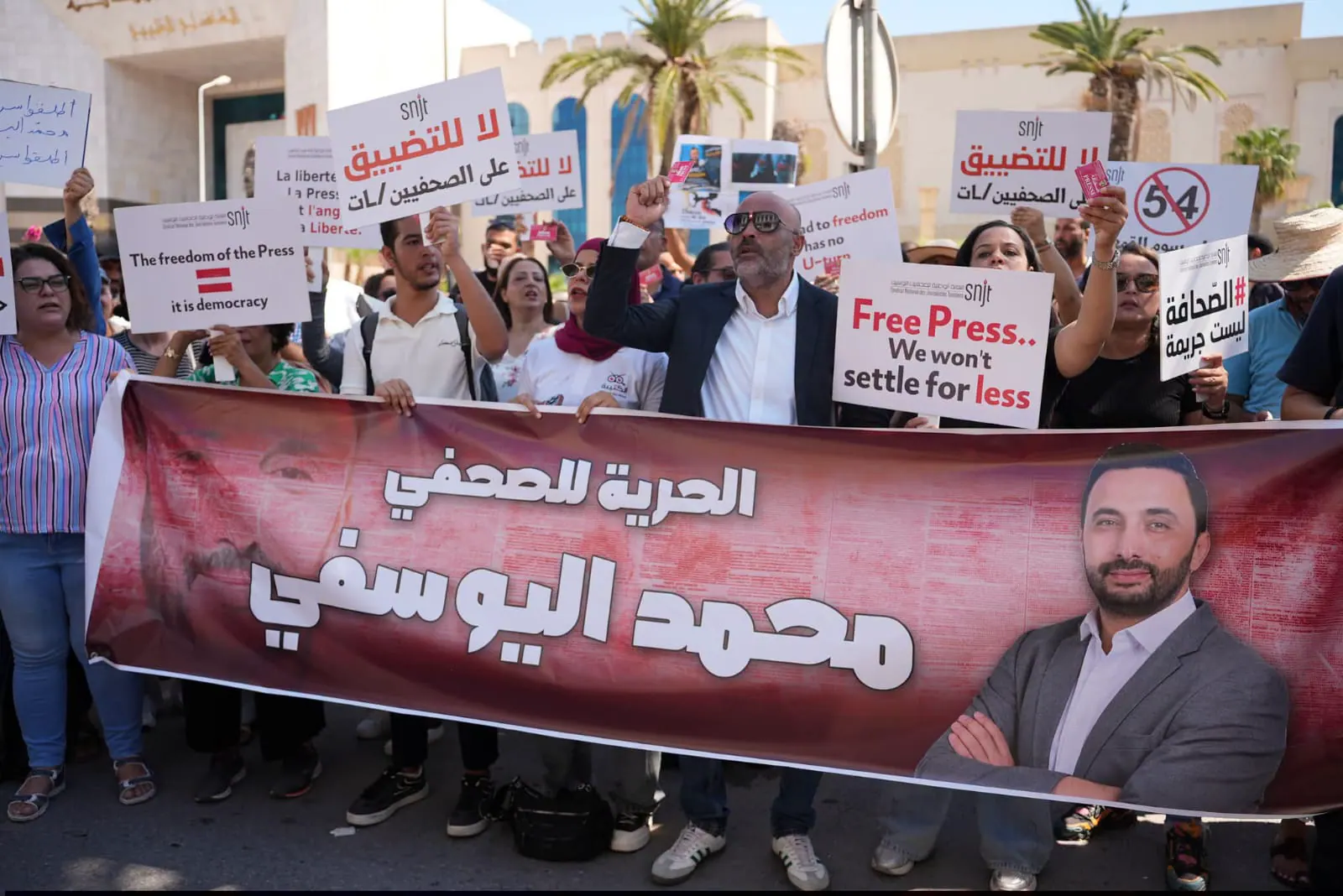
Tunisian journalist Mohamed Yousfi has been issued a detention warrant on charges of money laundering, according to a report by Legal Agenda. The development has raised concerns about the state of press freedom in Tunisia. Yousfi's case has not been extensively detailed publicly, but it has garnered significant attention from human rights groups and advocates for press freedom. The charges against him are part of a broader trend of judicial actions against journalists and media professionals in Tunisia.
The Tunisian judiciary has been criticized for its handling of cases involving journalists and media professionals. Many have accused the judiciary of using legal proceedings to silence critical voices and restrict press freedom. In recent years, Tunisia has seen a decline in press freedom, with several journalists facing prosecution and imprisonment on charges ranging from defamation to terrorism-related offenses. The country's media landscape has become increasingly polarized, with many outlets facing financial and legal pressures.
The case against Yousfi has sparked widespread concern among human rights groups and advocates for press freedom. Many have called for the charges against him to be dropped, citing the need to protect press freedom and allow journalists to carry out their work without fear of reprisal. The Tunisian government has faced criticism for its handling of press freedom, with many accusing it of using legal proceedings to silence critical voices.
The detention warrant against Yousfi is part of a broader crackdown on dissent in Tunisia. In recent years, the country has seen a significant increase in judicial actions against journalists, activists, and opposition figures. Many have accused the government of using the judiciary to suppress dissent and restrict civil liberties. The case against Yousfi has raised concerns about the erosion of press freedom and the rule of law in Tunisia.
The Tunisian government has defended its actions, citing the need to combat terrorism and maintain public order. However, many have accused the government of using these justifications to restrict civil liberties and silence critical voices. The case against Yousfi has highlighted the need for greater transparency and accountability in the Tunisian judiciary.
The international community has expressed concern about the case against Yousfi. The United Nations and other international organizations have called for the charges against him to be dropped, citing the need to protect press freedom and allow journalists to carry out their work without fear of reprisal. The case against Yousfi has raised concerns about the state of press freedom in Tunisia and the need for greater protections for journalists.
The case against Yousfi is ongoing, with many watching closely to see how it will unfold. The outcome of the case is likely to have significant implications for press freedom in Tunisia and the broader region. As the case continues, many are calling for greater transparency and accountability in the Tunisian judiciary and for the protection of press freedom.
Key points
- The detention warrant against Yousfi has raised concerns about the erosion of press freedom in Tunisia.
- The case against Yousfi is part of a broader crackdown on dissent in Tunisia.
- The international community has expressed concern about the case against Yousfi, calling for the charges against him to be dropped.