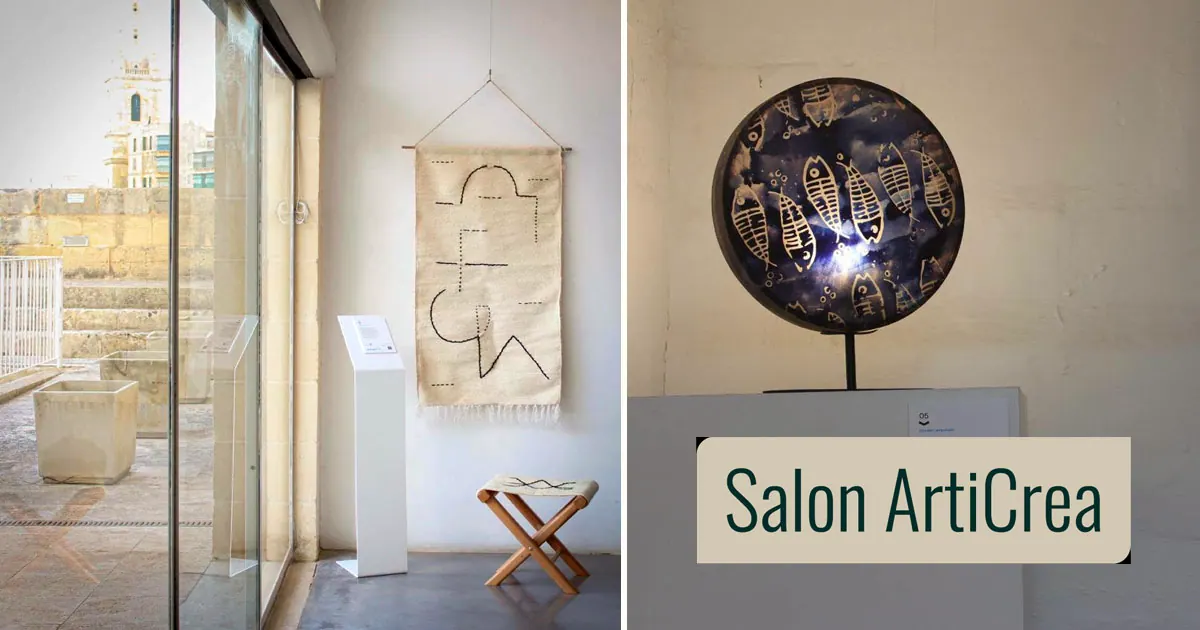
The Tunisian handicraft sector is set to take center stage at ArtiCrea, a professional fair dedicated to Tunisian art and design, which runs from October 5 to 11, 2026, at the Kram Exhibition Center in Tunis. Over 150 craft enterprises will participate in the event, which features professional meetings and workshops on trends, access to foreign markets, e-commerce, and creation protection. The fair is organized by the Tunisian National Office of Handicrafts (Onat), in collaboration with the Tunis International Fair Society and the National Handicraft Federation.
The handicraft sector in Tunisia contributes around 4-5% to the country's gross domestic product and generates thousands of jobs annually. In 2025, handicraft exports reached approximately 160 million dinars, accounting for about 2% of Tunisia's total exports. The sector comprises around 2,500 enterprises, including 650 exporters, and directly employs hundreds of thousands of artisans. The majority of Tunisian handicraft exports are destined for Europe, with the United States being one of the main markets.
To boost exports, the Tunisian government has set an ambitious target of 500 million dinars in handicraft export revenues for 2026, more than triple the 2025 figure. The authorities have introduced measures to support the sector, including the "Easy Export" program, which enables artisans and small and medium-sized enterprises to use the postal network for international shipments. The program has already led to the adhesion of 71 enterprises and the dispatch of over 6,000 parcels.
According to Leila Msellati, director-general of Onat, the official export value does not fully reflect the sector's commercial capacity, as some products reach foreign markets through channels not fully accounted for in statistics. She emphasized that enhancing export incentives and support can have a significant multiplier effect. The "Creative Tunisia" project, funded by the European Union and the Italian Agency for Development Cooperation, has supported 17 economic groups, accompanied over 2,000 artisans, and helped 200 craft enterprises access international markets.
The handicraft sector in Tunisia is considered a vital component of the country's cultural and tourist offerings, as well as a driver of regional development and economic inclusion. To achieve its export targets, the sector must overcome challenges related to accessing foreign markets and enhancing its competitiveness. The participation of foreign buyers and importers, as well as the integration of design and digital technologies, are seen as crucial to the sector's growth.
Onat is strengthening the presence of Tunisian products in international fairs, having recently participated in the Marseille Fair and announcing upcoming participation in Artigiano in Fiera in Milan and the Ambiente fair in Germany. The sector's growth is contingent upon its ability to transform its cultural heritage into economic value and become more competitive in international markets.
The handicraft sector in Tunisia is poised for growth, driven by a focus on design, innovation, and access to foreign markets. With the right support and incentives, the sector could become a significant contributor to Tunisia's economy, providing employment opportunities and promoting cultural exchange.
Key points
- The Tunisian handicraft sector aims to increase exports to 500 million dinars by 2026.
- The sector contributes around 4-5% to Tunisia's gross domestic product.
- Over 150 craft enterprises will participate in ArtiCrea, a professional fair dedicated to Tunisian art and design.