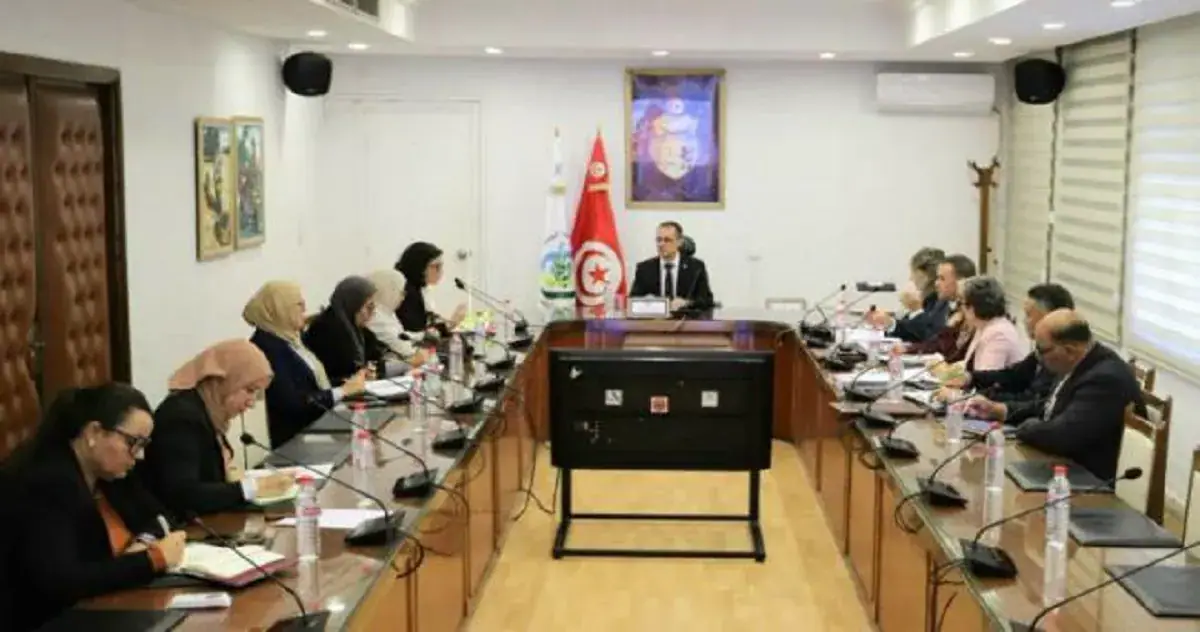
The Tunisian Ministry of Agriculture, Resources and Fisheries recently held a working session to discuss ways to improve the management of seed and fertilizer distribution. The meeting focused on expanding irrigated areas, adopting a bioclimatic map for quality seed distribution, and strengthening the agricultural input management system. Representatives from relevant structures participated in the discussion. They examined the efficiency of the supply system and explored mechanisms to enhance agricultural input management.
Minister of Agriculture, Resources and Fisheries Ezzeddine Ben Cheikh emphasized the importance of prioritizing the expansion of irrigated areas and optimizing water resource utilization to support agricultural production. He highlighted the need to ensure good water resource management and sustainability. The minister also stressed the importance of adopting Tunisia's bioclimatic map as a reference for defining seed distribution strategies and selecting suitable varieties.
The bioclimatic map will help identify the most suitable crop varieties for different regions, taking into account local climate and environmental conditions. This approach aims to improve crop yields and adaptability to climate conditions. By adopting this map, the government hopes to enhance agricultural productivity and resilience.
The working session also addressed the need for prior planning and development of supply mechanisms for seeds and fertilizers. Participants emphasized the importance of strengthening coordination among different structures to ensure timely and sufficient delivery of agricultural inputs. This will help maintain a smooth agricultural season and support farmers in their activities.
The Tunisian government is committed to improving agricultural productivity and supporting the sector's development. The ministry's efforts focus on enhancing the management of agricultural inputs, expanding irrigated areas, and promoting sustainable agricultural practices. These initiatives aim to increase crop yields, improve food security, and contribute to the country's economic growth.
The distribution of seeds and fertilizers is a critical aspect of agricultural production in Tunisia. The government's review of distribution mechanisms aims to address potential challenges and improve the efficiency of the supply chain. By streamlining the distribution process, the government hopes to reduce costs, minimize waste, and ensure that farmers have access to the necessary inputs.
The Tunisian agriculture ministry's efforts to improve seed and fertilizer distribution mechanisms reflect the government's commitment to supporting the agricultural sector. The initiatives discussed during the working session will contribute to enhancing agricultural productivity, promoting sustainable practices, and supporting the country's economic development. The government will continue to work with relevant stakeholders to implement these initiatives and achieve the desired outcomes.
Key points
- The Tunisian government is working to improve the management of seed and fertilizer distribution to support agricultural production and sustainability.
Reporting sources
- La distribution des semences et engrais sous la loupe · African Manager