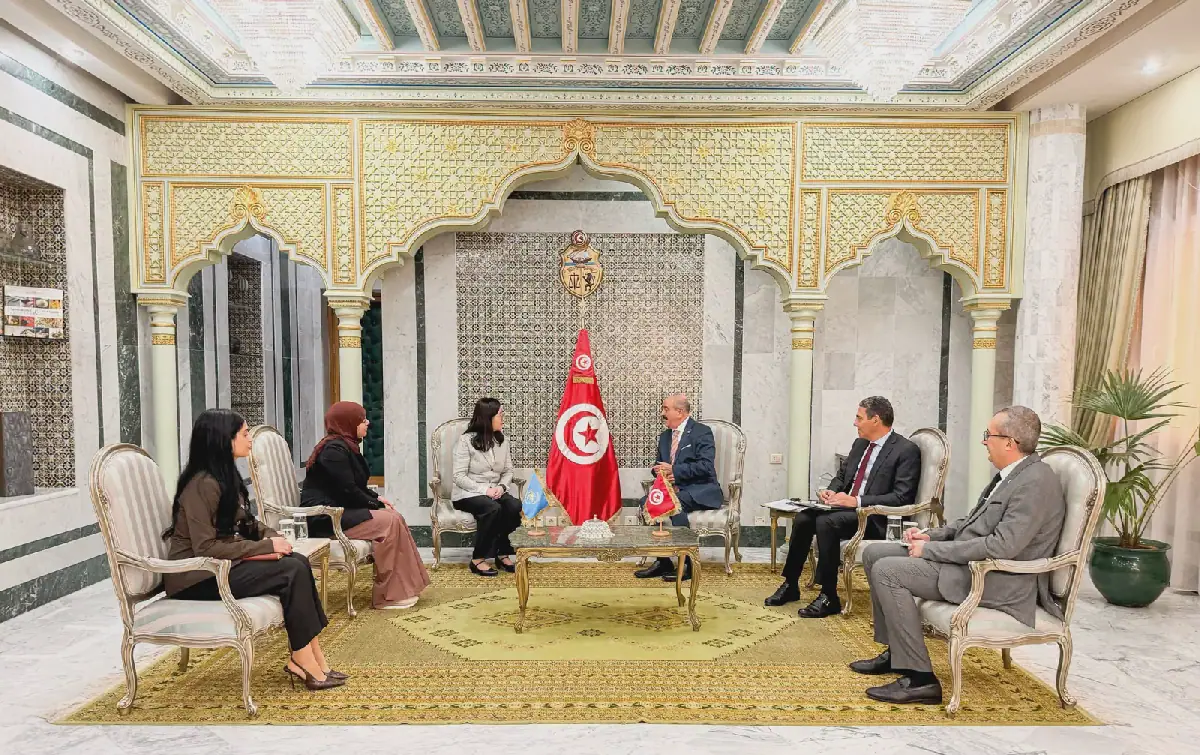
Tunisian Foreign Minister Mohamed Ali Nafti received Hyo-Jeong Kim, the newly appointed head of the World Health Organization's (WHO) mission in Tunisia, on Wednesday. The meeting took place at the Ministry of Foreign Affairs, where Nafti expressed his satisfaction with the development of cooperation and partnership between Tunisia and the WHO. He highlighted Tunisia's commitment to strengthening and diversifying this cooperation since its accession to the organization in 1957.
During the meeting, Nafti emphasized Tunisia's stance on adopting a solidarity-based and equitable approach to address global health challenges. He recalled Tunisia's call during the 79th World Health Assembly to restore the WHO's technical and scientific role. The goal is to concentrate efforts and resources on achieving sustainable health and an integrated global health system. This system should respond to global health challenges, ensure health for all, and learn from the COVID-19 crisis.
Hyo-Jeong Kim expressed her gratitude for Tunisia's positive role in negotiating the international agreement on pandemic prevention, preparedness, and response. The President of the Republic was among the first to call for the international community to adopt this agreement. The meeting reaffirmed the need to strengthen relations between Tunisia and the WHO, focusing on the "One Health" approach, digital health, and artificial intelligence in healthcare.
The two parties discussed supporting national efforts to enhance vaccine manufacturing capacities through technology transfer. Specifically, they considered transferring RNA messenger vaccine technology and developing health and medical diplomacy mechanisms. These efforts aim to improve Tunisia's capacity to respond to health crises and contribute to global health security.
The meeting between Nafti and Kim reflects the strong ties between Tunisia and the WHO. Tunisia has been a member of the organization since 1957 and has actively participated in its activities. The country is committed to cooperation and collaboration with the WHO to address global health challenges and promote sustainable health.
The WHO has a significant role in supporting countries to strengthen their health systems and respond to health crises. The organization's mission in Tunisia focuses on providing technical assistance and support to improve the country's health sector. The meeting between Nafti and Kim highlights the importance of this cooperation and the need to continue and enhance it.
The commemoration of the 70th anniversary of Tunisia's accession to the WHO is planned for next year. This event will provide an opportunity to reflect on the country's contributions to the organization and the progress made in the health sector. It will also serve as a platform to discuss future challenges and opportunities in the field of health.
Key points
- Tunisia and the WHO are strengthening their cooperation in areas such as the "One Health" approach, digital health, and vaccine manufacturing.