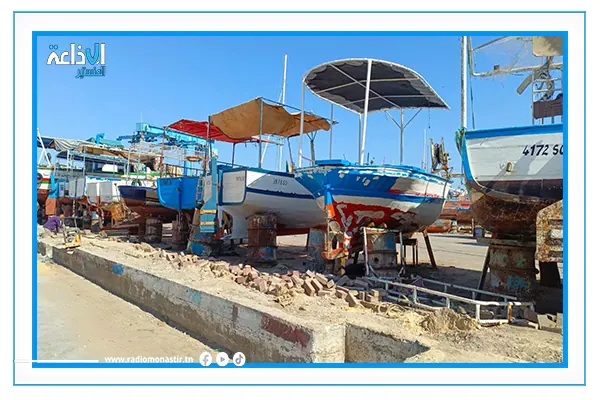
A group of fishermen from Tunisia's Sousse governorate staged a protest on October 7, 2026, in front of the regional office of the Ministry of Agriculture and Maritime Fishing. The demonstration was sparked by a joint monitoring campaign that targeted the removal of banned fishing nets. The fishermen were given a 48-hour ultimatum to regularize their equipment.
The fishermen's protest centered on the enforcement of a 30-millimeter mesh size for fishing nets, which they claim does not take into account their traditional fishing practices. According to Mehdi Qazah, a ship captain, the nets in question, valued between 4 and 5 million Tunisian dinars, have mesh sizes ranging from 24 to 26 millimeters and are used for catching "Megal" fish.
The monitoring campaign revealed that some fishing nets had mesh sizes as small as 18-20 millimeters, which is prohibited by law due to the harm it causes to the fish population. Amal Zarrouk, head of the Sousse marine fishing and aquaculture department, stated that the authorities had opted for a sensitization approach to encourage fishermen to replace their prohibited gear.
Zarrouk warned that if the fishermen do not comply, the authorities will proceed with the confiscation of the banned equipment. The fishermen's concerns were echoed by local reports, highlighting the challenges faced by the fishing community in the region. The protest underscores the need for a balanced approach to managing fishing practices and conserving marine resources.
The fishing industry is a significant sector in Tunisia's economy, providing livelihoods for thousands of people. However, overfishing and destructive fishing practices have threatened the sustainability of the country's marine resources. The authorities' efforts to regulate fishing practices aim to ensure the long-term conservation of Tunisia's fish stocks.
The protest in Sousse is not an isolated incident, as fishing communities across Tunisia face similar challenges. Recent reports have highlighted the need for sustainable fishing practices and effective management of marine resources. The government has emphasized its commitment to working with fishermen and other stakeholders to address these issues.
The situation in Sousse remains tense, with fishermen awaiting a resolution to their concerns. The authorities have reiterated their commitment to enforcing the regulations while taking into account the needs of the fishing community.
Key points
- Fishermen in Tunisia's Sousse governorate protest against a monitoring campaign aimed at removing banned fishing nets.
- The authorities have given fishermen 48 hours to regularize their equipment, warning of confiscation if they do not comply.
- The fishing industry is a significant sector in Tunisia's economy, but faces challenges related to overfishing and destructive practices.