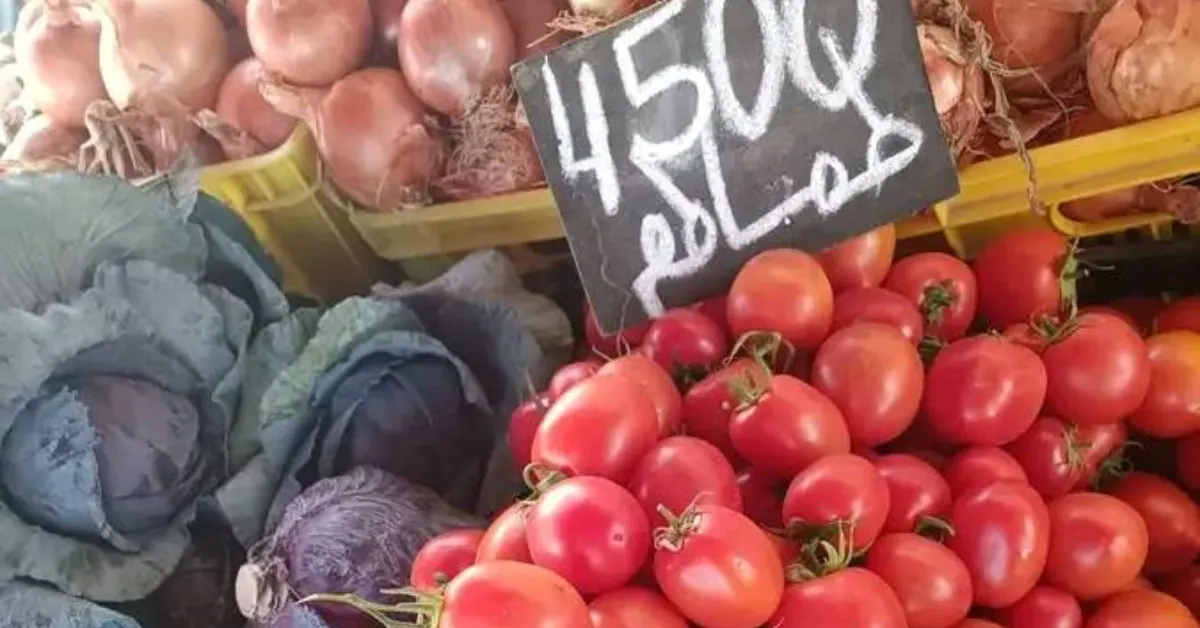
The Tunisian Farmers' Union has announced that it expects the current tomato crisis to ease within 15 to 20 days. According to the union's president, Medani Al-Dhaoui, the crisis is expected to ease with the arrival of new harvests, particularly from the coastal regions and the start of the "Bakorat" tomato season in mid-October. Al-Dhaoui made the statement in an interview on Diwan FM's "60-Minute" program.
The tomato crisis in Tunisia has been attributed to a combination of factors, including a heatwave that coincided with the flowering period of the plants, causing flowers to drop and damage to the vegetative growth. Additionally, recent weather fluctuations and frost damage in several production areas, including Sbeiba, Foussana, and Frianah, have contributed to the shortage. The crisis has led to a significant increase in tomato prices, with the price reaching 4-4.5 dinars per kilogram at wholesale markets.
Al-Dhaoui expressed concern that the current prices are not acceptable for consumers, while farmers are selling their produce at much lower prices. He also criticized what he described as exaggerated reports of the crisis lasting several months, warning that such talk could exacerbate the situation. The union president emphasized that the crisis is mainly related to the "Mazouzi" tomato production season, which is one of the three main tomato production seasons in Tunisia.
The three main tomato production seasons in Tunisia are the seasonal tomatoes, "Mazouzi" tomatoes, and "Bakorat" tomatoes. The current shortage is mainly concentrated in the "Mazouzi" production season. Al-Dhaoui explained that the production of "Bakorat" tomatoes, which is set to start in mid-October, will help alleviate the crisis. He also noted that the remaining quantities of "Mazouzi" tomatoes will contribute to improving the market supply.
The Tunisian Farmers' Union has urged calm and expressed optimism that the crisis will be resolved soon. Al-Dhaoui emphasized that the union is working to resolve the issue and ensure a stable supply of tomatoes to the market. He also called on consumers to be patient and to avoid panic buying, which could worsen the situation.
The tomato crisis in Tunisia has sparked concerns about food security and the impact on consumers. The country's authorities have been urged to take measures to address the crisis and prevent similar shortages in the future. The Tunisian Farmers' Union has pledged to work with the government to find solutions to the crisis and ensure a stable supply of essential food products.
The crisis has also highlighted the challenges faced by farmers in Tunisia, including the impact of climate change on agricultural production. Al-Dhaoui emphasized the need for sustainable solutions to address these challenges and ensure the long-term stability of food production in the country. The union is expected to continue working with the government and other stakeholders to address the crisis and promote sustainable agriculture practices.
Key points
- The Tunisian Farmers' Union expects the tomato crisis to ease within 15-20 days with the arrival of new harvests.