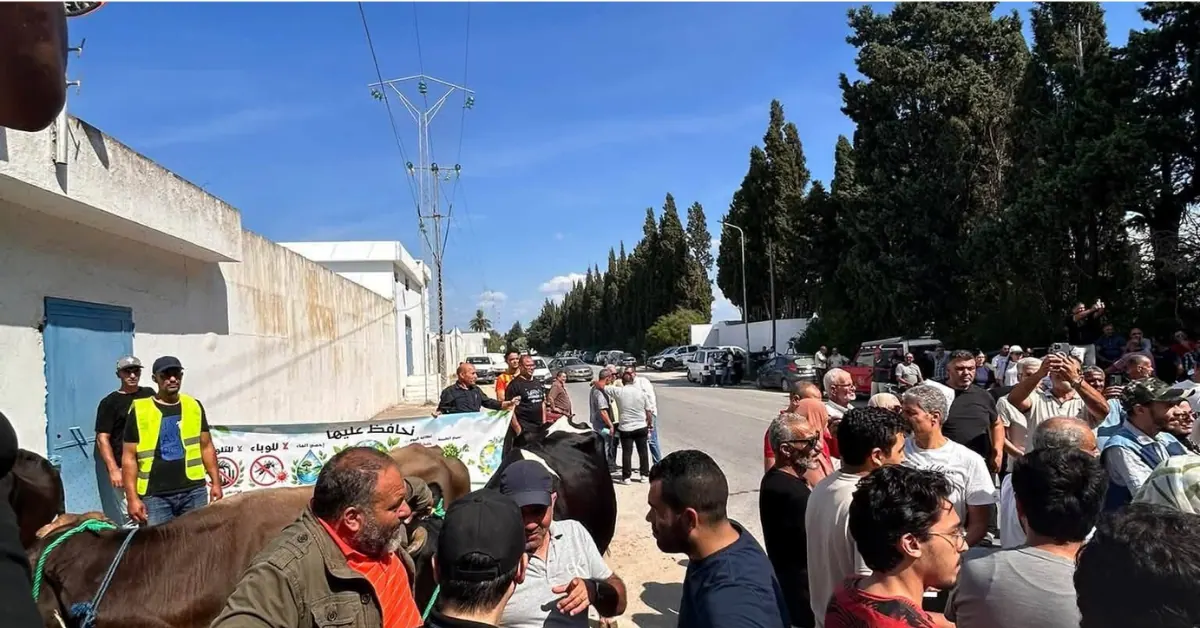
A group of residents and farmers in the town of Menzel Bouzelfa, in Tunisia's Nabil governorate, staged a protest on October 3 against a project to breed black fly larvae for export. The protesters, including members of the local agricultural union, expressed concerns about the project's potential impact on the environment, water supply, and public health. They claim the project could contaminate the soil, water, and air, posing risks to local residents and livestock.
According to Ahmed Belkaab, head of the local agricultural union, the project involves breeding black fly larvae to produce proteins for export. Belkaab stated that the project's location within a public irrigation area, which supplies water to local farms, raises concerns about potential contamination of the water supply and soil. The union has been investigating the project and has gathered evidence of potential risks, which they say have not been adequately addressed by the project's proponents.
The protesters are also worried about the project's proximity to several local institutions, including a hospital, schools, and a center for people with disabilities. They fear that the project could generate unpleasant odors, attract pests, or create other nuisance issues that could affect local residents. Furthermore, farmers in the area are concerned about potential impacts on their livestock, including cows, sheep, and poultry.
The local agricultural union has been working to raise awareness about the potential risks associated with the project. Belkaab emphasized that the union is not opposed to economic development, but rather seeks to ensure that any projects undertaken in the area prioritize environmental and public health concerns. The union is calling for a thorough environmental impact assessment to be conducted before the project proceeds.
The controversy surrounding the project highlights the challenges of balancing economic development with environmental and social concerns in Tunisia. The country's agricultural sector is a significant contributor to the economy, and many rural communities rely on farming and livestock production for their livelihoods. However, the government's efforts to promote economic growth and attract investment have sometimes been at odds with environmental and social protection.
The Menzel Bouzelfa project has sparked a heated debate about the need for sustainable and responsible development in Tunisia. While some argue that the project could create jobs and generate revenue, others are concerned about the potential long-term costs to the environment and public health. As the government weighs the pros and cons of the project, local residents and farmers are pressing for greater transparency and accountability.
The outcome of the controversy remains uncertain, but one thing is clear: the fate of the black fly larvae farm will have significant implications for the people of Menzel Bouzelfa and the broader Tunisian community. As the country continues to navigate its economic and environmental challenges, the need for inclusive, sustainable, and responsible development has never been more pressing.
Key points
- The project involves breeding black fly larvae to produce proteins for export, which has raised concerns about potential environmental and health impacts.
- The project's location within a public irrigation area and near local institutions has sparked fears about contamination and nuisance issues.
- The local agricultural union is calling for a thorough environmental impact assessment to be conducted before the project proceeds.