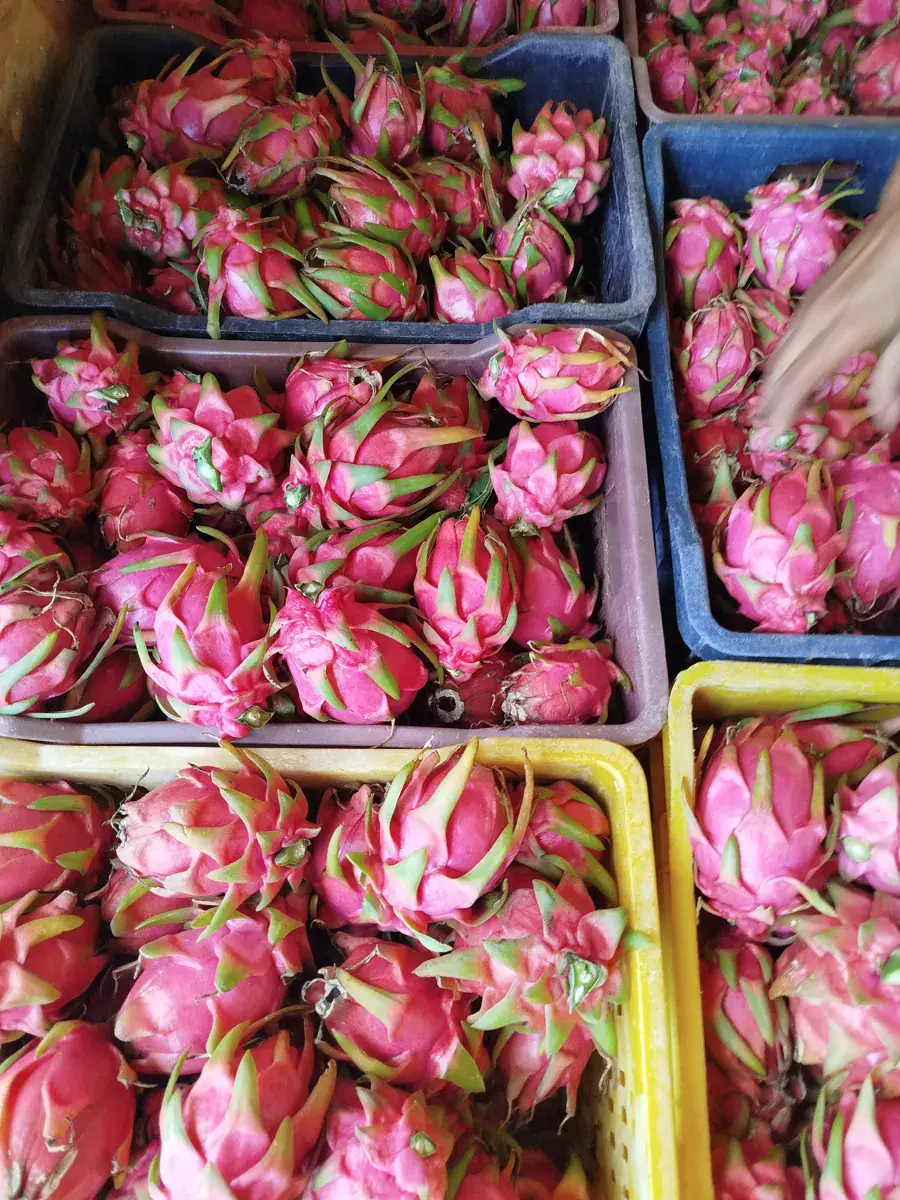
In a new agricultural experiment, Tunisian farmer Salah Eddine Ben Mansour from the Bougraqob region of Nabeul has successfully cultivated and produced dragon fruit, a tropical fruit. This emerging experiment has enabled him to achieve the first stages of production and gain experience in this field. Ben Mansour chose this type of fruit after observing the possibilities provided by this cultivation, especially since the plant has existed in Tunisia since the pre-colonial era.
The initial estimates indicate that the production could reach between 40 and 50 tons per hectare, considering that the results achieved so far are encouraging and exceed expectations, especially since this fruit has started to attract the attention of consumers and markets. Ben Mansour pointed out that the cultivation of this fruit required special care, as it is a fruit that needs a tropical climate and suitable environmental conditions.
One of the advantages of this fruit is that it does not require large quantities of water compared to some other crops, and its care does not require exceptional effort, despite its specificity as a tropical plant that needs to provide suitable climatic conditions to ensure its growth and production. The success of the project was linked to the adoption of a set of technologies and equipment, including providing special structures to host the trees.
In addition to concentrating night lighting to help intensify the flowering process and improve production, Ben Mansour also adopted a water spraying system to provide the necessary moisture that the plant needs. The care of the trees also includes the adoption of organic fertilization during the winter, and conducting pruning operations during the spring, in addition to continuous monitoring of the various stages of growth and production.
Ben Mansour confirmed that equipping the farm with this equipment required initial investments and expenses, but the recorded results, especially the profitability achieved since the first year, made the experiment promising and capable of development. Regarding the marketing of the product, Ben Mansour confirmed that the demand for this fruit is witnessing a noticeable development, especially with the increasing familiarity of the Tunisian consumer with new varieties of this fruit.
The farmer pointed out that the marketing did not represent an obstacle, considering the availability of demand from citizens, traders, and large commercial spaces. He also indicated that this experiment has started to attract the attention of a number of farmers, who are gradually moving towards cultivating new varieties of fruits with high production value and economic returns.
Ben Mansour revealed that Tunisia has a large diversity of dragon fruit varieties, with over 100 varieties, some of which have been adapted to local climatic conditions for many years. He highlighted one of the local varieties known in the region, the white variety, which is characterized by its sweetness, abundant production, and ability to resist climatic fluctuations and adapt to the Tunisian weather.
Key points
- The successful cultivation of dragon fruit in Tunisia reflects the country's diversified agricultural production and shift towards alternative crops.
- The farmer's experiment demonstrates the potential for profitable production of dragon fruit in Tunisia, with initial estimates suggesting production of 40-50 tons per hectare.
- The experience highlights the importance of preserving local agricultural wealth and encouraging farmers to diversify production and exploit available opportunities to develop the agricultural sector.
Reporting sources
- زراعة فاكهة التنين.. تجربة ناشئة وآفاق جديدة · Assabah News