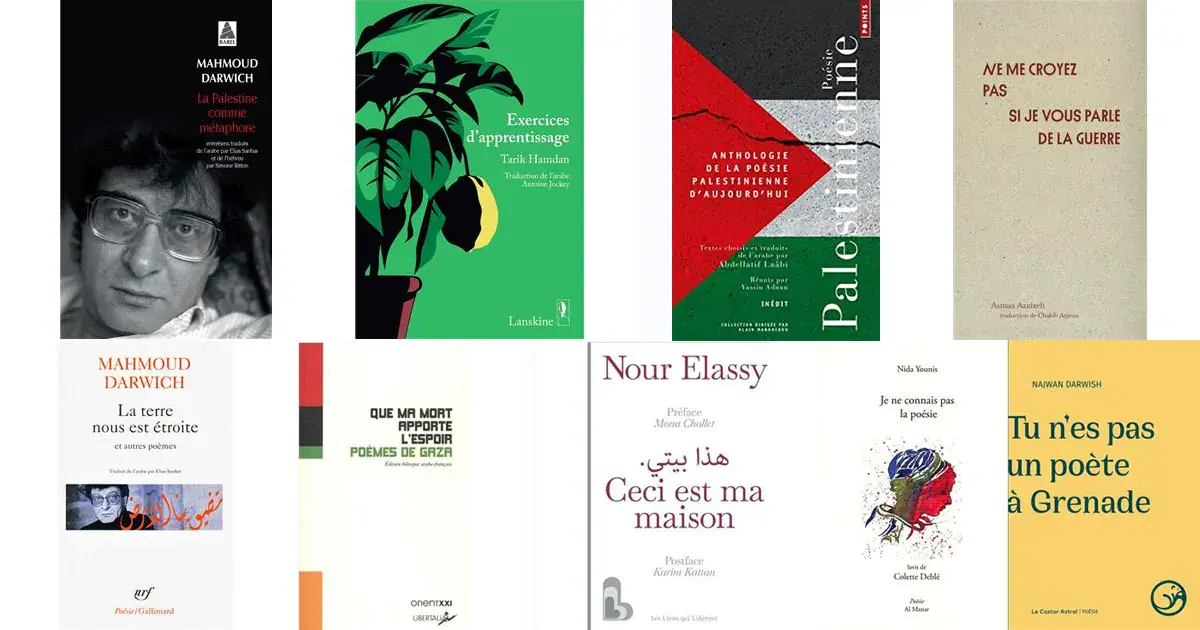
Professor Mounira Chatti, a Tunisian educator at the University of Paris 8, is hosting a study day titled "Poetry of Palestine: Inhabiting and Resisting. Arabic Poetic Dynamics from Mahmoud Darwich to Gaza Poets." The event is scheduled for Thursday, December 10, 2026, at the ITEM/CNRS conference room in Paris. The study day will feature researchers, translators, and poets discussing the significance of Palestinian poetry.
The event is inspired by the work of Abdellatif Laâbi, who noted in his 2022 anthology "Anthologie de la poésie palestinienne d'aujourd'hui" that the name of a country, Palestine, has become a poetic entity in itself. This phenomenon is largely attributed to its poets. Mahmoud Darwich, a renowned Palestinian poet, described Palestinian poetry as a "tent for nostalgia" that transforms physical absence into metaphorical presence.
The poetry of Palestine plays a significant role in the global poetry scene, particularly in its ability to turn absence into presence. It creates a symbolic home, or "bayt," where exiled, displaced, and disappeared individuals find refuge. This poetry navigates the paradox between the idea of home and the reality of exile, displacement, and erasure of places.
The precarious daily life and fear of death in Palestine have led to poetic variations marked by tension between the will to resist and the fear of disappearing. Hesham Abu Asaker describes the Palestinian poet as a "remnant of anxiety" that stretches between the city and the stone. This anxiety is reflected in the poetry, which struggles against historical ruptures and memory wounds.
According to Khalid Lyamlahy, contemporary Palestinian poetry strives to combat historical disruptions and memory injuries. Many poems are driven by the energy of movement and the obsession with the path to be taken. In the face of territorial and symbolic dispossession, poetry raises the voice as an act of survival and resistance against the erasure of places, voices, and human life.
The event aims to explore the role of poetry in Palestinian culture and its significance in the global context. The discussion will focus on the challenges of translating Palestinian poetry into other languages and the implications of this translation for cultural survival and identity affirmation. The study day will examine the intersections of poetry, politics, ethics, aesthetics, and lyricism in Palestinian poetry.
The study day will provide a platform for scholars, translators, and poets to engage with the complexities of Palestinian poetry and its role in resistance and identity formation. By exploring these themes, the event seeks to contribute to a deeper understanding of the significance of Palestinian poetry in the global literary landscape and its continued relevance in contemporary cultural and political discourse.
Key points
- The event will examine the intersections of poetry, politics, ethics, aesthetics, and lyricism in Palestinian poetry.