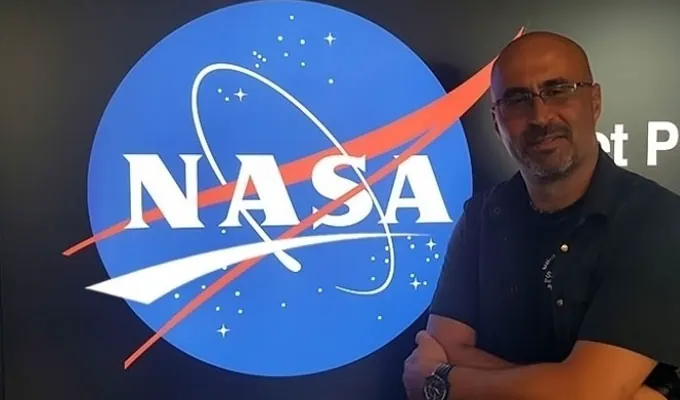
Dr. Mohamed Abid, a renowned engineer with a remarkable career in the US space program, has returned to his home country of Tunisia to share his experiences with students, researchers, and science enthusiasts. Born in Sfax, Tunisia, Abid pursued his higher education in France and later earned a Ph.D. in aerospace and mechanical engineering from the University of Southern California in the US. His international education laid the foundation for his future success in the field of space exploration.
Abid's journey to NASA began in 2004 when he joined the Jet Propulsion Laboratory (JPL), one of the primary research and engineering centers of NASA. He worked on several significant projects, including the Soil Moisture Active Passive (SMAP) mission, launched in January 2015, which aimed to improve the understanding of Earth's water resources and environmental conditions through satellite observations. As a lead engineer on the project, Abid played a crucial role in its success.
Abid's career took a notable turn in 2016 when he was appointed as the deputy mechanical engineer for the Mars 2020 program. This mission resulted in the successful launch of the Perseverance robot in July 2020 and its landing on Mars in February 2021. Abid was part of the team that contributed to the technical preparation of the robot, showcasing his expertise in the field of space exploration.
A personal event that significantly impacted Abid's life and career was the Challenger space shuttle accident in 1986, which claimed the lives of seven astronauts. In an interview with Al Jazeera in 2021, Abid shared that this tragedy motivated him to pursue a career in space engineering, driven by a desire to understand technical failures and ensure mission safety.
In August 2026, Abid returned to Tunisia for a series of meetings and events in Tunis, Sousse, Monastir, Sfax, and Djerba. During these interactions, he shared his experiences and discussed the importance of space exploration, as well as potential opportunities for scientific and technological cooperation between Tunisia and the US.
Abid's visit to Tunisia highlighted the potential for collaboration and knowledge sharing between Tunisian researchers and international networks. His story serves as an inspiration to young researchers in Tunisia, demonstrating the possibilities of success in the field of space exploration through hard work and determination.
As Abid's journey demonstrates, the transfer of knowledge and expertise between generations is crucial for the growth and development of scientific communities. His experiences and achievements serve as a testament to the potential for Tunisian scientists to contribute to and succeed in global research networks.
Key points
- Dr. Mohamed Abid's career at NASA includes working on the Mars 2020 and Perseverance robot missions.
- Abid's journey to NASA began with his education in France and the US, followed by his joining of the Jet Propulsion Laboratory in 2004.
- Abid returned to Tunisia in August 2026 to share his experiences and discuss potential opportunities for scientific cooperation with students and researchers.