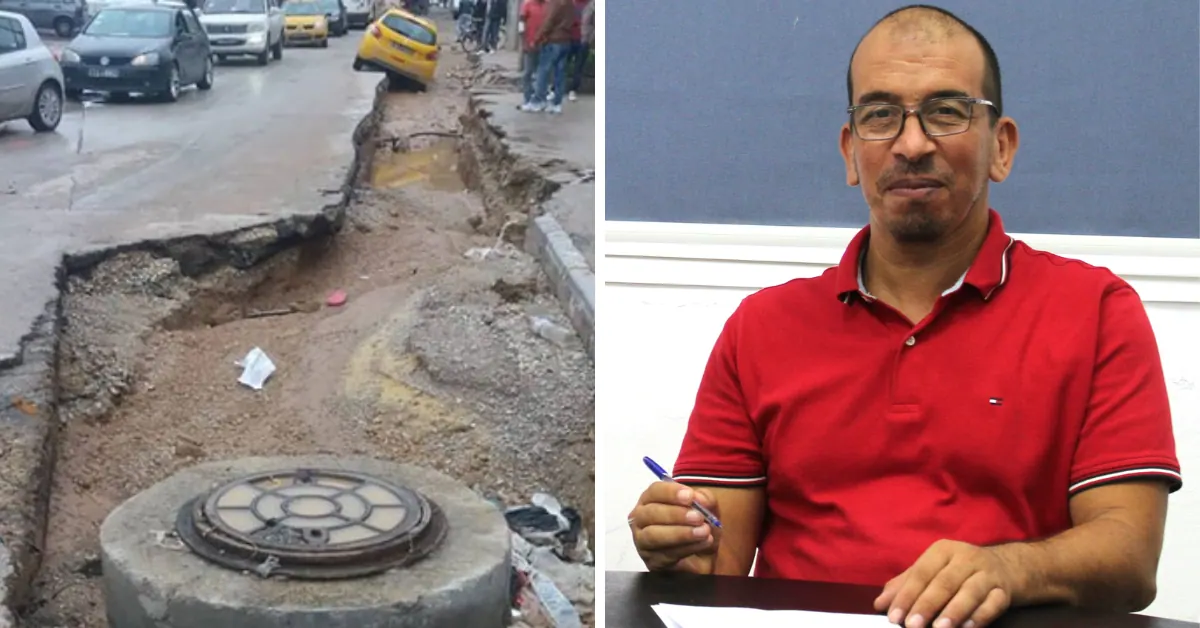
Engineer Mohamed Ayari, Secretary General of the Sectoral Equipment Department at the Tunisian Engineers' Order, recently discussed the importance of strategic planning and quality infrastructure in enhancing road safety and reducing fatal accidents. He cited the success story of Singapore, which transformed from a disastrous situation in the 1970s to a global model in infrastructure quality and safety. Ayari emphasized the need for clear strategies and collaborative projects, such as the "Nature in City" concept and nature-based solutions.
Ayari highlighted that city entrances are among the most accident-prone areas due to the change in speed from highways to urban areas. To address this issue, he suggested adopting simple and inexpensive solutions that modify the urban landscape, such as planting trees and changing colors, to alert drivers and automatically reduce speed. A pilot project will be implemented in the "Sidi Hussein" area, involving tree planting and urban landscape improvement to protect road users, especially students.
To develop Tunisia's infrastructure, Ayari stressed the need to abandon sectoral approaches and work according to a participatory systemic approach that relies on modern technology and artificial intelligence. He called for the creation of a unified dashboard based on geographic information systems (GIS) that brings together all stakeholders to ensure effective coordination and continuous monitoring. The National Remote Sensing Center (CNCT) will play a pivotal role in this process.
Ayari discussed the main factors leading to road deterioration, primarily the excessive load on trucks. He mentioned that the Ministry of Equipment is currently working on a pilot project using artificial intelligence to monitor non-compliant trucks and impose fines on them. The Secretary General of the Sectoral Equipment Department emphasized the need to review the legal framework for sorting and equipment.
Ayari invited to engage in the global program for road evaluation, adopting modern measurement indicators aimed at reducing road accidents by 50% by 2030-2035. He also underlined the importance of revising the legal framework for equipment selection, which currently prioritizes the lowest price, negatively impacting the quality of implementation.
The Tunisian Engineers' Order has taken an active role in promoting road safety and infrastructure development. As part of its efforts, the Order has been working closely with relevant authorities to implement effective solutions. Engineer Ayari's proposals have sparked interest among stakeholders, who recognize the need for innovative approaches to address road safety challenges.
The implementation of Ayari's proposals is expected to have a positive impact on road safety in Tunisia. The use of simple and inexpensive solutions, combined with modern technology and artificial intelligence, is seen as a promising approach to reducing accidents and improving infrastructure quality. The success of the pilot project in the "Sidi Hussein" area will be closely monitored, and the results are expected to inform future initiatives.
Key points
- Engineer Mohamed Ayari proposes simple and innovative solutions to reduce road accidents and improve infrastructure in Tunisia.
- Ayari calls for the adoption of a participatory systemic approach that relies on modern technology and artificial intelligence to develop Tunisia's infrastructure.
- The implementation of Ayari's proposals is expected to reduce road accidents by 50% by 2030-2035.