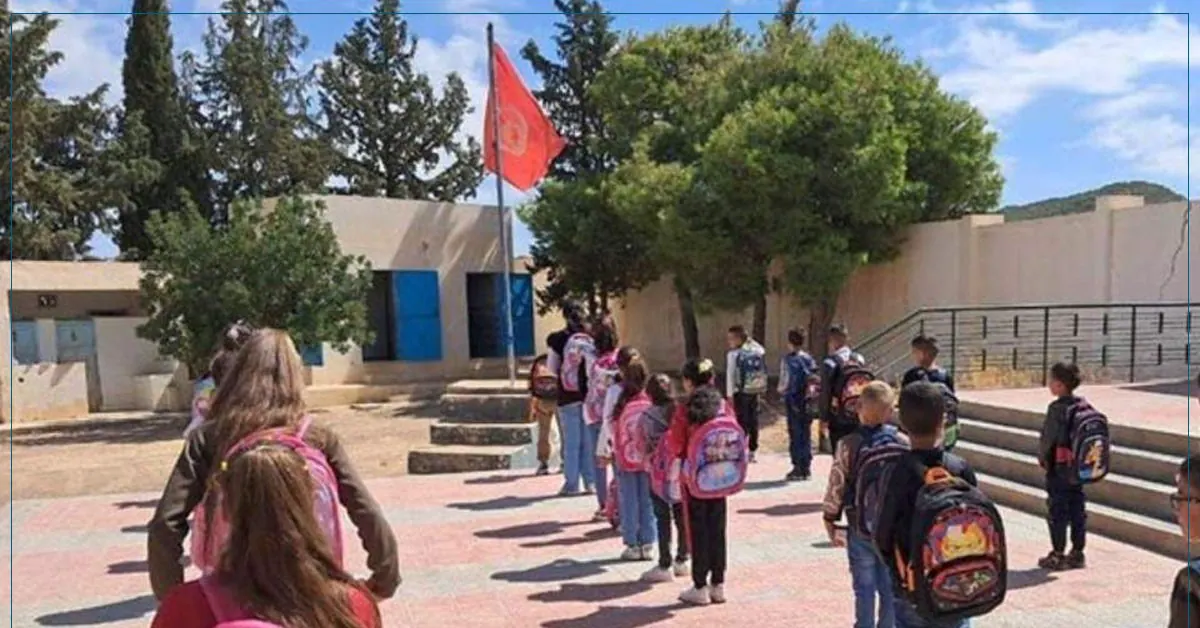
Tunisian Member of Parliament, Fakhreddine Fadhloun, has expressed support for the education ministry's recent decision to keep students within school premises until the end of classes. In a statement to Diwan FM on Friday, Fadhloun described the move as "very good" and "important". He noted that the decision was timely, given the risky behaviors observed within school environments.
Fadhloun, a member of the Committee on Education, Vocational Training, Scientific Research, Youth, and Sports, emphasized that the decision requires practical implementation, including the provision of review rooms in all educational institutions. This, he believes, will enable students to make the most of the additional time. The MP's comments highlight the challenges of enforcing the new rule and the need for adequate infrastructure.
The education ministry's decision is part of a broader program aimed at addressing emerging issues and risky behaviors in schools. The initiative seeks to enhance student protection and prevent situations that may threaten their physical and psychological well-being. By keeping students within school premises, authorities hope to minimize exposure to potential harm.
The move has been welcomed as a positive step towards ensuring student safety. Fadhloun's endorsement of the decision underscores the importance of collaborative efforts between policymakers, educators, and parents to create a secure learning environment. The Tunisian education system has faced various challenges in recent years, including issues related to student behavior and safety.
According to Fadhloun, the decision to restrict student movement within school premises is a necessary measure. He cited concerns over student safety and the need for a secure environment that allows students to focus on their studies. The MP's comments reflect a broader consensus on the need for urgent action to address student safety concerns.
The implementation of the new rule will require significant resources and planning. Educational institutions will need to provide adequate facilities, including review rooms and recreational spaces, to accommodate students who would otherwise be outside school premises. The success of the initiative will depend on effective coordination between schools, parents, and local authorities.
The decision to keep students in schools until the end of classes is a key aspect of the government's efforts to improve student outcomes and ensure their safety. By prioritizing student well-being, authorities aim to create a more conducive learning environment that fosters academic achievement and personal growth. The initiative is expected to have a positive impact on the education sector as a whole.
Key points
- The Tunisian education ministry's decision aims to address emerging issues and risky behaviors in schools.
- The move requires practical implementation, including the provision of review rooms in all educational institutions.
- The initiative seeks to enhance student protection and prevent situations that may threaten their physical and psychological well-being.