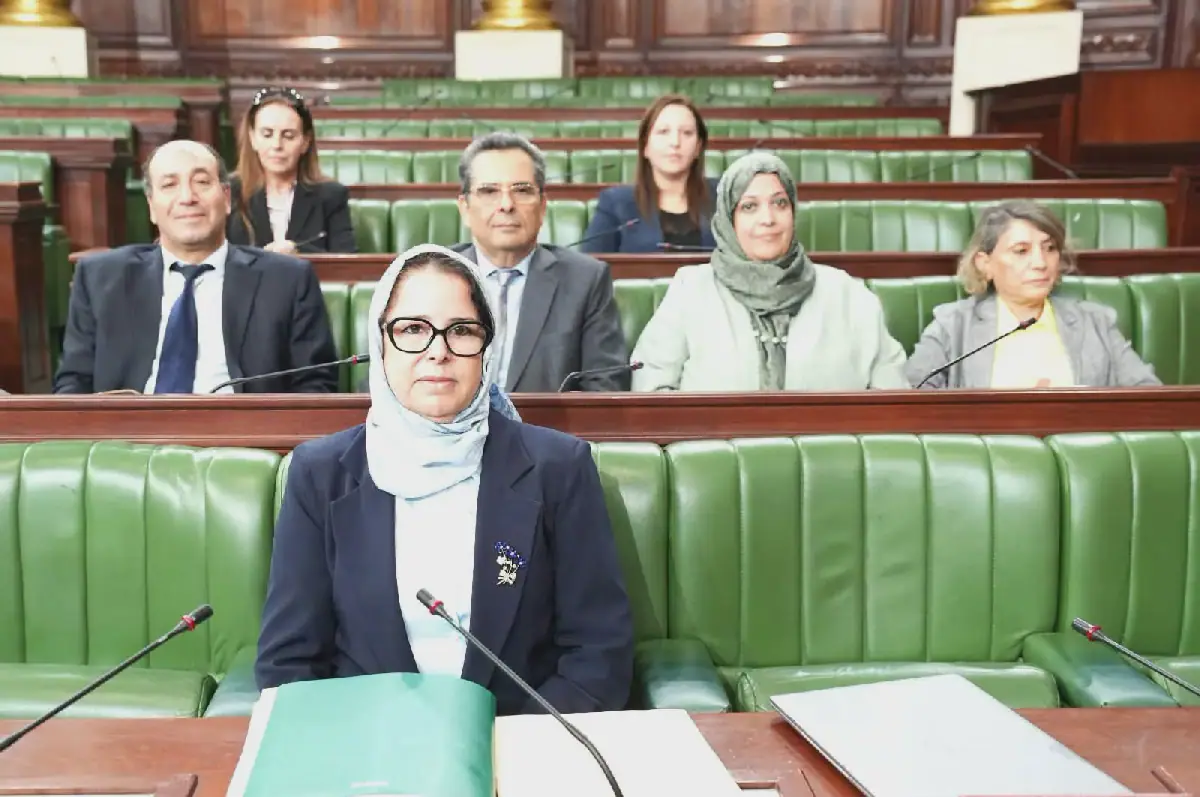
The First Deputy President of the Tunisian Court of Accounts, Faouzia Al-Qarqouri, emphasized the court's role in investing in the development of judges' capacities and enhancing the quality of public funds management. In her response to questions from parliamentarians, Al-Qarqouri highlighted that providing suitable conditions and resources for the court and its judges is not merely an administrative necessity but an investment in the growth of judicial capabilities and the improvement of public funds handling.
Al-Qarqouri outlined the court's tasks, which extend beyond monitoring public funds management to evaluating the effectiveness and efficiency of public programs and policies. She explained that the court's role involves not only identifying irregularities and shortcomings but also recommending reforms, imposing penalties, and referring cases that constitute crimes to the competent judicial authorities. The court's 2027 budget is projected to be 36.436 million dinars, a 2.45% increase from 2026.
The Court of Accounts' reports are utilized for accountability, reform, and governance, as well as for scientific research and informing decision-makers to prevent irregularities. Al-Qarqouri addressed concerns about the value of the court's reports, stating that they are used for accountability, reform, and governance, and in a third stage, for research and informing stakeholders to avoid irregularities.
In response to questions about the programming of oversight tasks by the court's advisors, Al-Qarqouri explained that the court adopts a scientific approach, managing risks and allocating resources to areas with significant public spending, multiple beneficiaries, and high-risk levels. The court's oversight work is carried out with the participation of 125 advisors, enhancing the quality and credibility of its reports.
The Court of Accounts follows up on the implementation of its oversight recommendations, using mechanisms that include on-site visits to assess the execution of recommendations and address irregularities. Achieving an 80% implementation rate of its recommendations is a significant milestone in the court's efforts to enhance its oversight work.
Al-Qarqouri mentioned that the court is currently working on several projects, including the development of an information system and a strategic risk management and vigilance system. She also highlighted the court's "Minara" platform, which is being developed and will soon be open to various state institutions, with plans for international expansion to support the court's resources.
The court's efforts focus on building judicial capacities, promoting public funds management quality, and enhancing oversight work. The court's budget and resources are allocated to support these objectives, with a focus on achieving tangible results and contributing to the development of the Tunisian judicial system.
Key points
- The Tunisian Court of Accounts has a budget of 36.436 million dinars for 2027, a 2.45% increase from 2026.
- The court uses a scientific approach to manage risks and allocate resources for its oversight tasks.
- The court has achieved an 80% implementation rate of its oversight recommendations.
Reporting sources
- Radio Tunis · Radio Tunis