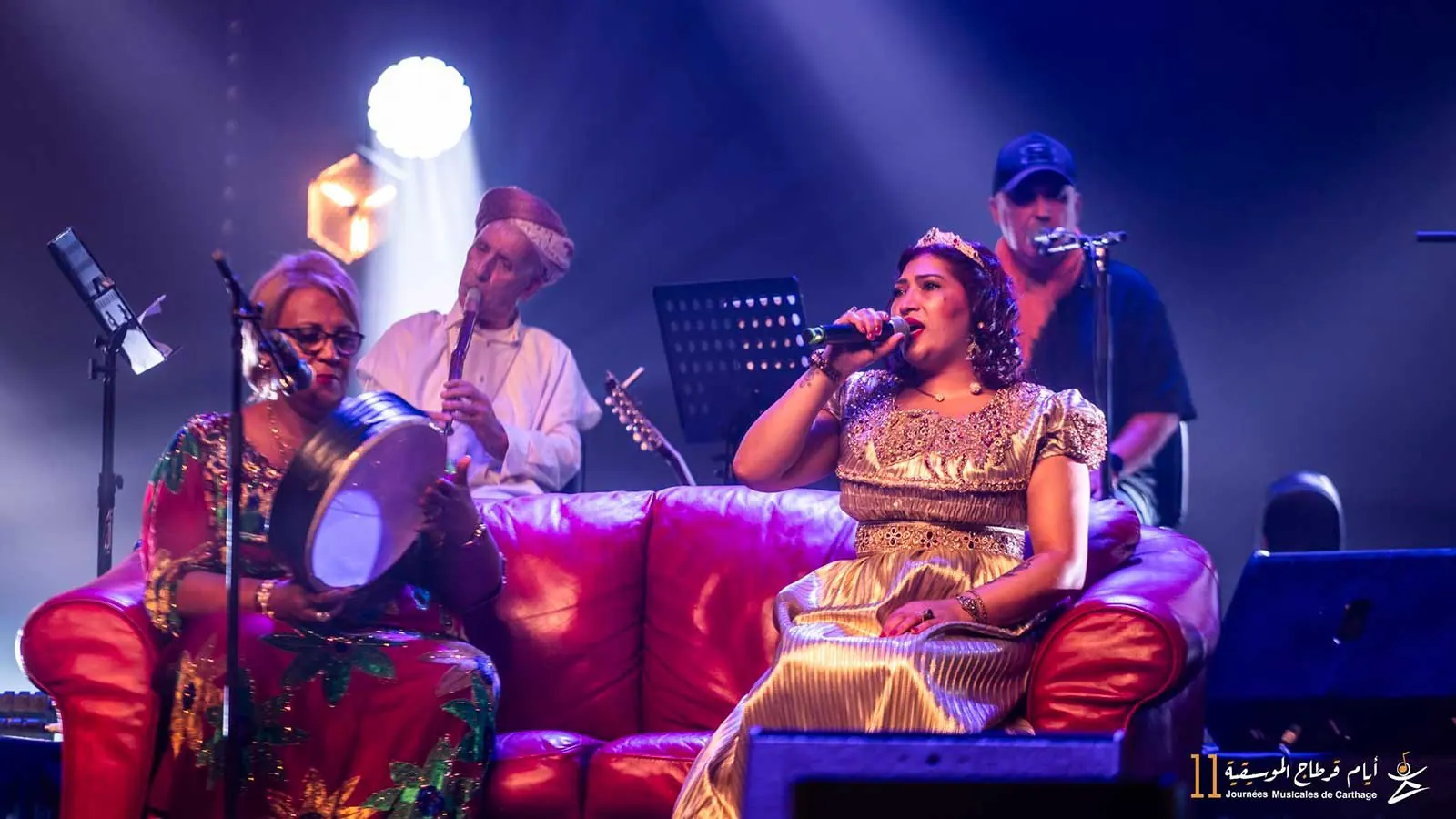
The 11th edition of the Carthage Musical Days (JMC) recently hosted a concert called "Les Dames du Raï" at the Théâtre de l'Opéra in Tunis' Cité de la culture. The event featured Cheikha Hadjla and Fella Japonia, accompanied by musicians Ahmed Bensidhoum, Sami Bouchareb, Mahfoud Lazizi, and Rabah Khalfa. They performed popular raï melodies that blended traditional music, intimate stories, and social engagement, creating a festive atmosphere.
This concert was a celebration of the Cheikhates, Algerian singers who broke with patriarchal and colonial norms in the 1930s through their bold lyrics. The musical and documentary performance was directed by Méziane Azaïche and written by Rabah Mezouane. It highlighted the journey of these pioneering female artists who, despite being confined to cabarets and private parties, managed to develop their music and eventually take the stage after Algeria's independence.
The concert not only celebrated legendary figures like Cheikha Rimitti but also showcased the current artistic legacy of these trailblazers. The immersive and festive event aimed to share an lesser-known part of Maghrebi musical heritage. By combining live music, historical stories, and archival projections, the performance honored the roots of raï music and its connection to social engagement and women's rights.
Cheikhates like Cheikha Rimitti, Kheira Guendil, Fadela, Zaouhania, and Zohra Bent Oûda are iconic figures in the history of raï, having paved the way for contemporary artists. Their stories and songs placed women's issues and social commitment at the heart of raï music. This concert continued their legacy, allowing the audience to connect with the music and its history.
Cheikha Hadjla and Fella Japonia, who come from the Cabaret Sauvage in Paris, performed famous raï titles like "La Camel," "Ana Hak," and "El Baroud." The concert was accompanied by videos that told the story of the pioneers of raï, whose memory remains vibrant today. This musical work appealed to both music enthusiasts and those interested in social history, offering a glimpse into a vibrant form of female resistance.
The event demonstrated the significance of preserving and promoting the musical heritage of Cheikhates. By sharing their stories and music, the concert aimed to inspire a new generation of artists and music lovers. The Carthage Musical Days continue to provide a platform for celebrating and preserving Tunisia's rich musical diversity.
The "Les Dames du Raï" concert was a testament to the power of music as a form of resistance and social commentary. The event highlighted the importance of recognizing and honoring the contributions of women to the development of raï music. By doing so, it ensured the continuation of this musical legacy and its relevance in contemporary times.
Key points
- The concert celebrated the musical heritage of Cheikhates, pioneering Algerian female singers who defied patriarchal and colonial norms in the 1930s.
- The event featured Cheikha Hadjla and Fella Japonia, who performed popular raï melodies that blended traditional music, intimate stories, and social engagement.
- The concert aimed to share an lesser-known part of Maghrebi musical heritage and honor the roots of raï music and its connection to social engagement and women's rights.