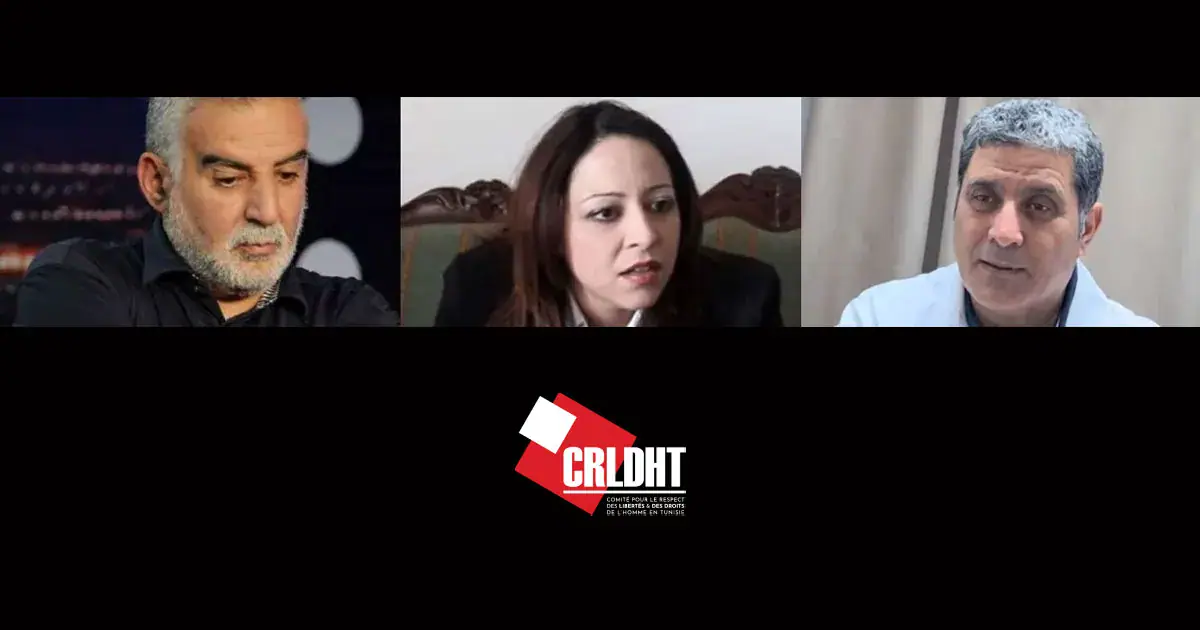
The Committee for the Respect of Liberties and Human Rights in Tunisia (CRLDHT) has strongly condemned the severe sentences handed down in the 'audio recordings' case, attributed to Mondher Ounissi, former interim president of the Ennahdha movement. On October 27, 2026, the Tunis court sentenced 11 individuals, including Ounissi and journalist Zied El Heni, to prison terms ranging from four to 25 years. The CRLDHT described the verdict as a grave attack on press freedom and the public's right to information.
The case dates back to September 2023, when audio recordings attributed to Ounissi and journalist Chahrazed Akacha were circulated on social media. The recordings allegedly discussed internal matters within Ennahdha and other political topics. Ounissi disputed the authenticity of the recordings. Zied El Heni, who discussed the recordings on a radio show, was initially summoned as a witness but later became a suspect, facing four terrorism-related charges. His defense team reported several irregularities during the investigation and trial.
The CRLDHT criticized the trial proceedings, citing restrictions on the defense's rights and the fact that the accused were tried in absentia via video link from Mornaguia prison. The committee argued that these conditions compromised the accused's ability to participate fully in the trial and exercise their right to a fair defense. The sentences handed down were as follows: Mondher Ounissi received nine years, Zied El Heni four years, and Taher Boubahri, Fethi Ayadi, and others 25 years each.
Many of those sentenced had already been convicted in separate cases. Mondher Ounissi had received four years in the Jilani Dabboussi case, while Zied El Heni had been sentenced to one year and 18 months to be served. Chahrazed Akacha had received 27 years in the 'Instalingo' case and 25 years in another 'conspiracy' case. The CRLDHT highlighted the cumulative effect of these sentences, emphasizing the need for a fair and just trial.
The committee denounced the use of anti-terrorism legislation to prosecute journalists for acts related to their profession, such as verifying information and protecting sources. They called on Tunisian authorities to release those detained, annul the October 27 verdict, and ensure a fair trial for those accused. The CRLDHT also demanded an independent examination of alleged irregularities during the investigation and trial.
The 'audio recordings' case has sparked concerns about press freedom and human rights in Tunisia. The CRLDHT argued that using anti-terrorism laws to sanction expression and journalistic work undermines democratic principles. They urged the Tunisian government to protect journalistic sources and prevent further prosecutions of journalists for acts related to their work.
The CRLDHT's condemnation of the sentences and demand for the release of those detained reflect broader concerns about human rights and press freedom in Tunisia. The committee's call for a fair trial and protection of journalistic sources highlights the need for Tunisian authorities to balance national security concerns with the need to uphold democratic values and protect human rights.
Key points
- The CRLDHT demands the release of those detained in the 'audio recordings' case, citing a grave attack on press freedom.
- The committee condemns the use of anti-terrorism legislation to prosecute journalists for acts related to their profession.
- The 'audio recordings' case has sparked concerns about press freedom and human rights in Tunisia.