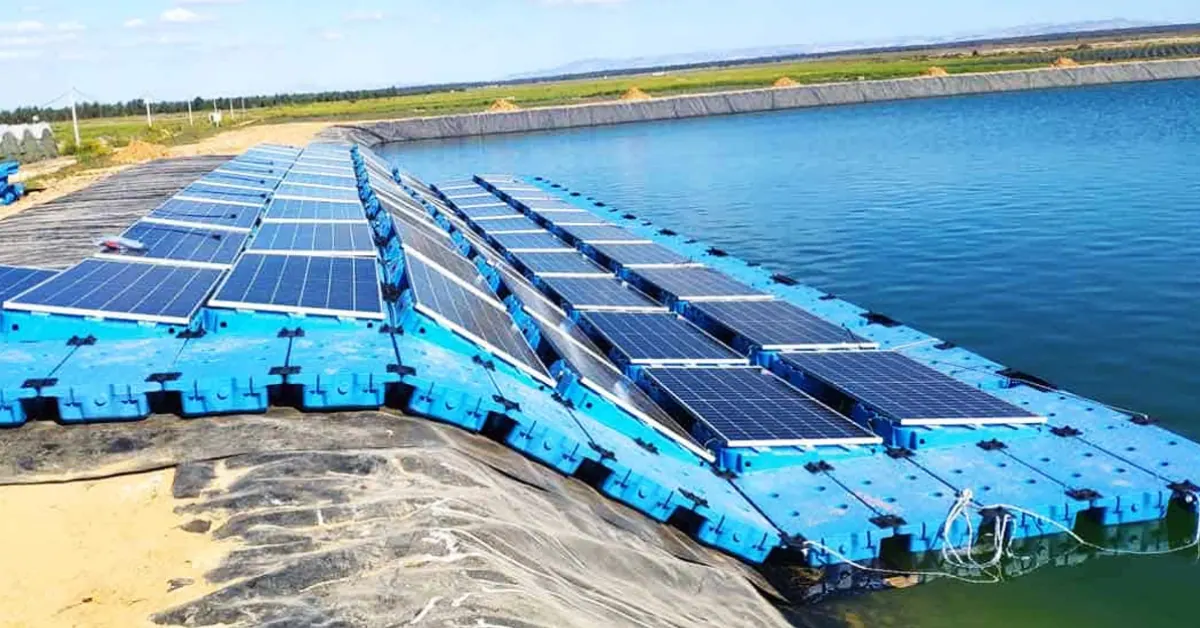
A Tunisian university professor specializing in climate science, Jamil Al-Hijri, has proposed exploring the feasibility of installing floating solar panels on the surfaces of dams in Tunisia. In a statement to Diwan FM, Al-Hijri noted that this technology could provide two significant benefits: generating clean electricity and reducing water evaporation. By covering part of a water body's surface with solar panels, the direct exposure of water to solar radiation is reduced.
Al-Hijri cited China's experience with floating solar panels as a model worth studying and emulating. He suggested that adopting such solutions in Tunisia could be the subject of international cooperation, as well as technical and economic studies to assess their suitability for Tunisian dams. According to Al-Hijri, these studies would help determine the viability of implementing this technology in the country's water infrastructure.
The professor emphasized that reducing water waste requires the development of irrigation methods. He noted that some farmers have started using more efficient techniques, such as drip irrigation and subsurface irrigation, which deliver water directly to the roots of plants and minimize evaporation. These methods have the potential to conserve water resources and improve agricultural productivity.
Al-Hijri also mentioned the use of black plastic in certain agricultural applications, particularly for vegetable cultivation. This practice helps control weed growth while reducing water evaporation and preserving soil moisture. By adopting such techniques, farmers can optimize water usage and promote sustainable agricultural practices.
The proposal to install floating solar panels on dams is part of a broader effort to promote renewable energy and water conservation in Tunisia. As the country seeks to address its energy and water challenges, experts like Al-Hijri are advocating for innovative solutions that can help mitigate the impacts of climate change and ensure a more sustainable future.
According to Al-Hijri, the implementation of floating solar panels on dams would require collaboration between various stakeholders, including government agencies, private sector companies, and international organizations. This cooperation would facilitate the exchange of expertise, technology, and best practices, ultimately contributing to the development of a more sustainable and resilient water-energy system in Tunisia.
The idea of harnessing solar energy from dam surfaces has sparked interest among Tunisian policymakers and industry stakeholders. As the country continues to explore new ways to address its energy and water needs, initiatives like Al-Hijri's proposal are likely to play a significant role in shaping the future of Tunisia's sustainable development.
Key points
- A Tunisian climate expert proposes installing floating solar panels on dam surfaces to produce clean energy and reduce water evaporation.