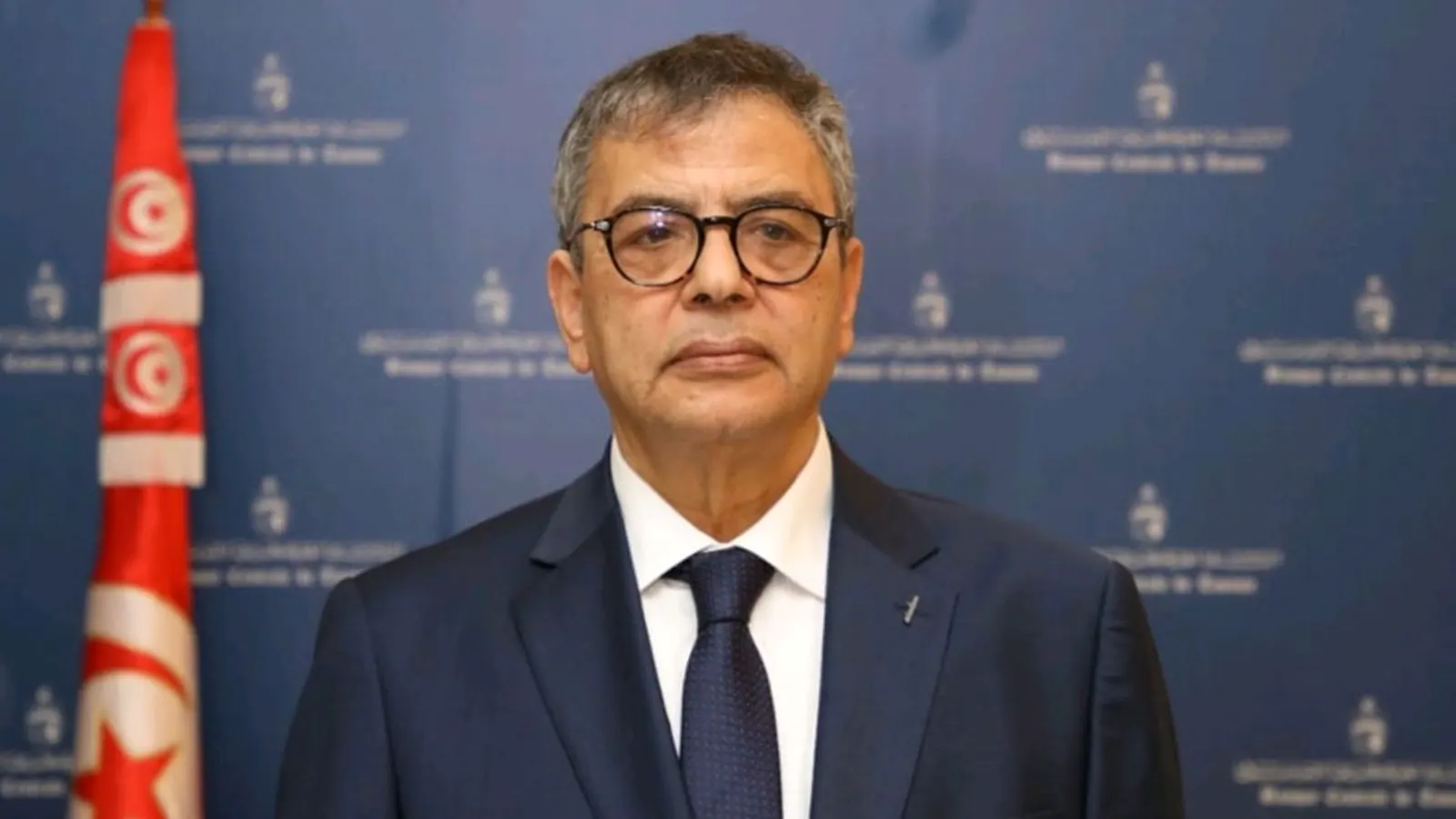
Tunisian Central Bank Governor Fathi Zouhair Nouri has called for the development of Arab financial and monetary cooperation to establish common mechanisms for protecting regional economies from shocks. This call was made during the 50th annual meeting of the Arab Central Banks and Monetary Institutions' Governors' Council, held in Abu Dhabi on September 29, 2026. Nouri emphasized that nearly five decades of Arab cooperation have provided a crucial foundation for building on, but stressed the need for new tools to keep pace with an increasingly complex and interconnected world.
Nouri highlighted the growing complexity of economic shocks, which are no longer isolated but rather cumulative and interconnected, including geopolitical, energy, food, financial, climate, and cyber threats. He noted significant disparities in financial capacities among Arab countries, with some nations holding substantial surpluses, reserves, and assets, while others face pressing financial constraints. This disparity, Nouri argued, can be transformed into a collective source of strength by establishing pre-agreed protection mechanisms.
The Tunisian Central Bank Governor proposed five practical and measurable initiatives to enhance Arab financial cooperation. These proposals include conducting a joint Arab stress test to assess economies' resilience to disruptions in trade routes, energy and food price hikes, and difficulties in accessing international financing. Additionally, Nouri suggested establishing an Arab network of swap and repo lines to provide liquidity when needed, in coordination with the Arab Monetary Fund.
Nouri's proposals also include the creation of a joint Arab observatory for early warning systems to monitor energy, food, shipping, insurance, and capital flow risks. Furthermore, he advocated for the expanded commercial use of the "Bena" Arab payment system through measurable objectives and the development of a common Arab framework for protecting payment systems and ensuring their continuity. This framework would involve annual regional exercises to test readiness against cyber and operational risks.
The success of these proposals, Nouri emphasized, depends on building safety margins during periods of stability and preparing intervention tools in advance. He stressed that crises do not allow for last-minute thinking, but rather test the preparedness and resilience of economic systems. In the context of central banks' roles, Nouri called for an evolution of their functions to enhance their ability to protect economic and financial stability in a rapidly changing world.
Nouri highlighted the importance of managing expectations, reinforcing reserve security and usability, and developing crisis management plans. He also underscored the need for enhanced communication and regional cooperation among central banks. Furthermore, Nouri emphasized the critical role of credibility in central banks' operations, stating that "credibility is our only capital that cannot be imported."
On the sidelines of the meeting, Nouri met with the Arab Monetary Fund's Managing Director and Chairman of the Board, Fahad Turk, to discuss issues of mutual interest and explore ways to strengthen cooperation with the Fund. Nouri concluded by calling for the 50th annual meeting to mark the beginning of practical steps towards enhanced collective protection, emphasizing the interconnectedness of Arab economies despite their diverse circumstances.
Key points
- Tunisian Central Bank Governor Fathi Zouhair Nouri calls for a shift from Arab financial cooperation to collective protection against economic shocks.
- Nouri proposes five practical initiatives to enhance Arab financial cooperation, including joint stress tests and the establishment of an Arab network of swap and repo lines.
- The success of these proposals depends on building safety margins during periods of stability and preparing intervention tools in advance.