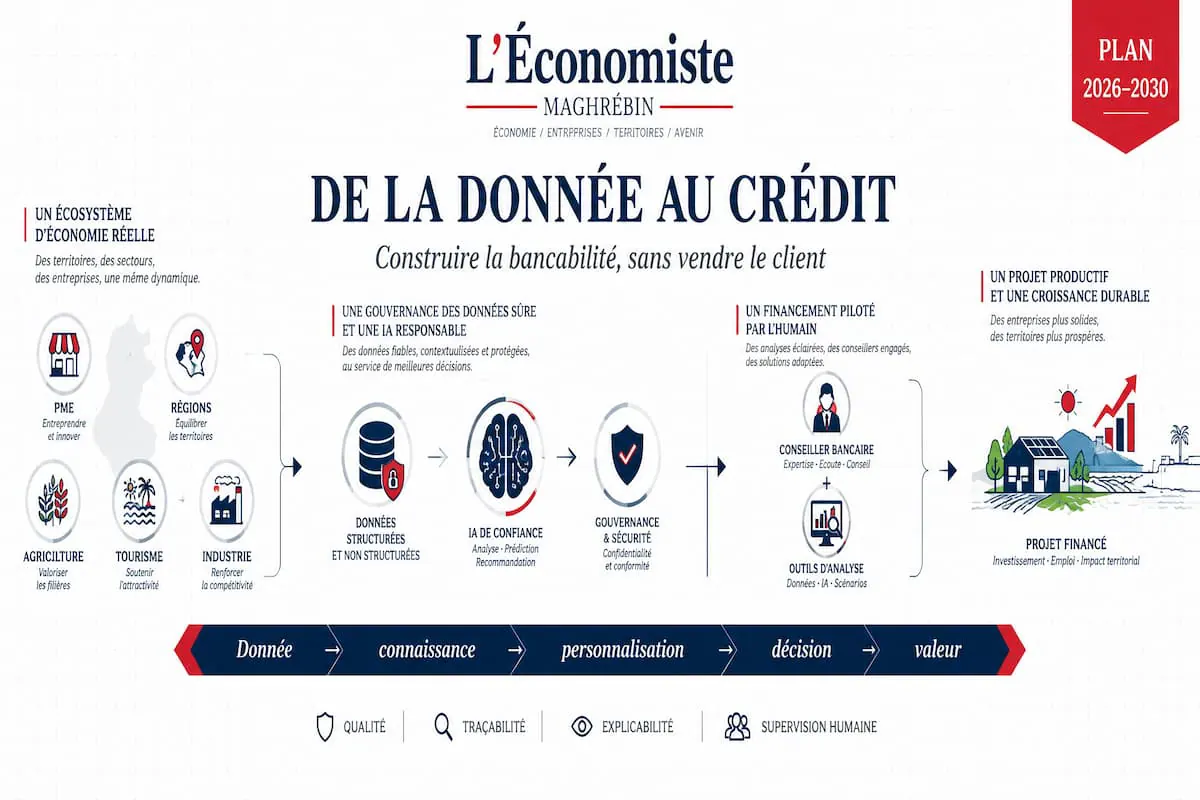
The Tunisian banking sector is undergoing a significant transformation, driven by the need to adapt to changing market conditions and customer expectations. According to a recent article by Abdelwaheb Ben Moussa, the traditional banking model is no longer sufficient to address the challenges of the 2026-2030 cycle. To remain competitive, Tunisian banks must develop three key capabilities: transforming technology into efficiency, data into decision-making, and innovation into economic sovereignty.
The article highlights the importance of data in driving business decisions and improving customer relationships. By leveraging data, banks can gain a deeper understanding of their customers' needs and develop more personalized financial products and services. This approach is particularly relevant for small and medium-sized enterprises (SMEs), which often face challenges in accessing financing due to a lack of credit history or collateral.
The concept of "precision banking" is central to this transformation, involving the use of data and analytics to make more informed lending decisions. By analyzing transaction data, financial statements, and other relevant information, banks can better assess the creditworthiness of SMEs and provide more targeted financing solutions. This approach can help reduce the risk of lending and improve the overall efficiency of the banking system.
The article also emphasizes the need for a more nuanced approach to customer relationships, one that balances personalization with respect for customer privacy. By leveraging data in a responsible and transparent manner, banks can build trust with their customers and provide more effective financial solutions. This approach requires a fundamental shift in the way banks think about customer relationships and the role of data in driving business decisions.
The transformation of the Tunisian banking sector is also driven by the need to support economic growth and development. By providing more effective financing solutions for SMEs and other key sectors, banks can play a critical role in promoting entrepreneurship and job creation. This approach requires a deep understanding of the needs of the real economy and the ability to develop innovative financial solutions that meet those needs.
The article concludes by highlighting the importance of a gradual and measured approach to transformation, one that prioritizes the development of new capabilities and the implementation of best practices. By focusing on the development of data-driven decision-making and precision banking, Tunisian banks can build a more sustainable and competitive business model that supports the needs of the real economy.
Ultimately, the success of this transformation will depend on the ability of Tunisian banks to balance technological innovation with a deep understanding of customer needs and the broader economic context. By leveraging data and analytics in a responsible and effective manner, banks can build a more efficient and sustainable business model that supports the growth and development of the Tunisian economy.
Key points
- Tunisian banks are shifting towards precision banking, leveraging data to inform decision-making and improve financing for small and medium-sized enterprises.