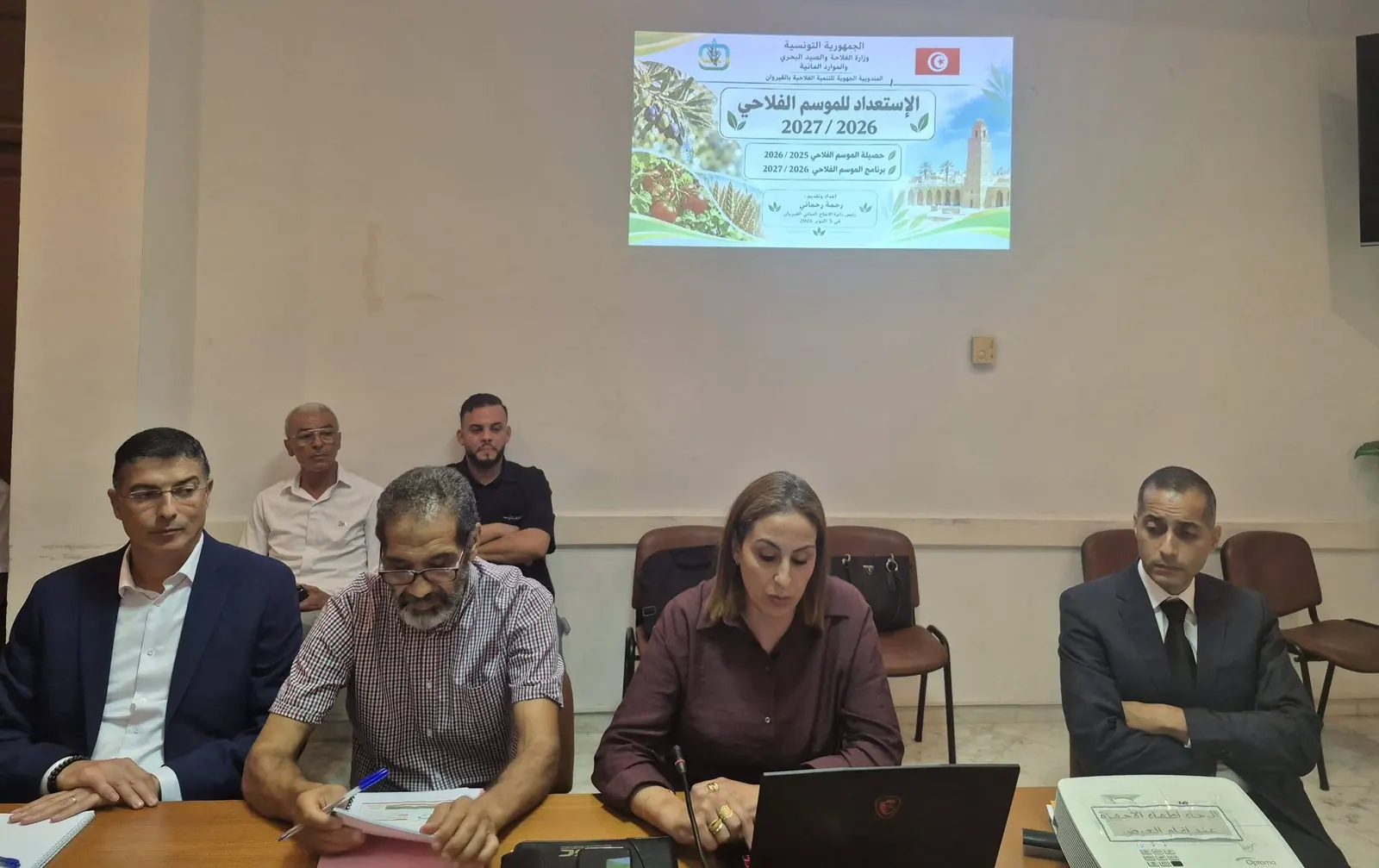
In a move to ensure a successful 2026-2027 agricultural season, Tunisian authorities convened a working session on October 5, 2026, in the city of Kairouan. The meeting was chaired by Sami Al-Ayedi, the First Delegate, and attended by various stakeholders, including the Governor's General Secretary, the Regional Delegate for Agricultural Development, and representatives from relevant organizations and administrative bodies.
During the session, participants reviewed the agricultural indicators and results of the previous season, evaluating and analyzing them to identify areas for improvement. They also examined the latest preparations for the current season through a visual presentation by the Regional Delegation for Agricultural Development. Key issues and solutions were discussed, along with data on the progress of preparations at all levels.
The meeting also focused on preparations for the major crop season, including the availability of seeds and fertilizers. Officials discussed the current state of preparations for the olive harvest and oil production season, with the opening of the olive harvest scheduled for October 26, 2026. A special session on the olive harvest and oil production is planned in the near future.
Another key topic was the program to encourage the fattening of sacrificial animals for the 2027 Eid al-Adha celebrations, which aims to provide financing for farmers to purchase fodder. The First Delegate emphasized the importance of adequate preparation for the launch of the agricultural season in optimal conditions, particularly in securing chemical fertilizers, grains, and olive harvesting and processing.
The session highlighted the need for close collaboration and coordination among all stakeholders to address the challenges facing the sector. This includes supporting the efforts of agricultural extension services and ensuring the smooth operation of harvesting and processing operations, with particular attention to disposing of olive pomace.
According to officials, the goal of these preparations is to ensure a successful agricultural season, which is crucial for the country's food security and economic growth. The authorities are working to provide support to farmers and agricultural cooperatives to help them overcome the challenges they face.
The working session is part of a series of meetings and activities aimed at promoting the agricultural sector in Tunisia. Recent events in Kairouan have included a health and sports event (marathon) on the occasion of the National Day for Organ Donation, a mobile awareness campaign on the dangers of addiction, and medical examinations for over 5,000 Hajj pilgrims from six governorates.
Key points
- Tunisian authorities review preparations for the 2026-2027 agricultural season to ensure optimal conditions for farmers and agricultural cooperatives.