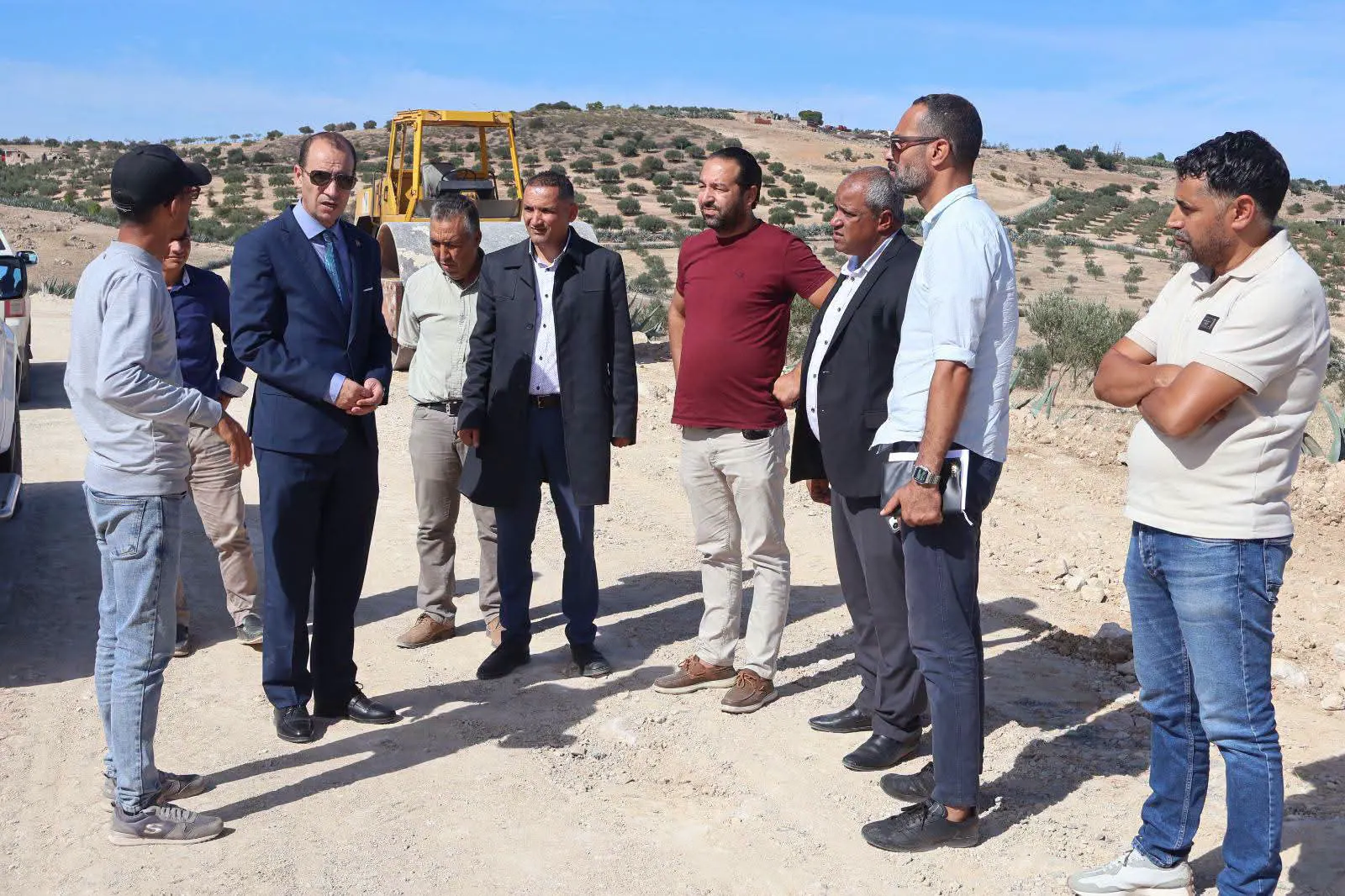
On Monday, October 12, 2026, Silyana Governor Khaled Al-Waeri carried out a field visit to Al-Arusa delegation to monitor the progress of several infrastructure projects. The visit aimed to assess the implementation of these projects and identify technical issues. According to Hassan Qanawati, a member of the local development council, the projects focus on improving road networks and enhancing citizens' mobility.
The visit covered several projects, including the development of rural roads and the improvement of streets and sidewalks. Authorities emphasized the need to accelerate work and address identified shortcomings. One of the projects inspected was the development of the Masratah road, which spans 18 kilometers at a total cost of approximately 1.3 million dinars. The project is 75% complete, and officials stressed the importance of enhancing the rainwater drainage system.
The visit also included an inspection of the Kanana road, constructed as part of the complementary elements program, phase two. The project covers 1.9 kilometers at a total cost of 2.9 million dinars and is 50% complete. Authorities urged the contractor to increase the work pace to complete the project by the end of November. Additionally, officials called for coordination between relevant services to conduct necessary tests.
In the Bujalida popular neighborhood, the governor inspected the development and paving of roads and sidewalks, which has a total cost of 3.6 million dinars and is 75% complete. Authorities emphasized the need for the national water exploitation and distribution company to repair damaged control cables and enhance coordination between services to avoid work disruptions.
These projects aim to improve the road network and rural roads in Al-Arusa delegation, enhancing mobility and living conditions in the area. Completing the projects within the specified deadlines and addressing technical issues remain key concerns. The field visit demonstrates the authorities' commitment to monitoring and supporting infrastructure development in the region.
The projects under inspection are part of a broader effort to improve Tunisia's infrastructure, focusing on rural development and enhancing citizens' quality of life. By investing in road networks and public services, authorities aim to stimulate local growth and improve living standards.
The successful completion of these projects will have a positive impact on the local population, facilitating transportation and access to essential services. The authorities' continued monitoring and support will be crucial in ensuring the projects' timely completion and addressing any technical challenges that may arise.
Key points
- The Tunisian authorities' field visit to Al-Arusa delegation highlights their commitment to monitoring and supporting infrastructure development in the region.