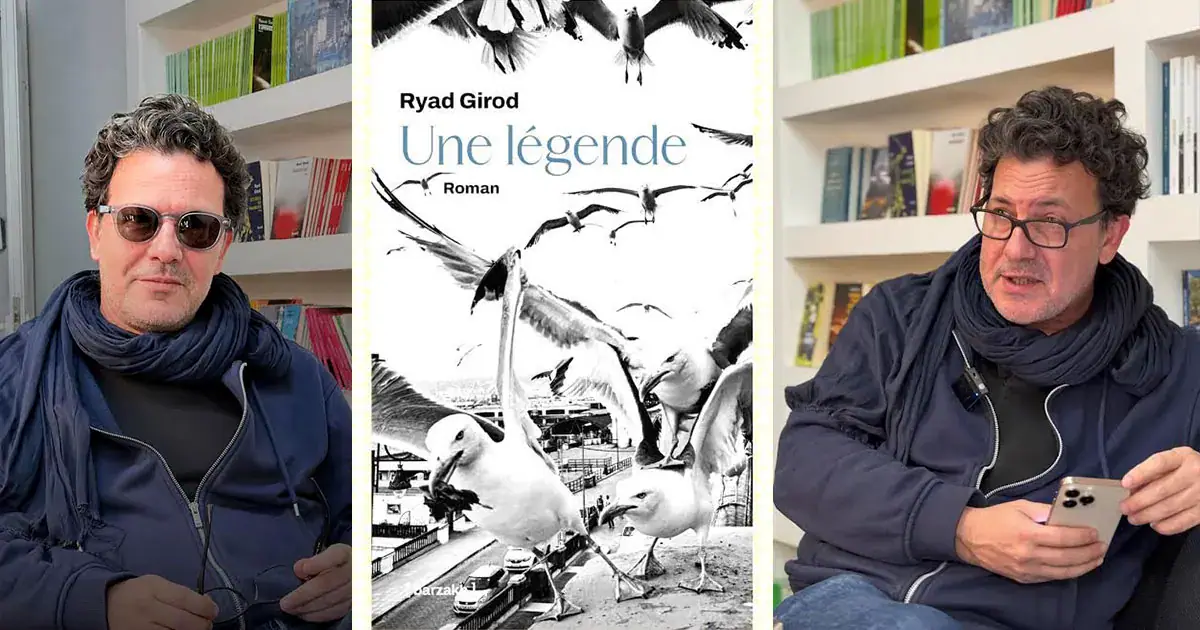
Tunisian author Ryad Girod has recently released his novel "Une légende", a thought-provoking work that delves into the complexities of knowledge, existence, and power. The novel, published by Barzakh editions in April 2026, follows the story of Djamal Guettala Sarah, an astrophysicist and actress who becomes embroiled in an espionage operation that challenges her understanding of the world. Through Sarah's journey, Girod masterfully weaves together themes of philosophy, meditation, and the search for knowledge.
The novel's narrative is complex and multi-layered, jumping between different timelines and perspectives. One moment, Sarah is in Algiers, filming an episode of the TV show "Le Bureau des légendes", while another moment takes the reader to 17th-century Netherlands, where the philosopher Spinoza is grappling with the implications of the De Witt brothers' murder. This non-linear narrative structure allows Girod to explore different facets of human existence and the search for meaning.
At its core, "Une légende" is a novel about the fragility of human understanding and the elusiveness of knowledge. Sarah's experiences serve as a microcosm for the ways in which individuals seek to make sense of the world, often in vain. As she navigates the treacherous landscape of espionage, Sarah finds herself questioning her own perceptions and understanding of reality. This introspection is mirrored in the novel's use of philosophical references, particularly the works of Spinoza, who serves as a kind of spiritual guide for Sarah.
The character of Sarah is a fascinating study in contrasts, embodying both the rationality of a scientist and the creativity of an artist. Her journey is marked by moments of profound insight and crippling uncertainty, as she struggles to reconcile her own desires with the demands of those around her. Through Sarah's story, Girod raises important questions about the nature of power and control, highlighting the ways in which individuals can become pawns in larger games.
One of the most striking aspects of "Une légende" is its use of imagery and symbolism. The novel is replete with vivid descriptions of the natural world, from the stars and clouds to the intricate patterns of the universe. These images serve as a kind of visual shorthand, conveying the complexity and beauty of human experience. The use of the lens as a metaphor for understanding is particularly noteworthy, highlighting the tension between perception and reality.
The novel's exploration of artistic expression is another key theme, as Girod weaves together references to music, literature, and visual art. The character of Johannes, a composer, serves as a kind of alter ego for Girod, highlighting the ways in which creative expression can transcend the limitations of time and space. This celebration of art and imagination serves as a counterpoint to the darker themes of power and control, offering a vision of human existence that is both hopeful and redemptive.
Ultimately, "Une légende" is a novel that defies easy categorization, blending elements of thriller, philosophical treatise, and cosmic meditation. While the narrative may be complex and challenging at times, the rewards are well worth the effort. As Girod himself notes, the novel is an attempt to capture the fragile beauty of human existence, marked by both uncertainty and resilience. The final image of Sarah as a "naissante étoile" serves as a powerful testament to the enduring power of human imagination and creativity.
Key points
- The novel explores the complexities of knowledge, existence, and power through a complex narrative of espionage, philosophy, and cosmic meditation.