The Tunisian association "tunsea" for participatory sciences has called for respecting the legal size limits for swordfish, particularly in light of the abundance of this fish species in Tunisian markets recently. According to a decision by the Minister of Agriculture, Water Resources, and Maritime Fishing, dated December 27, 2024, it is prohibited to catch swordfish with a length of less than 100 cm from the lower jaw to the tail cavity.
The decision also sets an alternative measure, allowing for a minimum weight of 11.4 kg for the whole fish or 10.2 kg after removing the intestines and gills. Furthermore, the decision prohibits catching swordfish from January 1 to March 31 of each year, with a limited exception for individuals under the specified size, not exceeding 5% of the total swordfish catch by weight or number.
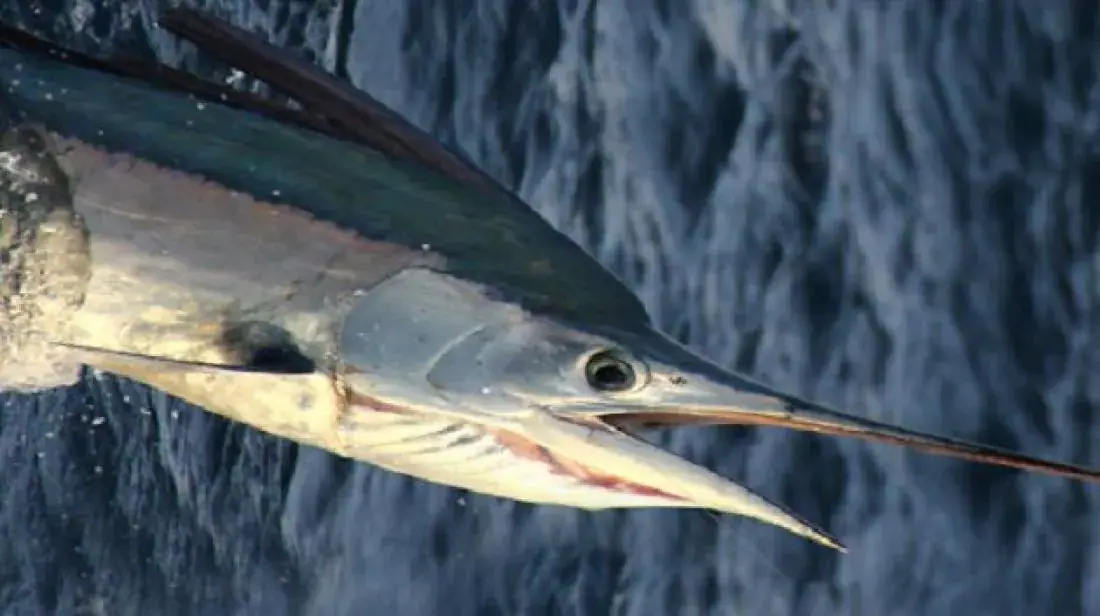
Swordfish are migratory fish that live in the open sea, characterized by a long, flat upper jaw resembling a sword, which they use to hunt prey, mainly fish and squid. They play a crucial role in the marine food chain as apex predators. Studies on Mediterranean catches have recorded individuals with lengths exceeding 2 meters from the lower jaw to the tail cavity, not counting the sword.
A study published by the International Commission for the Conservation of Atlantic Tunas found individuals reaching lengths of up to 2.35 meters using the same measurement method. The size of swordfish varies depending on the region, season, and fishing method. A study on 1,000 swordfish caught by the Italian fleet in 2021/2022 in several areas, including the Strait of Sicily and the Ionian, Tyrrhenian, and Adriatic seas, found an average length of approximately 1.30 meters.
The study also reported an average weight of around 33 kg per fish. Research estimates that females typically reach sexual maturity at a length of about 1.39 meters from the lower jaw to the tail cavity. The studies emphasize that the sword should not be included in measurements, as it can give the impression that a small fish has reached the legal size.
The Tunsea association stresses that catching juvenile swordfish leads to a loss of growth potential and increased weight, reducing the chances of maturation and reproduction, and ultimately threatening the renewal of stocks and the sustainability of fishing in the future. The association's call aims to promote responsible fishing practices and protect the swordfish population.
By enforcing the legal size limits and closed seasons, Tunisian authorities can help conserve swordfish stocks and maintain a healthy marine ecosystem. The cooperation of fishermen, consumers, and other stakeholders is essential in ensuring the long-term sustainability of swordfish fisheries in Tunisian waters.
Key points
- The Tunsea association urges adherence to a minimum length of 100 cm for swordfish.
- The legal size limits aim to protect juvenile swordfish and promote sustainable fishing practices.
- The association's call is crucial for maintaining a healthy marine ecosystem and ensuring the long-term sustainability of swordfish fisheries.