Tunisian artist Khalil Hentati recently presented his latest creation, "Tuqus," a multimedia experience that explores the intersection of music, memory, and cultural heritage. The work, which translates to "rituals" in Arabic, takes viewers on a journey across the Mediterranean, from Greece to Palestine, Egypt to Morocco, and Italy to Tunisia. By combining electronic music, documentary images, and Mediterranean rituals, Hentati creates a sensory experience that transcends borders and time.
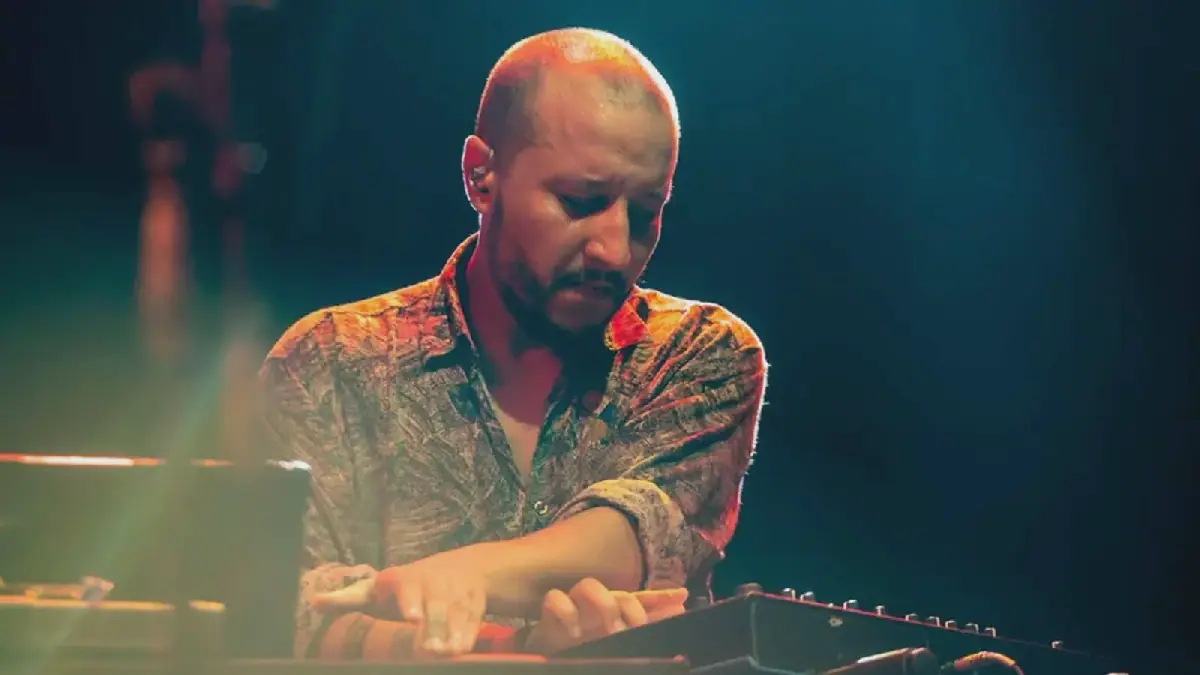
At the center of the performance, Hentati stands at a console and screens, guiding the sounds and images with precise, ceremonial gestures. His role is not one of dictation, but rather facilitation, as he weaves together fragments of music and memory to create a collective experience. The title "Tuqus" reflects Hentati's research on popular and ritual music, which he began with his previous work, "Aïchoucha." This latest creation builds upon that foundation, expanding his exploration of the connections between cultures and traditions.
The visual elements of "Tuqus" are a key component of the experience, featuring faces, bodies in motion, ceremonies, and fragments of life that compose a sensitive geography. These images do not simply illustrate the music; they respond to it, intersect with it, and sometimes destabilize it. The voices and rhythms intersect and overlap, creating a rich and dynamic soundscape that defies traditional notions of identity and folklore.
Hentati's use of electronic music allows him to transform and recontextualize the fragments of sound and memory that he gathers. The result is a composition that is both deeply rooted in tradition and yet, utterly contemporary. The music is not simply something to be listened to; it is an immersive experience that engages the body and the senses, creating a sense of connection to the earth, to rhythm, and to the collective.
One of the key aspects of "Tuqus" is its ability to tap into the viewer's bodily memory, evoking a primal, universal response that transcends language and rational thought. The experience is both mystical and terrestrial, conjuring a sense of connection to the natural world and to the communities that have shaped the music and rituals that are presented.
Hentati's work is not simply about creating a spectacular experience; it is also about exploring the intersections between cultural heritage, technology, and collective memory. By using electronic music and digital media, he is able to reveal unexpected connections and correspondences between different traditions and cultures. The result is a work that is both a celebration of diversity and a testament to the shared human experiences that unite us.
The success of "Tuqus" lies in its ability to create a shared experience that is both intimate and collective. The performance is not simply a concert or a spectacle; it is a ritual that brings people together, allowing them to connect with one another and with the music and memories that are being presented. As such, it represents a new kind of cultural production, one that is both rooted in tradition and yet, open to the possibilities of the future.
Key points
- Khalil Hentati's "Tuqus" combines electronic music, documentary images, and Mediterranean rituals to create an immersive experience.
- The work explores the intersection of music, memory, and cultural heritage.
- The performance creates a shared experience that is both intimate and collective, allowing viewers to connect with one another and with the music and memories presented.