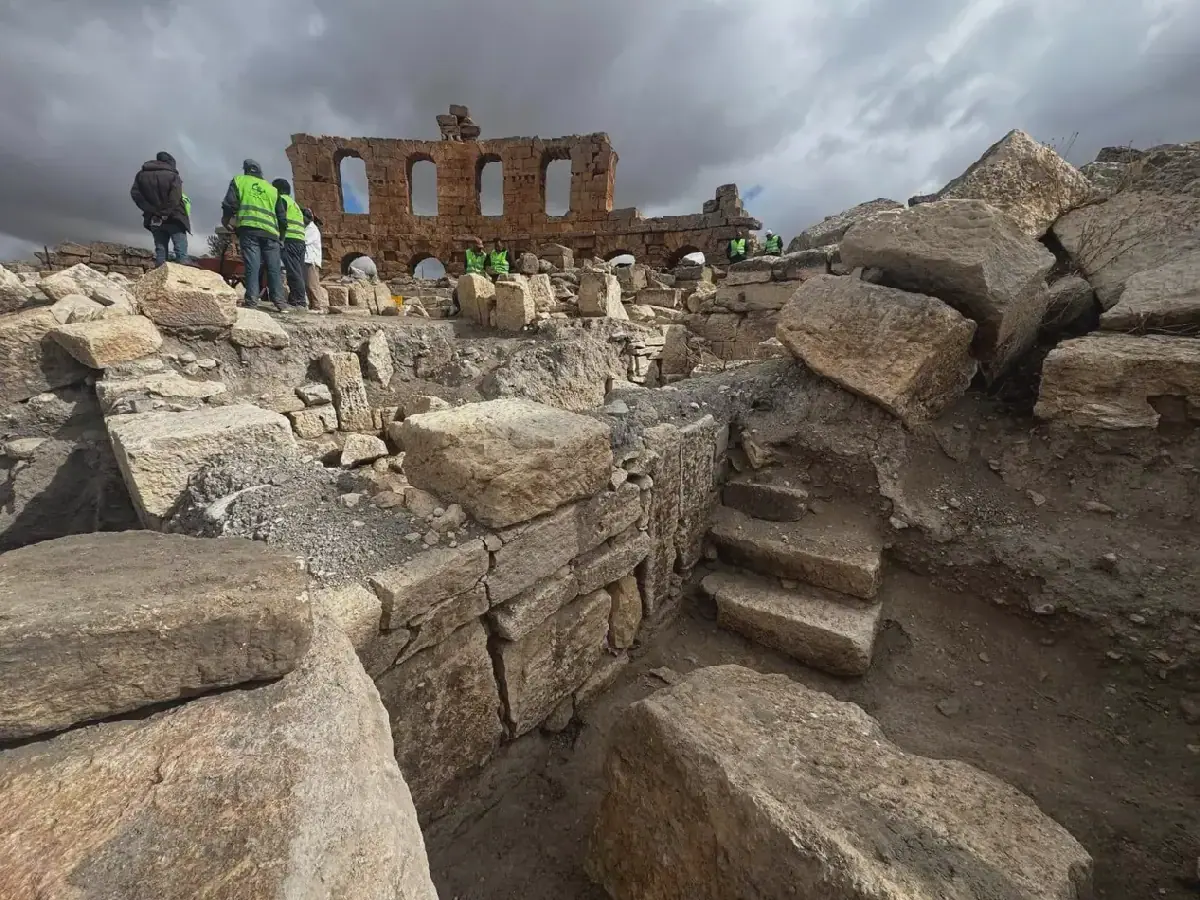
The Tunisian National Heritage Institute (INP) announced on November 1, 2026, the discovery of habitation vestiges dating back to the Fatimid and Aghlabid periods at the Roman theater of the archaeological site of Medina, formerly known as Althiburos, located in the delegation of Dahmani, in the Kef governorate. This finding was made possible through an archaeological excavation campaign conducted from October 11 to 22, 2026.
The excavation, carried out under the supervision of the Ministry of Cultural Affairs, is part of a cooperation agreement between the INP and the University of Palermo in Italy. A team of researchers, heritage conservators, and specialized archaeology students took part in the project. The Tunisian-Italian scientific project focuses on studying the Roman theater and documenting the site's various historical phases, particularly Late Antiquity and the Islamic period.
The excavations provided precise data on the organization of the theater's seating, stage location, and decorative elements. Some of these decorative elements were found in their original position, while others had been reused in the construction of walls and floors. This operation is notable for its meticulous nature and represents an unprecedented approach in North Africa, according to the INP.
Many Roman theaters have been unearthed, but their evolution during subsequent historical periods has not been thoroughly studied. This campaign aims to better understand the fate of these emblematic monuments of Roman civilization through stratigraphic and chronological documentation, allowing researchers to retrace their different phases of occupation and transformation.
The site of Medina, or Althiburos, offers a unique opportunity to explore the intersection of Roman and Islamic cultures. The discovery of Fatimid and Aghlabid era remains within a Roman theater highlights the complex history of the region. Further analysis of the findings is expected to shed more light on the historical significance of this site.
The collaboration between the INP and the University of Palermo demonstrates the importance of international cooperation in archaeological research. This joint effort has enabled the participation of students and researchers from both countries, contributing to a deeper understanding of the region's cultural heritage.
The excavation campaign's results are expected to contribute significantly to the field of archaeology, particularly in the study of Roman and Islamic cultural interactions. The documentation and analysis of the site's various phases will provide valuable insights into the historical development of the region.
Key points
- Tunisian and Italian researchers collaborate on archaeological excavation at Roman theater site
- Discovery provides insights into Fatimid and Aghlabid periods in North Africa
- Excavation campaign marks a new approach to studying Roman theater evolution